Start from the panel, not the pit
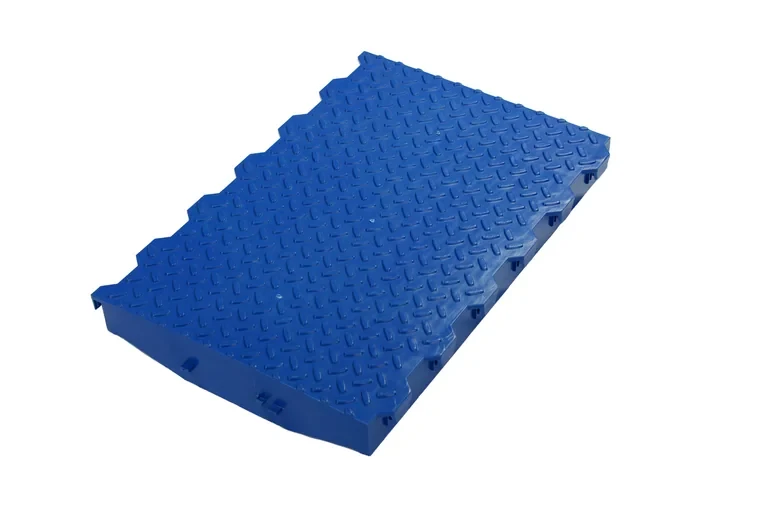
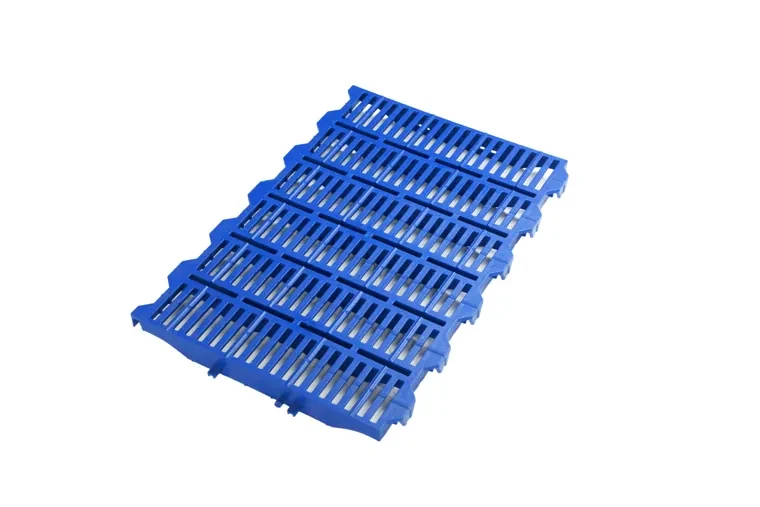
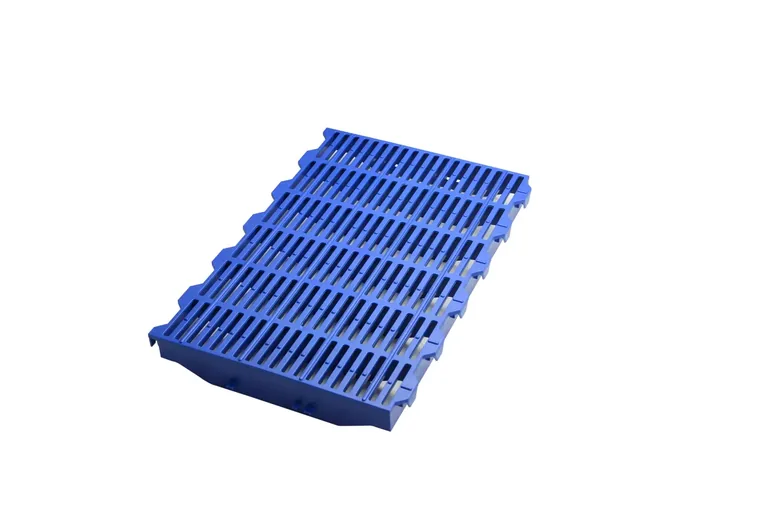
The beam grid is decided by the slat code, not the other way round. A 600 × 400 mm panel needs support at 400 mm centres; a 600 × 600 mm panel at 600 mm. Confirm the code before anyone marks out the pit.
If you are re-flooring an existing building, measure the existing beam centres first and choose the panel that matches them. That is almost always cheaper than moving beams.
Set and level the beam line
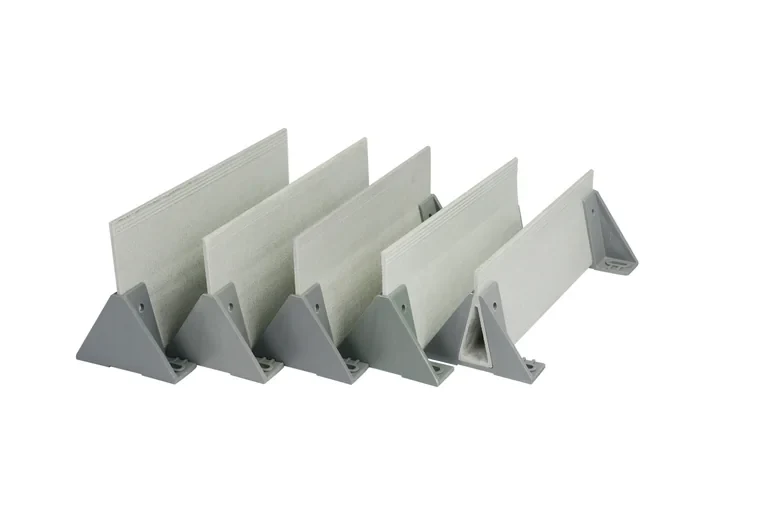
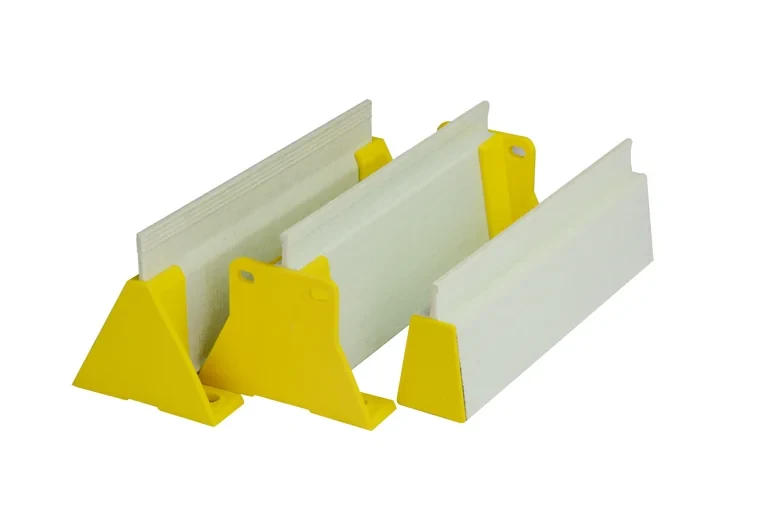
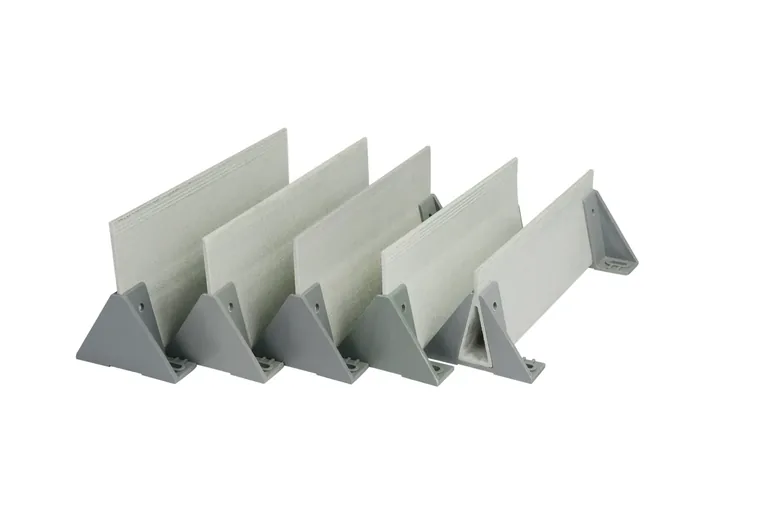
FRP beams are light enough to place by hand, which makes it tempting to skip the levelling. Do not. Correcting a beam line after the floor is down means lifting the floor.
Level along each run first, then across the runs. With triangular supports, shim at the moulded feet rather than packing under the beam mid-span. Cap every cut end to keep the laminate sealed.
Lay panels from a straight reference
Start at a known straight edge — normally the pen division or a wall — and work across. Lay the first full row, check it against your line, then continue. Small errors accumulate quickly across a wide room.
Run the panels so the interlock sits along the beam and the rib direction crosses the animal's line of travel.
Finish the edges properly
The last row against a wall is where improvised details appear. Use the closed-edge (C) panel from the same series, or a channel section designed for the position. A timber fillet at the pit edge will rot and a gap will trap feet.
Leave the manufacturer's expansion allowance at the room ends. Polypropylene moves slightly between day and night temperature, and pinning a floor rigid at both ends is how panels lift.
Check before the room is loaded
Walk the floor. Anything that rocks is a levelling problem and it will not fix itself. Check that panel joints are closed, that edge panels are seated, and that nothing protrudes above the surrounding surface.
Then wash it. The first washdown finds anything the eye missed, and it is far easier to correct an empty room.
What to check in week one
Look for trapped feed at the drinker line, for panels that have crept in their interlock, and for any sign of deflection over a span. A floor that has been set out correctly will not change; one that has not will show it within a fortnight.