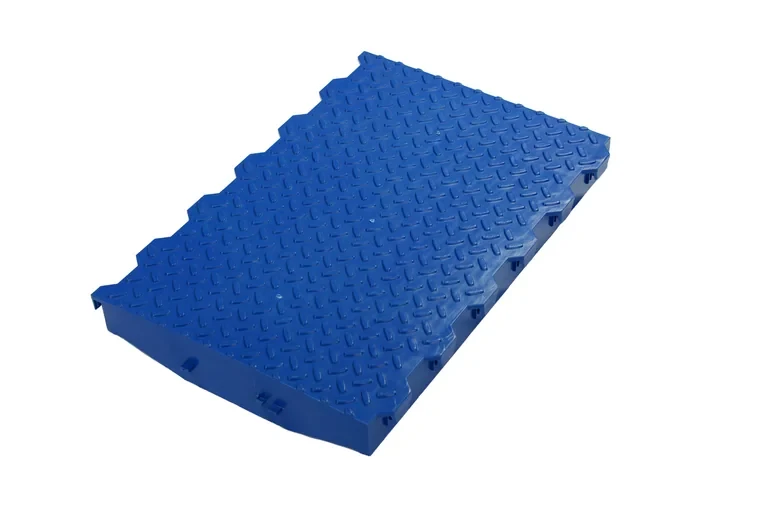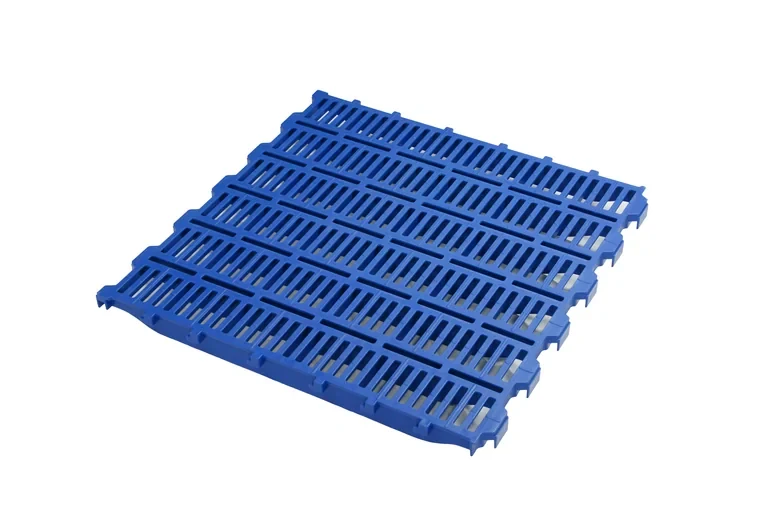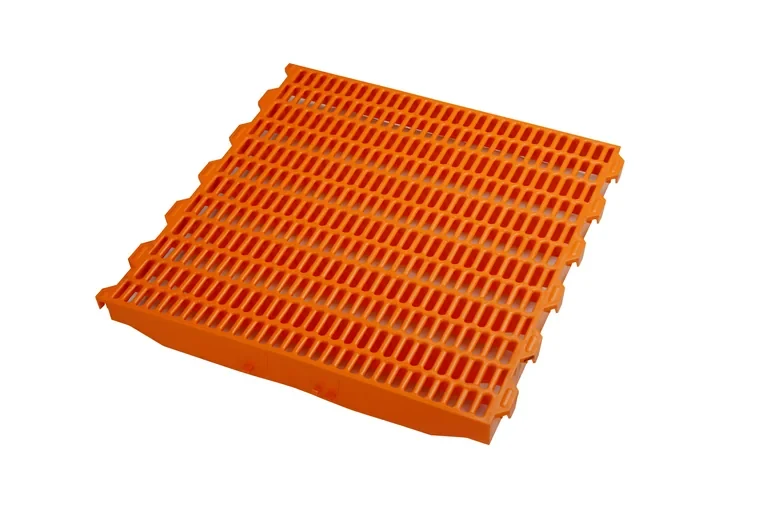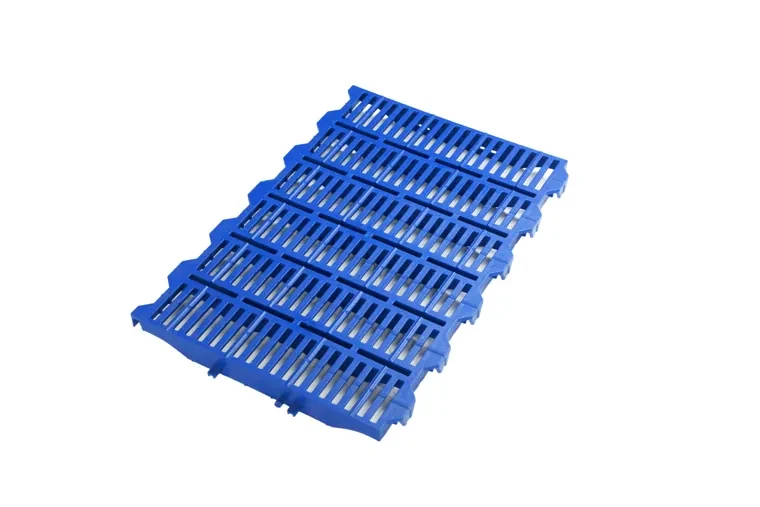
Why the gap is the decision
Everything else about a slat — material, colour, span — is easy to change at order stage. The gap pattern is the one choice that shows up every day for the next fifteen years, in how wet the pen is and how many animals go lame.
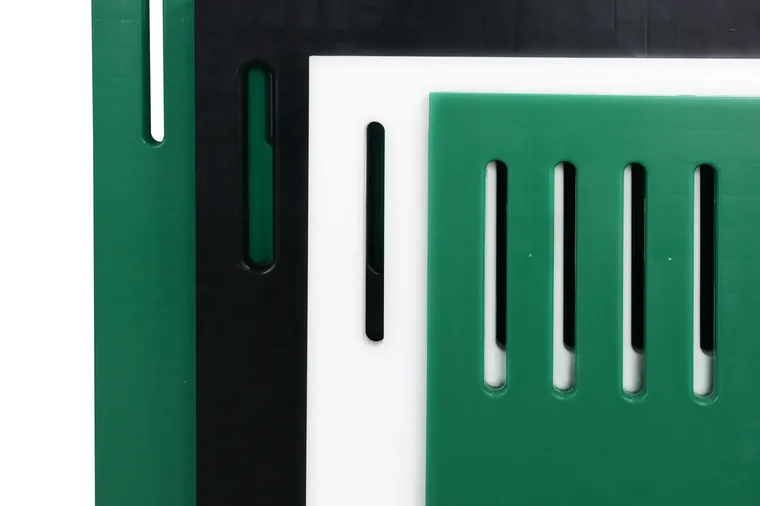
Too wide and a young foot drops into the opening; too narrow and manure sits on the surface. There is no pattern that is right for every room, which is why a manufacturer produces three.
Farrowing: protect the piglet, cool the sow
In a farrowing crate two animals with opposite requirements stand a metre apart. The litter needs a warm, near-solid surface with a gap small enough that a newborn claw is carried, not trapped. The sow needs the opposite: a surface that drains heavily and draws heat away from her.
The usual answer is a waterdrop (LWS) or fine-gap (LWD) plastic panel across the piglet area and a cast-iron insert under the sow. Iron conducts heat away and takes the concentrated weight without deflecting.
Nursery and weaner: fine gap, dense ribs
A weaned pig is light, soft-footed and busy. The LWD series exists for exactly this window — a narrower gap and a denser rib field, in spans up to 700 mm so wide nursery pens do not need an extra beam row.
If you are seeing splay-leg or foot damage in the first week after weaning, the floor gap is the first thing to check, before the diet.
Grow-finish: wide slot, heavier manure
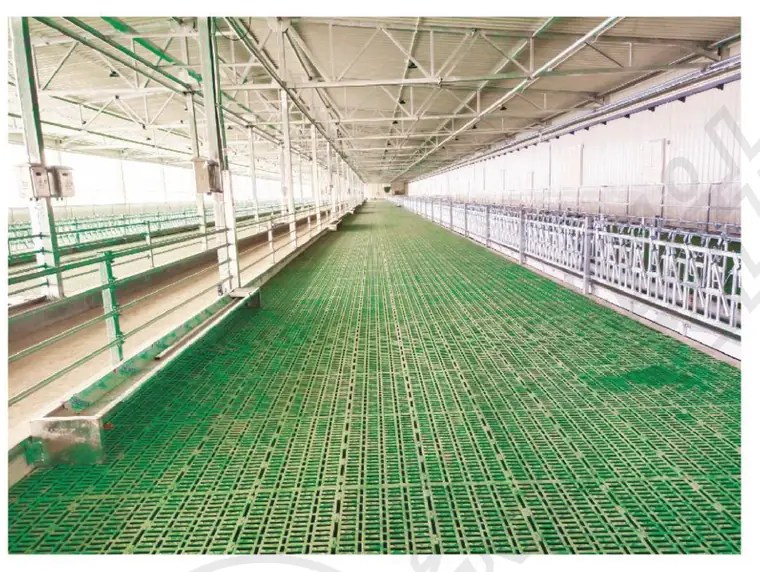
By finishing weight, manure volume and consistency have both changed. A gap that kept a nursery pen dry will clog. The LW slot pattern is the standard here: wide, round-edged openings that clear on hoof pressure alone and mostly avoid the need for daily hosing.
The round edge matters as much as the width. A square-shouldered opening is what damages a claw, not the opening itself.
Washdown-critical rooms: the waterdrop pattern
If your routine is all-in/all-out with a full wash between batches, drainage speed across the whole panel becomes the deciding factor. The LWS waterdrop pattern drains from every point of the panel rather than only along slot lines, so a room dries faster and turns around sooner.
Reading the code
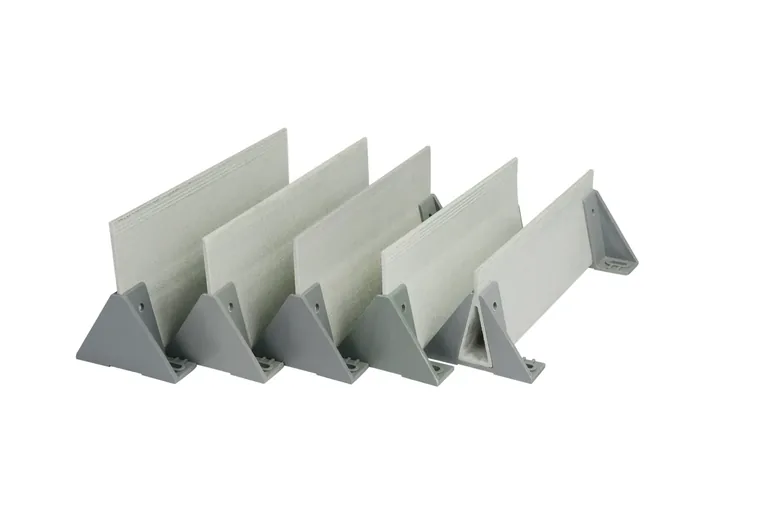
Across the JGM range the code carries the answer. The first digits are the panel width in millimetres, the last are the span — LW6040 is 600 mm wide and spans 400 mm, LWD6070 spans 700 mm. A B suffix marks the sow version and a C suffix the closed-edge panel used where the floor meets a wall.