Where the loss actually happens
Not in the silo and not in the auger. It happens in the last half metre: feed that scatters on the way down, feed heaped in one side of a pan and pushed out by the pig that gets there second, and feed left in a pan that was set too open on the day it was commissioned.
All three are equipment-detail problems, and all three are cheap to fix relative to what they cost each batch.
Control the drop
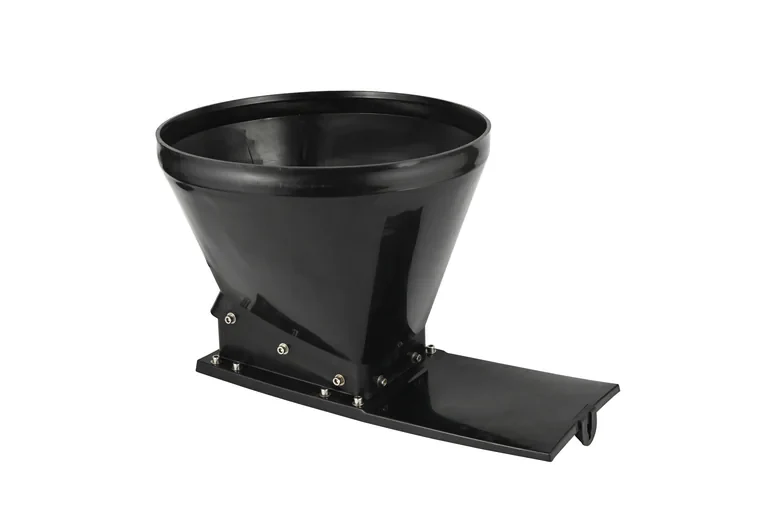
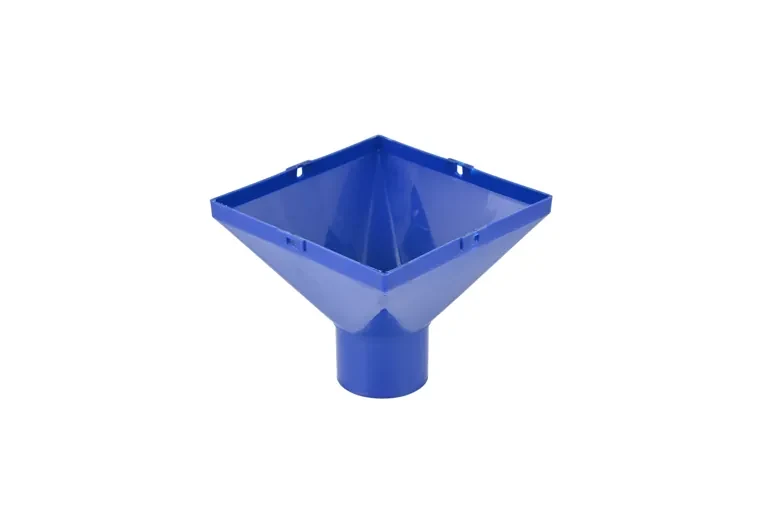
A straight pipe dropping into an open pan sprays feed across the pen. A hopper with a tapered anti-bridge throat turns the fall into a controlled column, and a trumpet-mouth drop pipe spreads that column across the pan surface instead of heaping it at one point.
Sizing matters: measure the existing drop pipe before ordering. Ø60 mm and Ø75 mm are not interchangeable, and a loose fit reintroduces the scatter you were trying to remove.
Set the pan, then check it
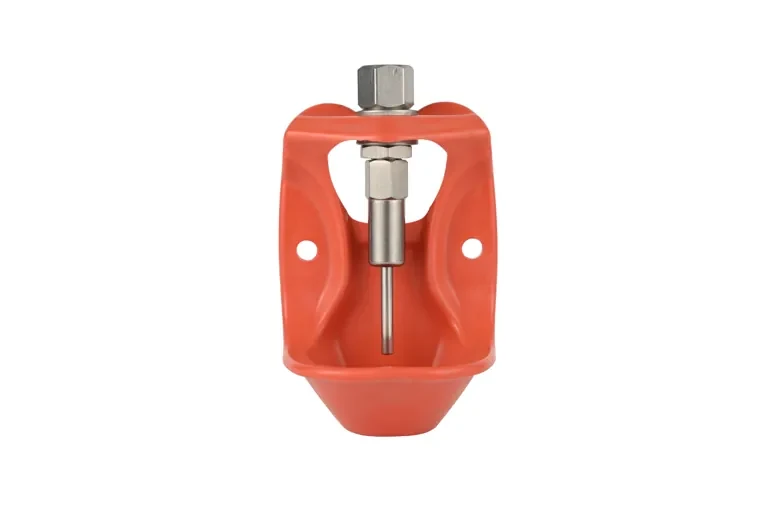
Start with the adjustment nearly closed and open it until feed is just present in the pan rather than heaped. A pan with visible feed spread thinly across the base is correctly set; a pan with a mound in it is not.
Then check weekly for the first month. Pigs grow into a different flow requirement, and a setting that was right at 25 kg is not right at 60 kg.
Match the feeder to the group
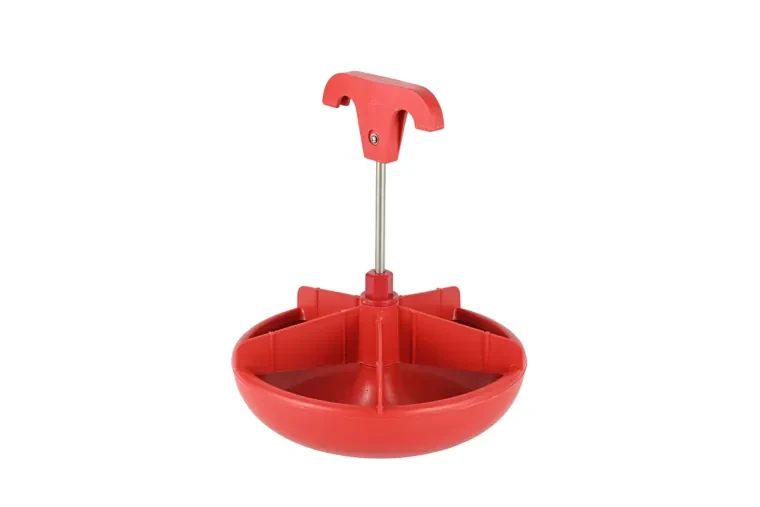
A round pan gives every pig the same access, which matters most in the weeks after weaning when a group is still sorting itself out. A large maxi pan with a stainless adjustment suits finishing groups, where the issue is capacity and holding a setting under daily pressure.
Whichever you use, mount the rim at the shoulder height of the smallest pig in the group, not the average one.
For sows, stop estimating
Ad-lib feeding is the wrong tool for a gestation row. A volumetric dosing cup sets the ration mechanically and repeats it every feed, and releasing the whole row together means the room is fed in one pass with every sow starting at the same time.
Weigh one drop whenever the diet or its density changes. A volumetric cup measures volume, not weight, and a change of formulation changes the relationship between the two.
The weekly routine
Walk the row before feeding and look for a pan that is empty or heaped. Check for bridged meal in hoppers when the feed form changes. Empty and rinse pans at batch change rather than topping up over old feed, which is where mould starts.