
 Feeding
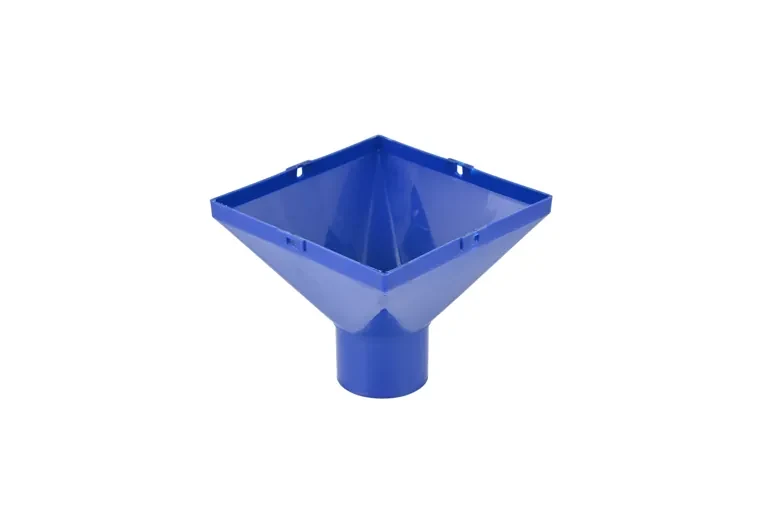
Trumpet Feed Drop Pipe
Trumpet-mouth drop pipe in Ø60 and Ø75 mm that spreads feed evenly across the pan instead of dropping it in one place.
PPØ60 / Ø75
Feeding Systems
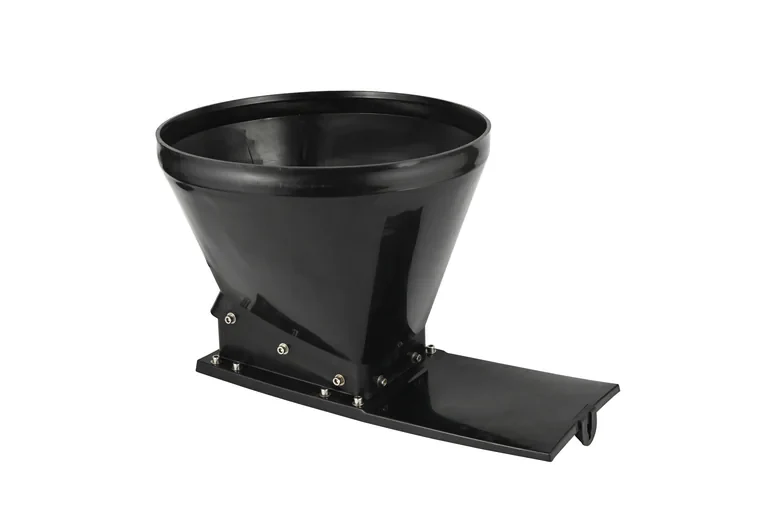
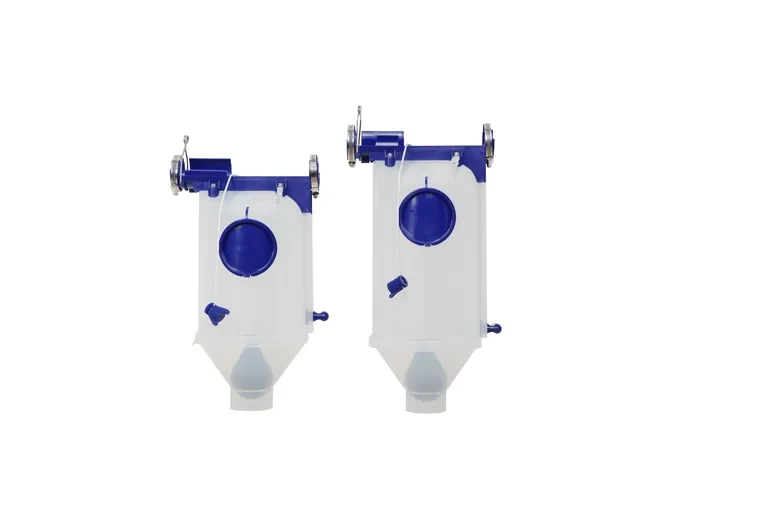
Drop hopper that channels feed cleanly from the line into the pan or trough below.
Between the feed line and the pan there is a short drop where most scatter happens. A hopper with a properly tapered throat turns that drop into a controlled column of feed instead of a spray across the pen.
JGM produces two sizes: the 62010 hopper at 418.98 × 179.05 × 317.5 mm for main feed drops, and the 62011 small hopper at 268 × 166 × 306 mm for narrow positions and smaller rations.
Key benefits
A tapered throat keeps the drop as a column instead of a scatter.
The internal taper is drawn so meal does not arch across the throat and stall the drop.
The full hopper for the main drop and the small hopper where space or ration is limited.
No corrosion and no coating to flake into the feed.
A hopper throat controls the fall.
The internal taper is shaped against bridging.
Moulded polypropylene does neither.
One-factory supply
Flooring, penning, feeding, water and climate are made on the same site, so a room can be specified and shipped as one order.
See the turnkey packageSpecifications
Figures below are taken from the JGM product catalogue. Anything we cannot source from it is marked TBC and confirmed with your quotation rather than estimated.
| Item | Specification |
|---|---|
| 62010 | 418.98 × 179.05 × 317.5 mm |
| 62011 (small) | 268 × 166 × 306 mm |
| Material | Polypropylene (PP) |
| Function | Feed drop from line to pan or trough |
| Feature | Anti-bridge throat |
| Packing | Quantity |
|---|---|
| 62010 | 10 pcs per carton · 450 × 400 × 600 mm |
| 62011 | 8 pcs per carton · 450 × 400 × 600 mm · 250 pcs per pallet, 1250 × 1050 × 2100 mm |
Ask for the full size chart and carton-loading data for your order.
Injection-moulded polypropylene. The Feed Drop Hopper is injection-moulded on JGM's own presses in Ningbo. Polypropylene granulate is dried, dosed and shot into a steel tool, so the part that leaves the press is the part the tool was cut for — there is no secondary forming stage where the dimension can drift. Colour is added as masterbatch at the press, which is why colour goes all the way through the part instead of sitting on it as a coating.
Comparison
| Alternative | When to choose it instead |
|---|---|
| Trumpet Feed Drop Pipe | The trumpet drop pipe spreads the feed across the pan; the hopper controls the fall into it. |
| Maxi Pan Feeder | The hopper feeds the pan — order both where feed comes from an overhead line. |
| Dosing Cup (6L / 8L) | For measured sow rations, use a dosing cup rather than a free-drop hopper. |
Use guide
Mount the hopper square under the line outlet so feed falls centrally.
Match the hopper size to the ration — a large hopper on a small ration just holds stale feed.
Check the throat for bridging when switching to a finer meal.
Rinse hoppers at batch change with the rest of the feed line.
Answers
62010 is the full-size hopper at about 419 × 179 × 318 mm; 62011 is the small hopper at 268 × 166 × 306 mm for narrow positions.
The throat is shaped against bridging, but any very fine or damp meal needs checking during commissioning. Tell us your feed form with the enquiry.
62010 goes 10 per carton and 62011 goes 8 per carton, both in a 450 × 400 × 600 mm box; the small hopper palletises at 250 pieces.
Yes, and that is the usual pairing — the hopper controls the fall and the trumpet spreads the feed into the pan.
Related products
Feeding
Trumpet-mouth drop pipe in Ø60 and Ø75 mm that spreads feed evenly across the pan instead of dropping it in one place.
 Feeding
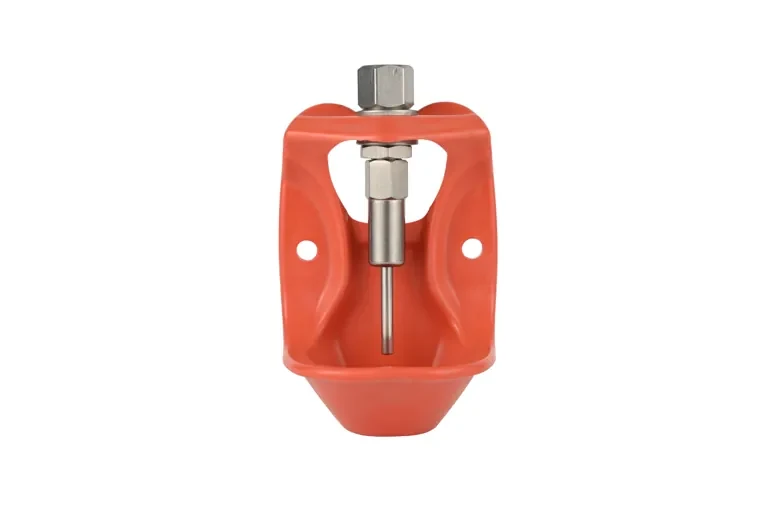
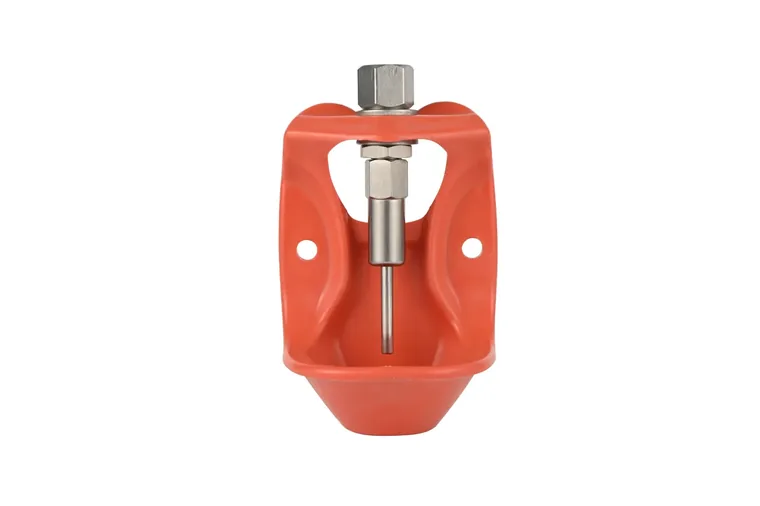
Large-capacity pan feeder with a stainless adjustment for grow-finish pigs, set to deliver feed without spilling it.
 Feeding
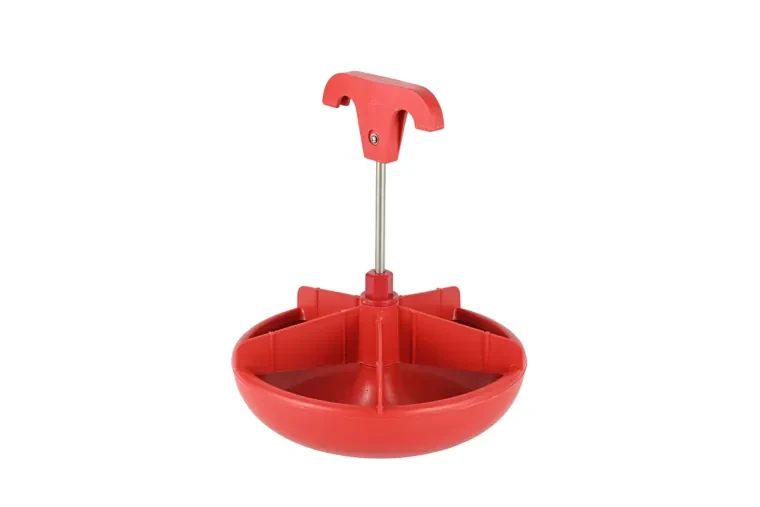
Round wean-to-finish pan feeder that gives every pig the same access around the bowl.
 Feeding
Volumetric dosing cup in 6 L and 8 L that sets an exact ration per sow and drops it on command.
Related reading
 Product Guide
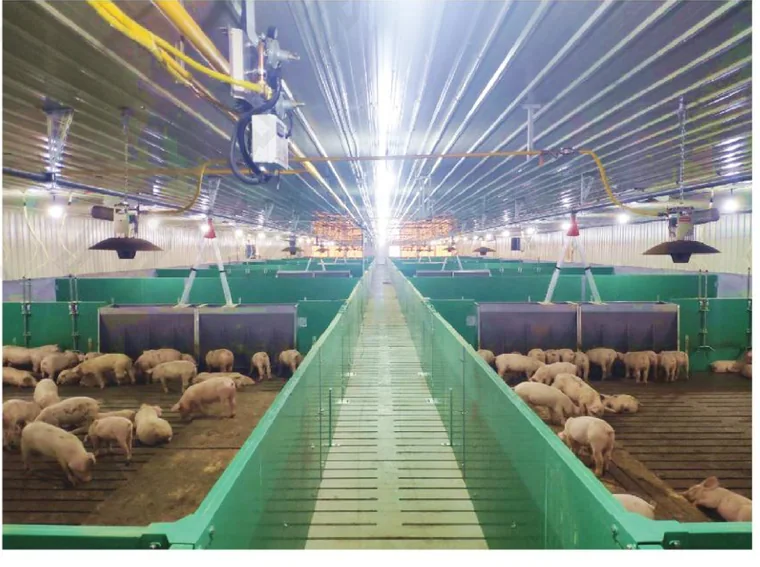
Feed is the largest cost in a finishing house, and most of what is lost is lost between the line and the animal's mouth.
 Checklist
The nursery room is where growth is either kept or lost. This is what to check before the first batch walks in.
Talk to an engineer
Tell us the room size, the animal stage and the capacity you are aiming at. Our engineers reply with a layout, an equipment list and a quotation.