
Two Shot Handheld Enclosure Tooling
Two materials one visible boundary and a tool that has to agree with itself
What Makes This Part Family Hard
A handheld terminal or scanner housing is judged on the line where the two materials meet. The first shot has to hold position under the second, the shut-offs have to seal against a surface that has already shrunk, and both halves still have to assemble.
Customer names and program data are not published. What follows is how we take tooling of this type, and the photographs are of our own work.
How We Take It
Rotation strategy settled in the DFM
How the first shot transfers to the second station is decided on paper, with the gating for both shots shown.
First-shot shrinkage carried into the second cavity
The second station is cut against the first shot as it will exist, not as it was drawn.
Sequence proven by simulation
The mold motion simulation steps through the transfer so the stations are proven not to interfere.
Shut-offs machined on shared equipment
Both stations are cut on the same CNC and EDM equipment so the two halves of the tool match.
The Photographs on This Page
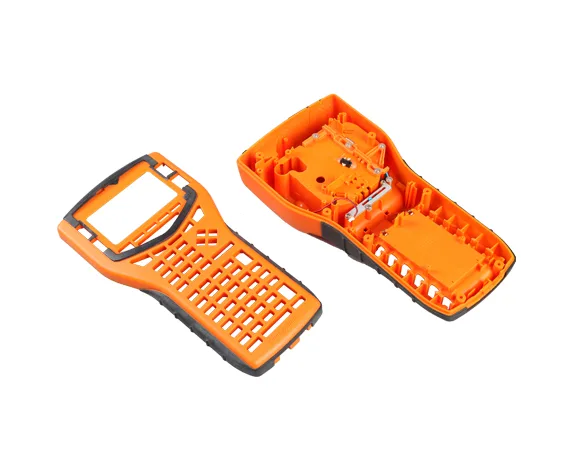
The parts shown are molded JEC work: handheld enclosure halves, a terminal front housing with a contrast keypad frame and a scanner grip.
Quality Route
- Electrode dimension and surface finish inspection
- Steel dimension inspection after machining
- Mold trial reports with a sample dimension report (FAI)
- Final mold inspection and packing inspection
Parts in This Profile
Two Shot Handheld Device Enclosure
Front and rear enclosure halves molded with hard and soft zones in register.
View details →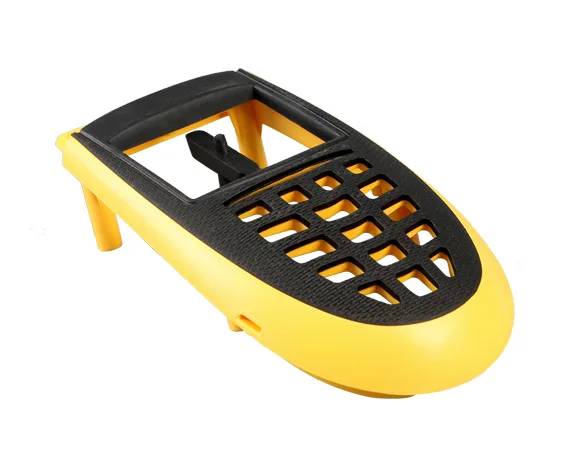
Two Shot Handheld Terminal Housing
Handheld terminal front housing molded in a yellow shell with a black keypad frame.
View details →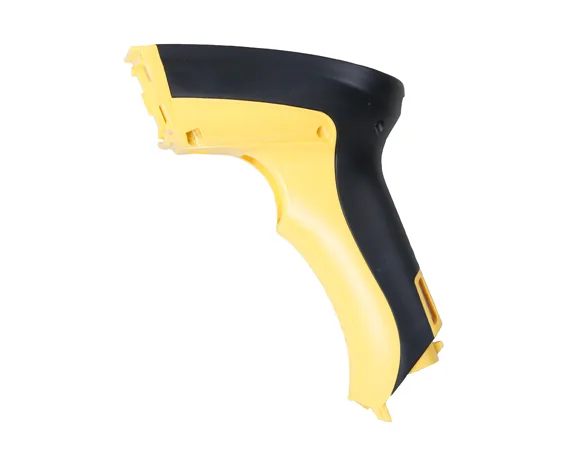
Two Shot Scanner Grip Housing
Scanner grip housing with a rigid body and an over-molded contrast grip.
View details →About This Profile
Is this a named customer project?
No. We do not publish customer names or program data. This profile describes a part family we have tooled and the engineering decisions it forces; the photographs are our own work.
Can you take on work like this?
Yes — this is the kind of tooling we build. Send the 3D data, the resin and the annual volume and a professional quotation comes back within two working days.
What evidence comes with the tool?
Mold trial reports with a sample dimension report (FAI), then final mold inspection and packing inspection before shipment.
Will you sign a confidentiality agreement?
That is normal for tooling work and we treat customer data as confidential by default. Send your own form with the enquiry. Specific terms: TBC.
Bring Us a Tool Like This
Send the part data and the volume. A professional quotation with technical comment comes back within two working days.