
- Home
- Products
- Chili Thread
- Red Chili Thread
Red Chili Thread
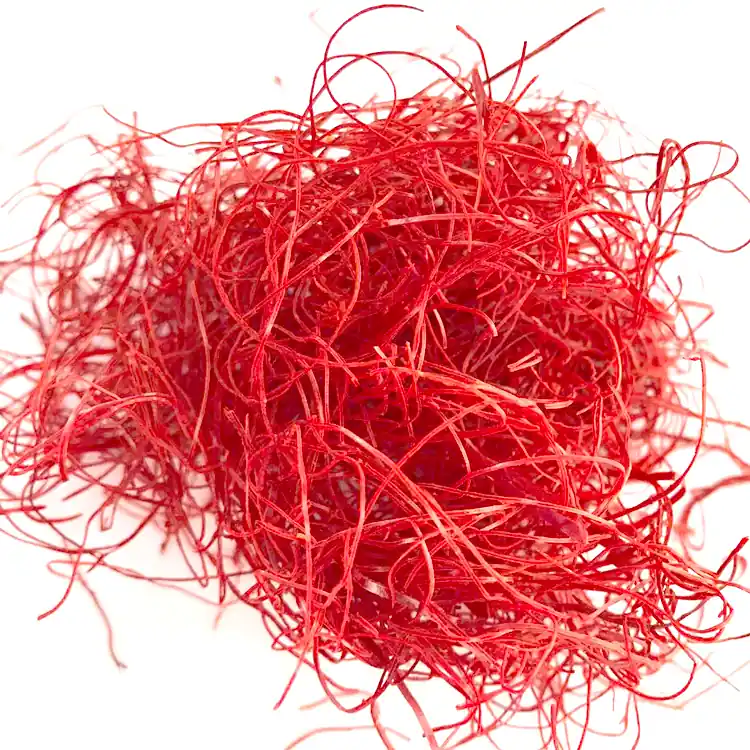
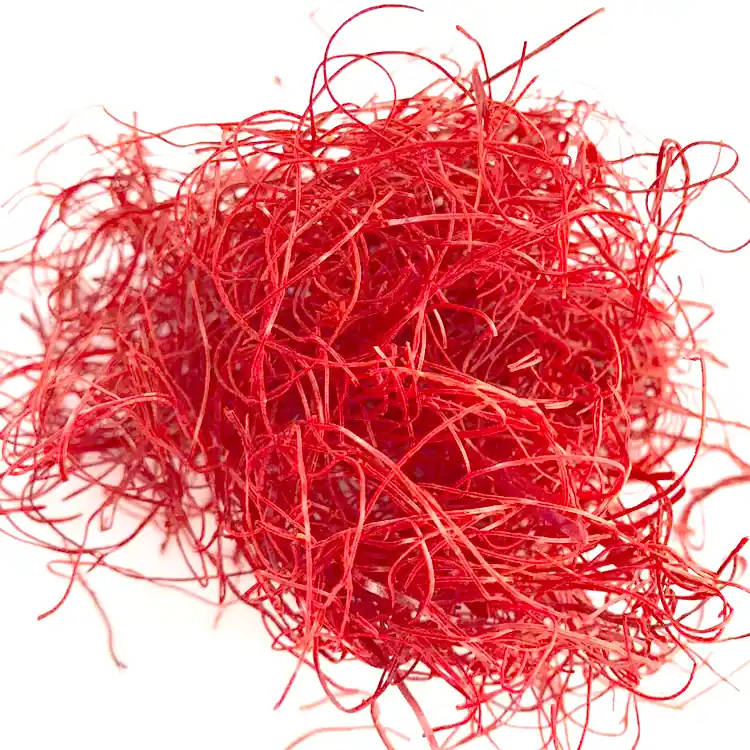
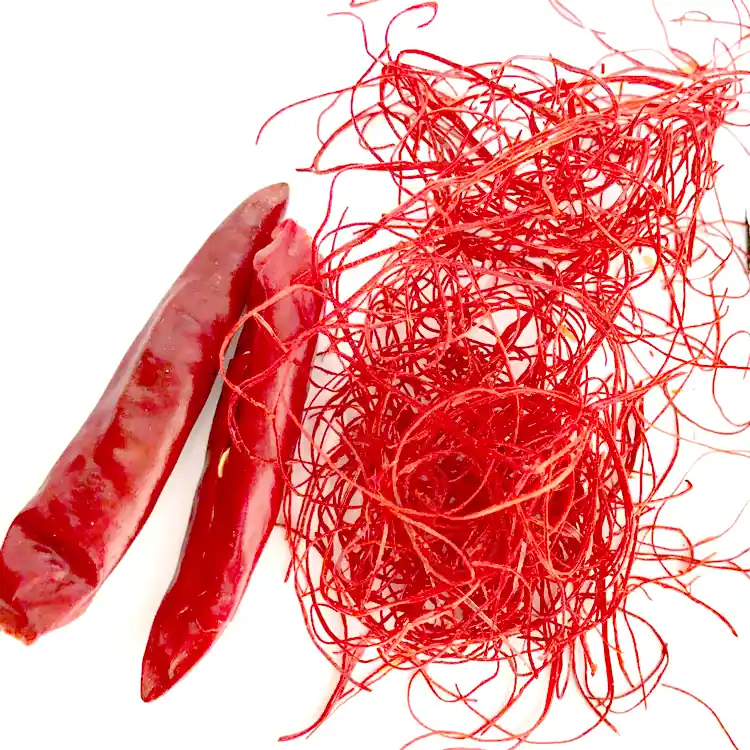
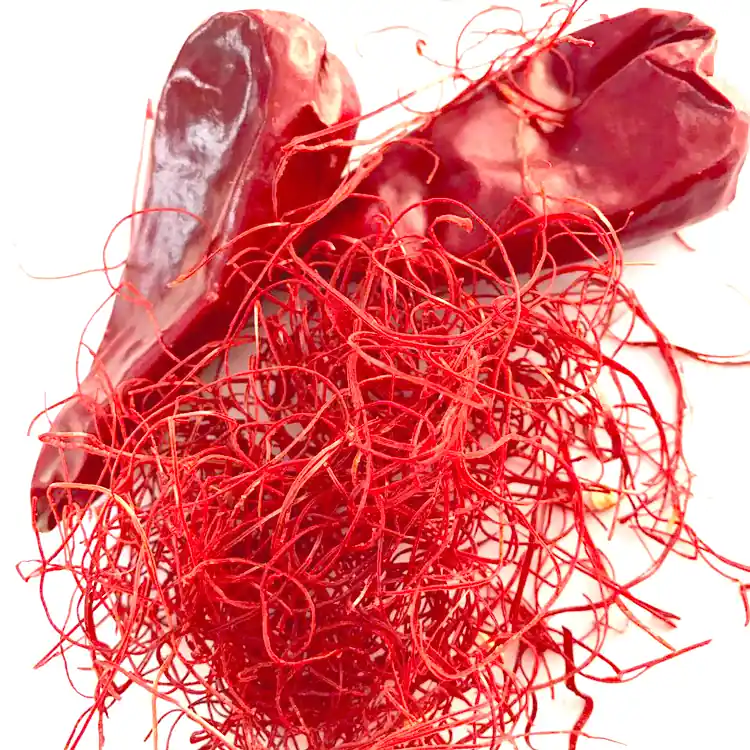
Beijing Red pods sliced to 0.4 mm and 0.8 mm threads for visible garnish
- Appearance
- Natural red
- Size (length)
- 0.4 mm, 0.8 mm
- Pungency
- 2,000-50,000 SHU
- Colour
- 100-220 ASTA
Beijing Red pods sliced to 0.4 mm and 0.8 mm threads for visible garnish
These threads come from the Beijing Red pepper, also sold as Puya chili, a dried red pepper named for the region in China where it is believed to be indigenous. They have a grassy, slightly smoky, fresh flavour.
Threads are cut at 0.4 mm and 0.8 mm, natural red, across 100 to 220 ASTA and 2,000 to 50,000 SHU. They can be used as they are, toasted or rehydrated. Because the threads are very pliable they work as a visually spectacular garnish and provide a nice touch of heat.
Key Benefits
The chili stays visible
A powder disappears into the dish. A 0.4 mm thread is still recognisably chili on the plate.
Pliable rather than brittle
The threads bend rather than shatter, which is what makes them work as a garnish on kimchi and cold dishes.
Three ways to use one product
As is, gently toasted in a dry pan for about one minute, or soaked for 10 to 15 minutes in warm water.
Two thicknesses
0.4 mm for a fine garnish, 0.8 mm where the thread has to survive mixing.
Published Figures We Quote Against
| Appearance | Natural red |
|---|---|
| Size (length) | 0.4 mm, 0.8 mm |
| Pungency | 2,000-50,000 SHU |
| Colour | 100-220 ASTA |
| Cut from | Beijing Red pepper (Puya chili) |
| Shelf life | TBC — ask us for the current figure |
Technical Features
- Cut from
- Beijing Red pepper, also called Puya chili
- Appearance
- Natural red
- Thread width
- 0.4 mm and 0.8 mm
- Flavour
- Grassy, slightly smoky, fresh
- Heat
- 2,000 to 50,000 SHU
Customisation Options
- Thread width 0.4 mm or 0.8 mm.
- Colour selected within the 100 to 220 ASTA band.
- Retail sachet or bulk carton packing.
- Cut from a specified pod grade on request.
Where This Product Ends Up
Kimchi garnish
The most common use, scattered on the finished product.
Korean, Mexican and Southwestern dishes
Used where a little extra heat plus a visual cue is wanted.
Hors d’oeuvres, salads, soups and stir-fries
Added at the end so the thread stays intact.
Chili vinegar
About 1 oz of threads in a 1 cup jar of vinegar with a dash of salt and a pinch of sugar, left 7 days at room temperature and strained.
Who It Is For
- Kimchi producers who finish the pack with a visible garnish.
- Ready-meal and chilled-food manufacturers wanting a decorative heat cue.
- Retail spice packers selling a premium chili format.
Problems It Solves
Ground chili is invisible in a finished dish
Threads read as chili at a glance.
Brittle cut chili breaks into dust in transit
These threads are pliable rather than brittle.
Garnish products usually carry no specification
These are quoted against the same 100 to 220 ASTA and published SHU band as our ground grades.
From the Field to Your Container
Beijing Red pods selected for pliability
Threads can only be cut from pods that bend rather than shatter, so the pod selection for the thread line is tighter than for the whole-pod grades.
Rehydrated and slit
Pods are brought to a cutting moisture and slit lengthwise to 0.4 mm or 0.8 mm. Cutting dry would produce dust rather than thread.
Dried back and colour checked
Threads are dried back and the lot is checked against the agreed point in the 100 to 220 ASTA band before packing.
Packed to protect the cut
Threads are packed so they arrive as threads. Over-compressed packing turns a garnish product into flake in transit.
Quality Control and Certification
- Thread lots are checked for cut consistency as well as colour, since an inconsistent cut is visible on the finished plate in a way that a powder variation is not.
- Colour is confirmed inside the quoted 100-220 ASTA band against your agreed target point.
- Cut under the same HACCP system certificate as the rest of the plant, issued by the China Quality Certification Centre.
- Because threads are a finishing ingredient that is never cooked again, the kosher and HACCP coverage on this line is the part most buyers ask about first.
- The thread line runs in the same plant and under the same clean record as the rest of the range: no food quality or safety incident since 1999.
Use Guide
- Use as they are for a garnish that keeps full colour.
- Toast over medium heat for about one minute in a dry skillet to lift the flavour.
- Soak 10 to 15 minutes in warm water to soften before folding into a wet product.
- For chili vinegar, use about 1 oz of threads to 1 cup of vinegar, close tightly, leave 7 days at room temperature, then strain and refrigerate.
How This Compares With the Rest of the Range
| Alternative | What changes |
|---|---|
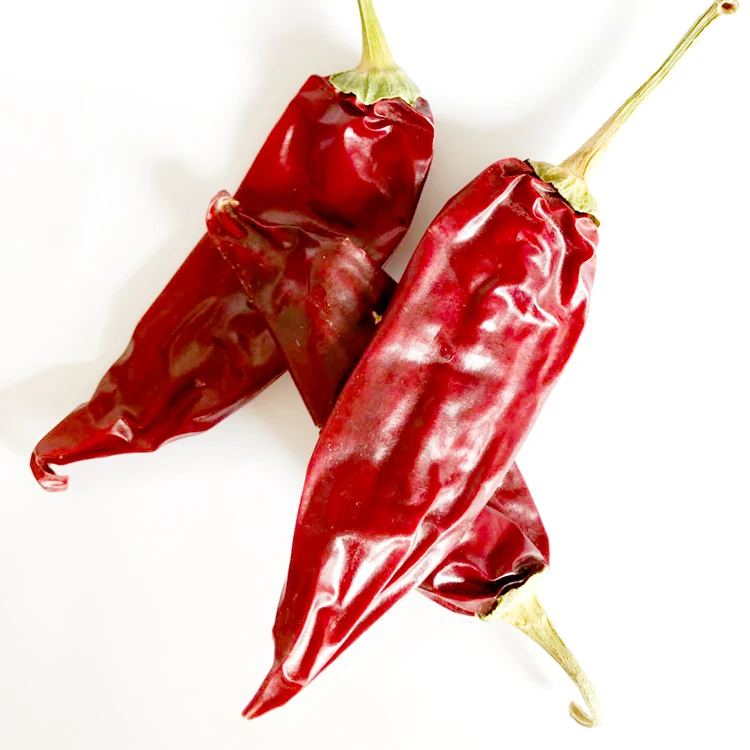
| Puya Chili Beijing Red Pepper | The whole pod these threads are cut from. Buy the pod if you cut in house. |
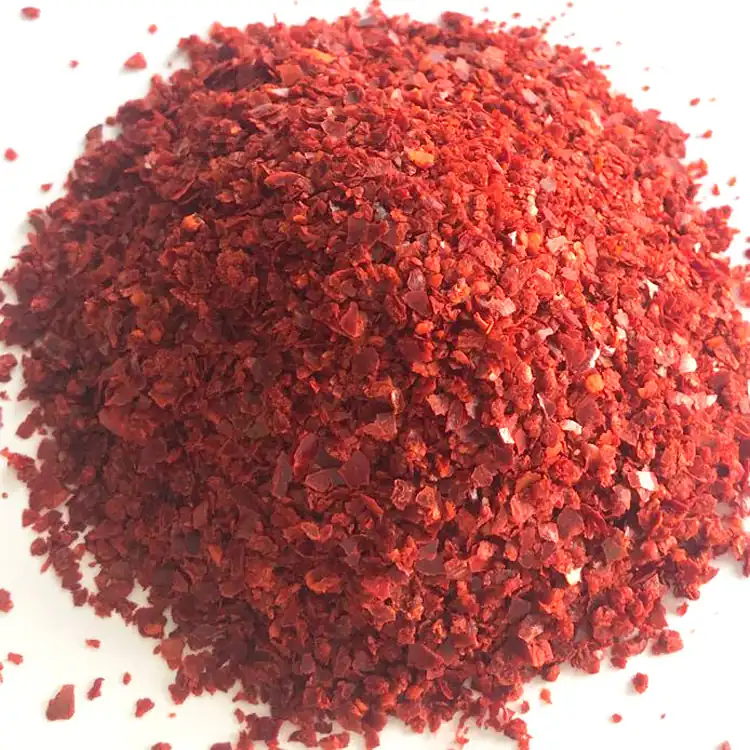
| Crushed Chili | Flake rather than thread, at 40 to 60 mesh. Cheaper per kilo and used inside the product rather than on it. |
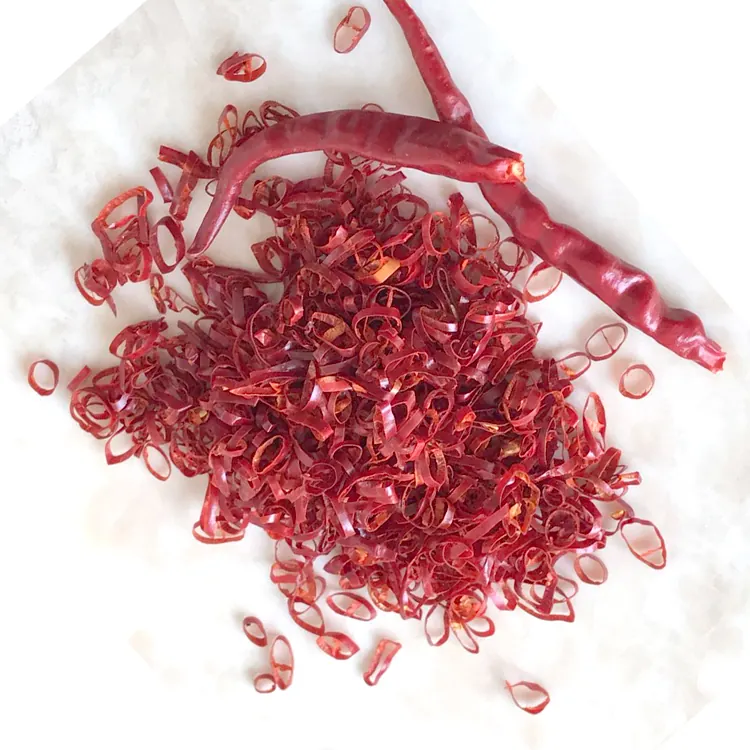
| Red Chili Pepper Ring | A 2 mm ring cut, also visible, but far hotter at 18,000 to 25,000 SHU. |
Other Items Buyers of Red Chili Thread Look At
Questions About Red Chili Thread
What are chili threads used for?
Mostly as a garnish on kimchi and on Korean, Mexican and Southwestern dishes, and in hors d’oeuvres, salads, soups and stir-fries where a little extra heat and a visual cue are wanted.
Which thickness should I order?
0.4 mm gives the finest look. 0.8 mm survives mixing better if the thread goes into the product rather than on top of it.
How hot are they?
Quoted across 2,000 to 50,000 SHU. Tell us where in that band you need to sit and we will grade the lot accordingly.
Do they need rehydrating?
Not necessarily. They can be used as they are, toasted for about a minute, or soaked for 10 to 15 minutes in warm water.
What pod are they cut from?
The Beijing Red pepper, also sold as Puya chili, which we also supply whole.
Quote Red Chili Thread to Your Specification
Tell us the ASTA colour, the SHU heat and the packing you need. We will come back with a price, a lead time and a sample.