
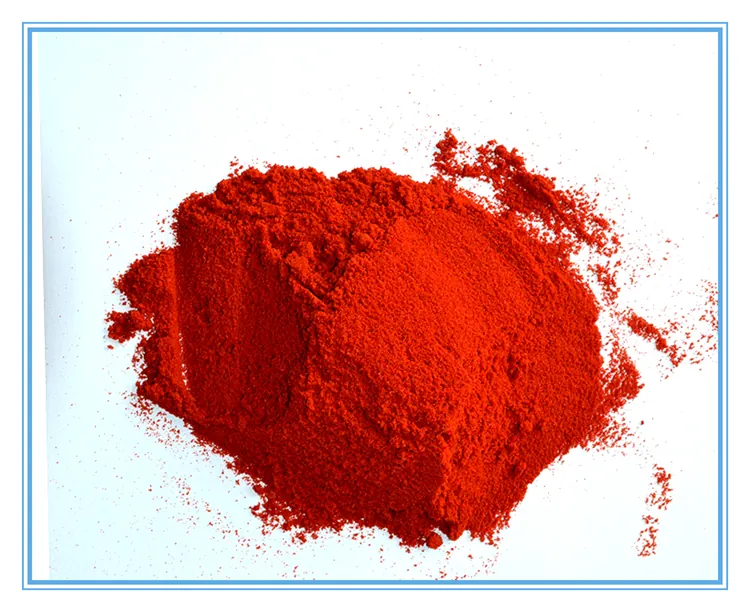
The steps we mill at
Premium chili powder is milled at 40, 60, 80, 100 or 120 mesh to the customer’s choice. Premium sweet paprika powder is milled at 60 to 80 mesh, which is the grade the meat industry normally asks for. Crushed chili sits at 40 to 60 mesh, which is deliberately coarse enough to stay visible.
Crushed chili with seeds is specified by cut size rather than mesh, at 3 to 5 mm, and red chili pepper rings are cut to 2 mm.
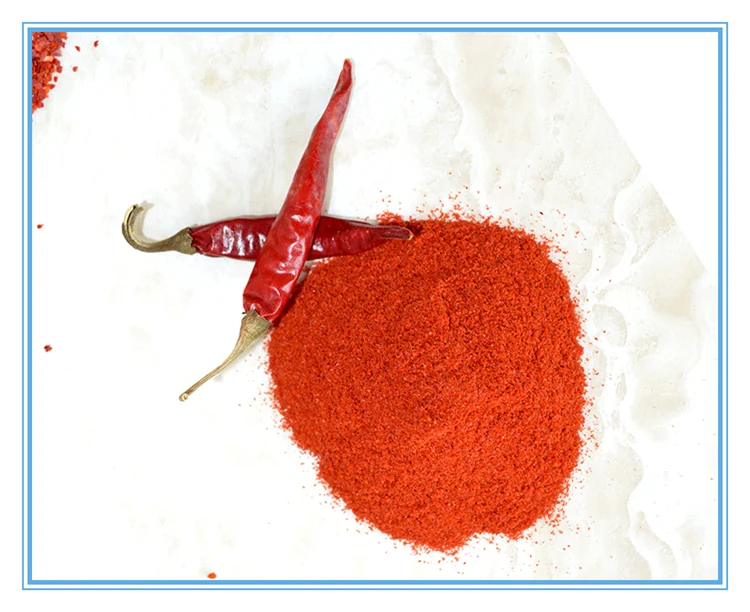
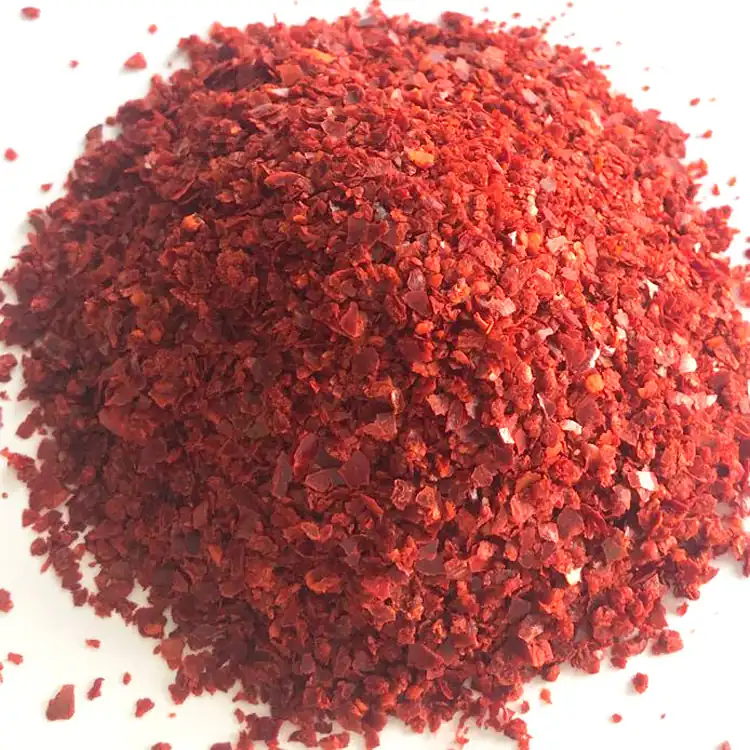
Chili powder beside the pod it came from. Mesh decides whether this reads as colour or as visible grains in the finished product.
What changes as the mesh gets finer
Dispersion improves and the spice stops being visible as grains. Bulk density rises, so a volumetric doser that was calibrated on a coarse grade will overdose on a fine one. Surface area rises too, which means colour fades faster in storage and flavour releases earlier in a cook.
A coarse grade does the opposite. It shows, it holds its colour longer, and it survives a surface application such as a rub without disappearing.
Matching mesh to the application
Snack dusting normally wants 100 to 120 mesh so the seasoning does not show as grit. General dry blending sits at 80 to 100. Meat emulsions want 60 to 80. Visible rubs and coarse seasonings want 40 to 60 or a crushed grade instead.
Moisture and caking
A fine powder cakes more readily than a coarse one at the same moisture. Our chili powder and paprika powder are both specified below 10 percent moisture, while the crushed grades are allowed 14 percent, precisely because the coarse particle tolerates it.
Questions About This Guide
Will a finer mesh change my dosing?
Yes. Bulk density rises as mesh gets finer, so a volumetric doser calibrated on a coarse grade will overdose on a fine one. Dose by weight.
Which mesh should a snack seasoning use?
100 to 120 mesh, so the seasoning does not show as grains on the finished snack.
Does mesh affect how fast the colour fades?
It does. A finer mesh exposes more surface, so it loses ASTA faster in storage than a coarse grade or a whole pod.
Put These Numbers on a Purchase Order
Send us the colour, heat and mesh you have settled on and we will quote it landed at your port.