
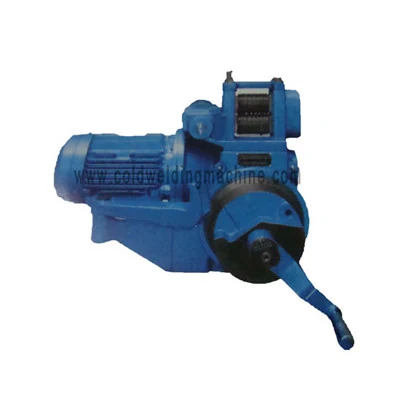
Wire Pointing Machines
SGT170 Wire Pointing Machine for Intermediate Drawing
Conical points from φ3.55 mm in to φ0.66 mm out, on eight grooves with nitrided 38CrMoAl rolls.
View specifications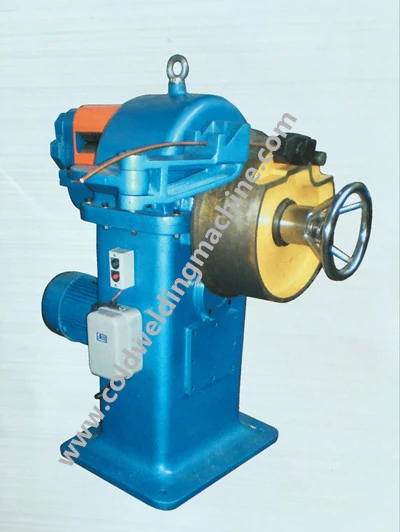
Points 8.0 mm copper rod and 13.0 mm aluminium rod down to a φ1.00 mm outlet on a 450 mm block.
The SGT450 is the pointing machine that sits ahead of a rod breakdown draw. It takes φ13.00 mm in and brings the point down to φ1.00 mm through 100 mm rolls turning at 23.5 R/min, driven by a 3 kW motor at 960 R/min.
Rated for 8.0 mm copper rod and 13.0 mm aluminium rod, where an intermediate pointer would stall.
One pass takes the rod from full section to a point the first breakdown die will accept.
A large block diameter keeps the bend radius off the rod while it is being pointed.
The eccentric setting that produces the taper, fixed so the point is repeatable coil after coil.
The SGT170 covers intermediate drawing from φ3.55 mm to φ0.66 mm with a 1.5 kW motor. The SGT450 is the rod-scale machine: 13 mm inlet, 450 mm block, 3 kW motor and a 655 kg frame.
Dies are manufactured for wire between 0.10 mm and 25.0 mm to suit round or profile wire and rod, to the customer's own specification, at -1% / +2% of the wire diameter.
On the motorised and hydraulic machines, operating voltage is built to the industrial supply of the destination country. State voltage, phase and frequency with the order.
Machines are packed in a strong wooden or plywood case as stated per model. Carry cases are supplied with the portable welders and the DA10.
Conical points from φ3.55 mm in to φ0.66 mm out, on eight grooves with nitrided 38CrMoAl rolls.
View specifications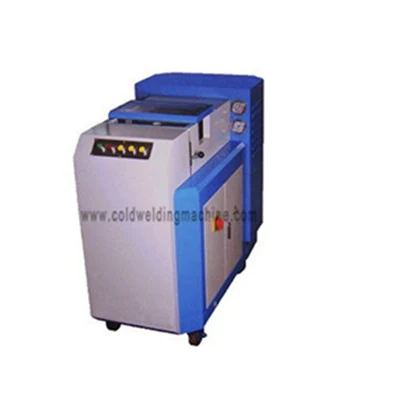
Rectangular strip as well as round wire, copper to 8.00 mm and aluminium to 15.00 mm on a 660 kg frame.
View specifications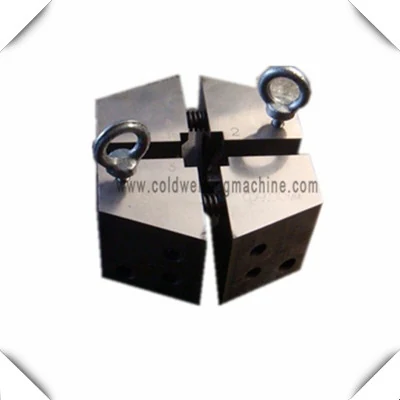
Matched die sets for CHY100 CHY200 CHY400 and CHY700, covering copper 1.00-13.00 mm and aluminium 1.00-25.00 mm.
View specifications8.0 mm copper rod and 13.0 mm aluminium rod, with a φ13.00 mm inlet.
A 3 kW motor running at 960 R/min, driving 100 mm rolls at 23.5 R/min.
1100 × 845 × 1250 mm with a net weight of 655 kg.
Yes. The rolling action produces a conical point rather than a triangular one, which is what keeps the rod from being drawn broken in the first die.
Give the wire material, the diameter and the country the machine will run in, and the quote comes back with the die set and the voltage build already decided.