
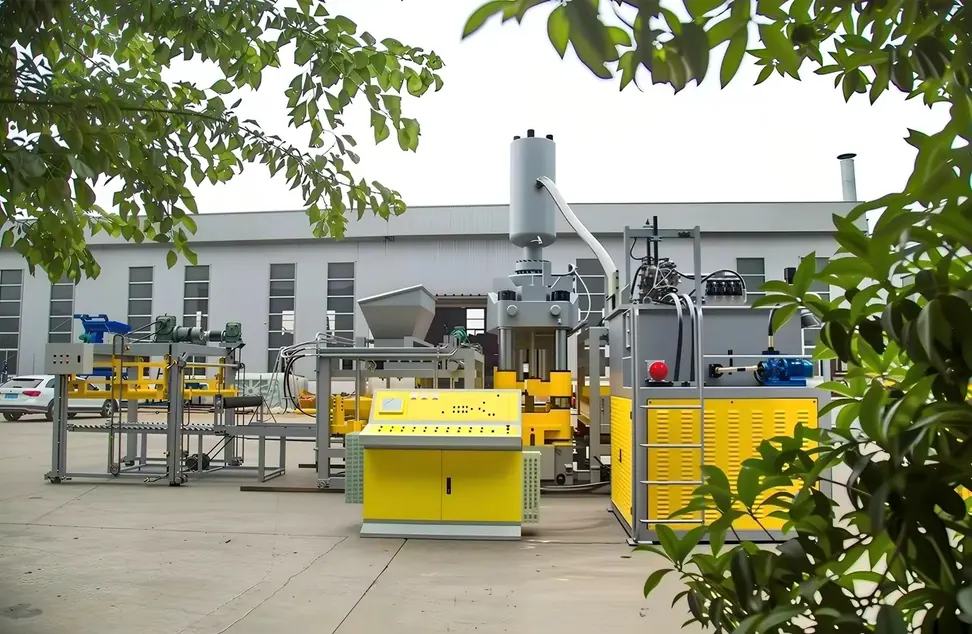
From First Message To Commissioned Block Plant
The nine steps between a first WhatsApp message and a line producing blocks in your own workshop.
Buying a block plant is not buying a machine. It is a sequence of decisions about raw material, block size, layout, power, freight and training, and getting one of them wrong is expensive after the container has sailed. This is the sequence we work through with every buyer.
From First Message To Commissioned Block Plant In 9 Steps
Technical consultation
A model is chosen from a catalogue before anyone has looked at the raw material or the site.
The sales and technical team review your aggregate, cement, fly ash or slag, the block types you want, target daily capacity, workshop dimensions, local voltage and budget, then recommend matching models.
Plant layout and foundation drawing
The machine arrives and does not fit the building, or the foundation is poured to the wrong dimensions.
Equipment layout plans, machine foundation drawings and batching plant layouts are customised to your factory site free of charge.
Raw material test and sample blocks
Block strength is assumed rather than tested, and the problem surfaces after production starts.
Send raw aggregate to the Linyi factory for a free moulding test. Finished block samples, test videos and production parameter reports come back before you order.
Technical proposal and quotation
A single price with no configuration list, then extras appear later.
The quotation lists the vibration motor, hydraulic cylinder, mould frame, feeding hopper, mixing system and electrical control cabinet, with overall dimensions and power consumption, and no hidden fees.
Factory inspection
The buyer never sees the machine before it is packed.
Airport pick-up and accommodation are arranged for customers visiting the workshop to witness assembly, shot blasting and a real trial run.
Container loading and freight
Loading is worked out at the port and the spare parts do not fit.
Loading volume is calculated for 20GP and 40HQ containers, with a spare parts packing scheme and an ocean freight estimate for reference.
Installation and commissioning
The line sits in crates because nobody on site has installed one before.
Field technicians can be dispatched for installation, mould trial moulding, line commissioning and worker training; the buyer covers flights, accommodation and local transport.
Operator training and documentation
The machine runs only while the visiting engineer is on site.
Operation manuals, maintenance handbooks, hydraulic diagrams, electrical circuit drawings, mould replacement guides and wear parts catalogues are supplied in English with every machine.
Warranty and long-term support
Support stops at the end of the warranty period.
12 months on the main frame, vibration system, drive motors and Siemens PLC from the shipment date, then free technical guidance for the life of the equipment.
The Models Referenced Above
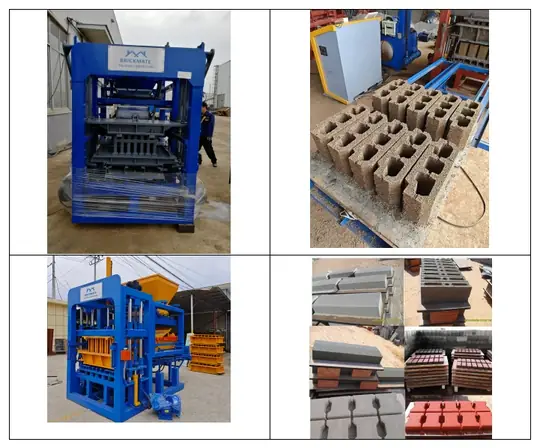
QT4-15 Automatic Concrete Hollow Block Making Machine
Full hydraulic automatic machine producing 5000 to 7000 standard blocks per 8 hour shift from sand, fly ash, slag, gangue or construction waste.
5000-7000 standard blocks per shift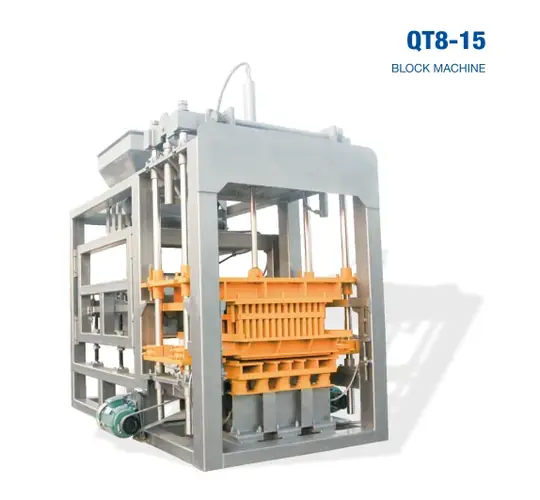
QT8-15 Automatic Hollow Block Making Machine
90 kN hydraulic automatic machine moulding eight hollow blocks per cycle, 15360 blocks per 8 hour shift.
1920 pcs/hour at 400 x 200 x 200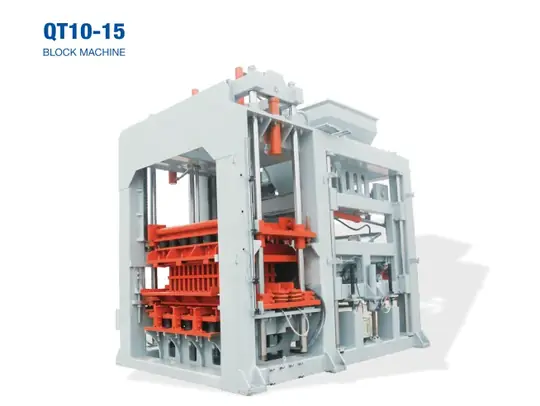
QT10-15 Full Automatic Concrete Block Production Line
Large production line with Siemens, Omron and Yuken components, 90 kN vibration and a published output table across seven block types.
3600-4800 pcs/hour at 400 x 100 x 200 hollow block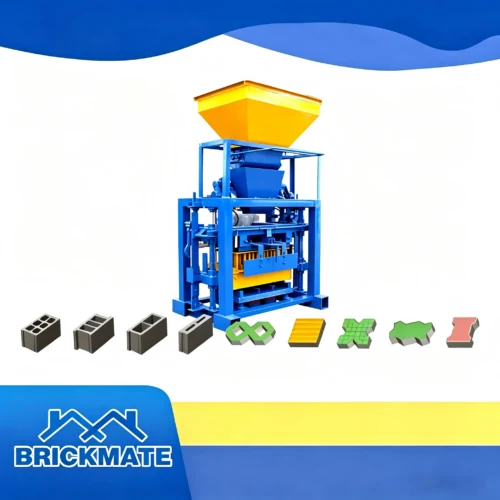
QT40-1 Semi Auto Cement Block Machine
Conveyor-fed electrical vibration press with a 30 second cycle, sized for a 60 square metre workshop and three to four workers.
630-840 pcs/hour at 400 x 100 x 200From First Message To Commissioned Block Plant Questions
How long does the whole process take?
Do we have to visit the factory?
Who pays for on-site commissioning?
Start On From First Message To Commissioned Block Plant
Send the details of your project and the constraint you are working against. A recommended starting point with drawings and a configuration list comes back.