
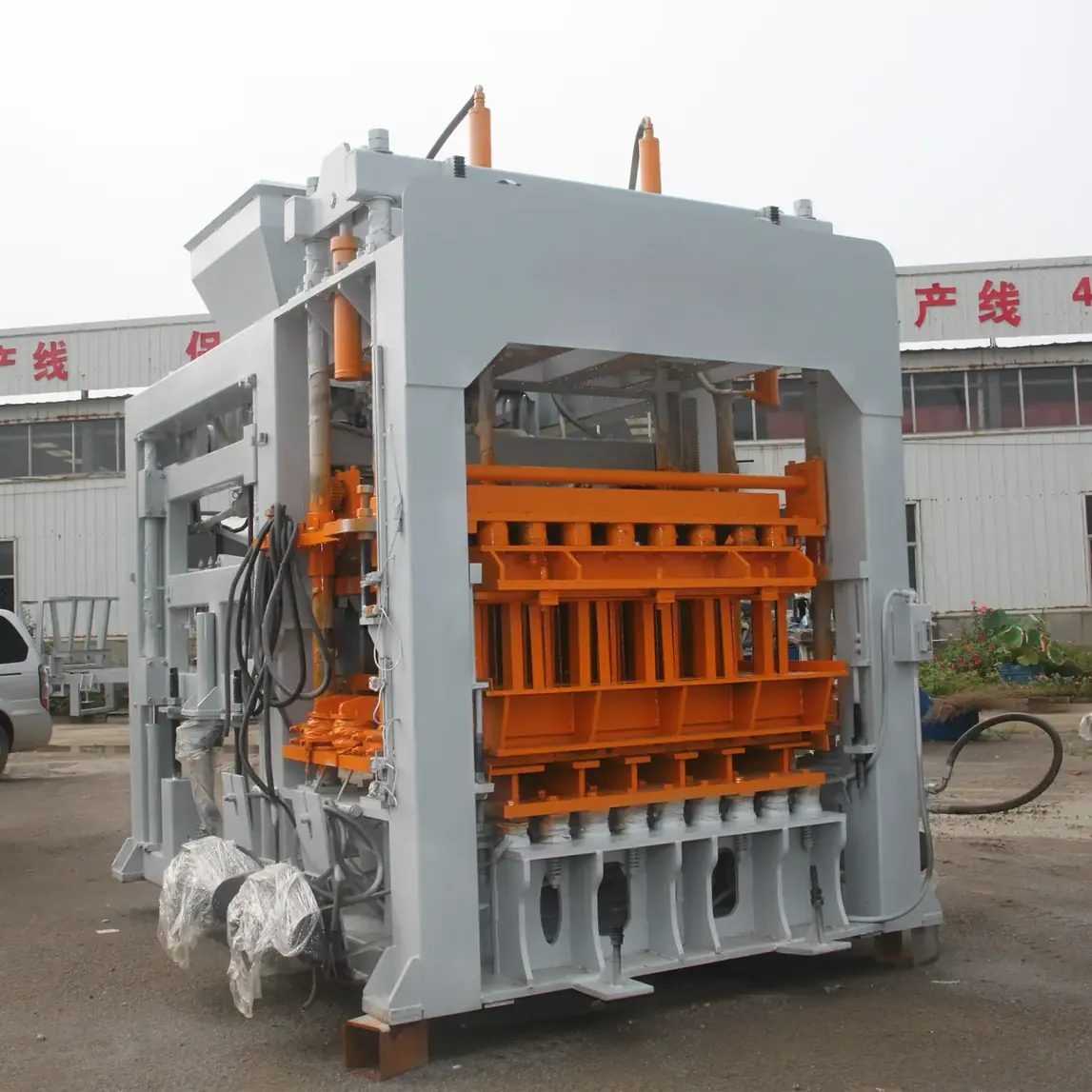
Automatic Concrete Block Machine
Hydraulic, PLC controlled machines and full production lines that mould four to twelve blocks per cycle for plants producing thousands of blocks a shift.
Every Automatic Concrete Block Machine We Publish
Six machines share the same principles: hydraulic pressure moulding, high-frequency vibration, wire cut and carburised moulds, and a PLC that runs feeding, distribution, moulding, demoulding and discharge. What separates them is blocks per cycle and vibration force, which is what decides shift output. The tables on each page are the published figures, not estimates.
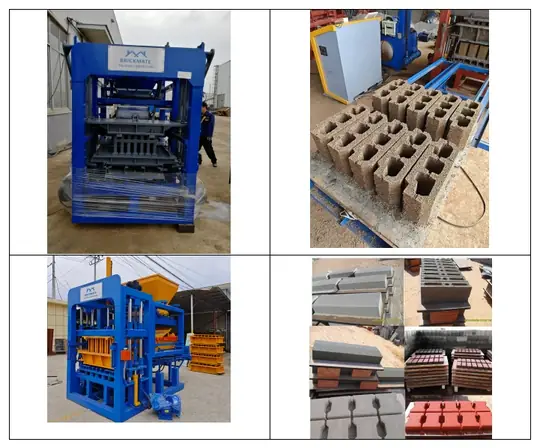
QT4-15 Automatic Concrete Hollow Block Making Machine
Full hydraulic automatic machine producing 5000 to 7000 standard blocks per 8 hour shift from sand, fly ash, slag, gangue or construction waste.
5000-7000 standard blocks per shift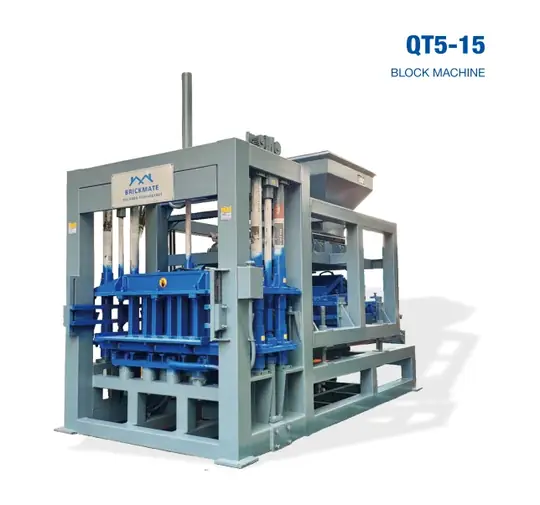
QT5-15 Automatic Paver And Block Making Machine
Medium scale automatic plant at 1200 blocks per hour, with a colour machine option for two-layer paving blocks.
1200 pcs/hour at 400 x 200 x 200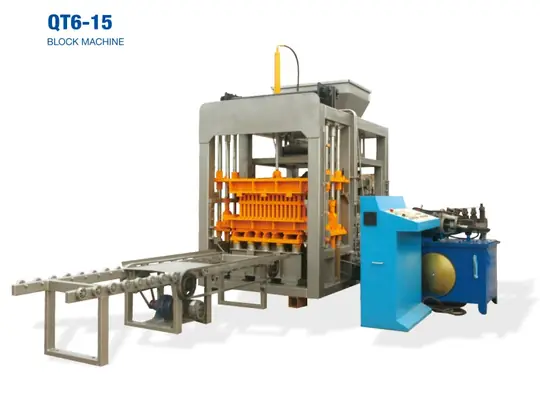
QT6-15 Medium Large Scale Cement Brick Machine
Hydraulic automatic press moulding six hollow blocks per cycle at 40.5 kW, for plants moving into medium large scale output.
1440 pcs/hour at 400 x 200 x 200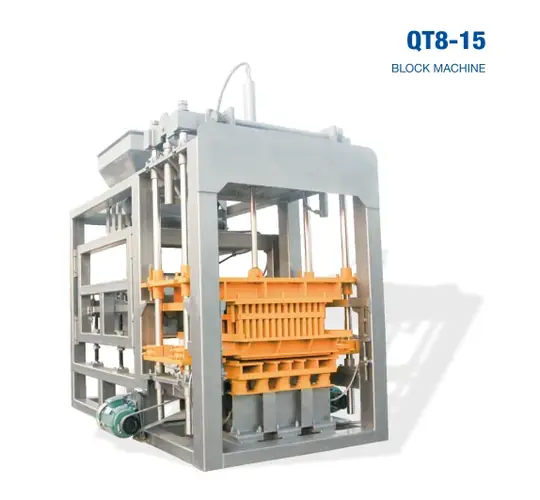
QT8-15 Automatic Hollow Block Making Machine
90 kN hydraulic automatic machine moulding eight hollow blocks per cycle, 15360 blocks per 8 hour shift.
1920 pcs/hour at 400 x 200 x 200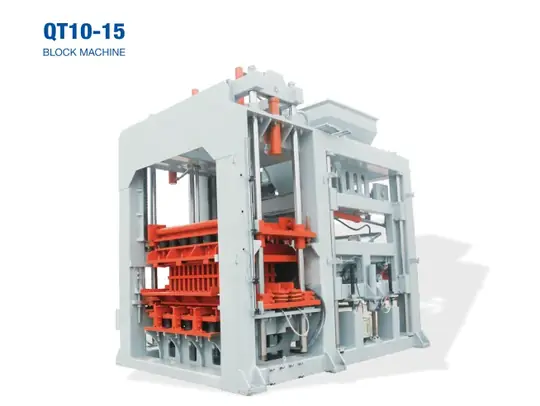
QT10-15 Full Automatic Concrete Block Production Line
Large production line with Siemens, Omron and Yuken components, 90 kN vibration and a published output table across seven block types.
3600-4800 pcs/hour at 400 x 100 x 200 hollow block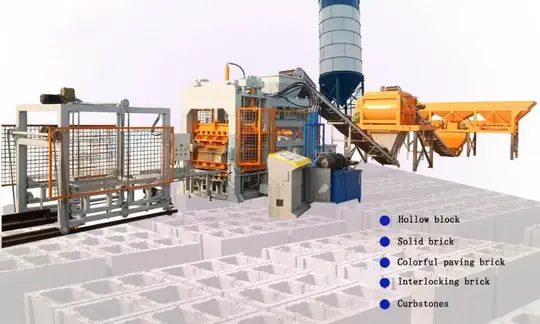
QT12-15 Full Automatic Concrete Block Production Line
Largest line in the range: twelve blocks per cycle, 102 kN vibration and 96000 standard bricks per 8 hour shift.
2880 pcs/hour at 400 x 200 x 200| Model | Vibration force | Power | Pallet size |
|---|---|---|---|
| QT4-15 | - | - | - |
| QT5-15 | 45-65 KN | 26.5 KW | 1070 x 550 mm |
| QT6-15 | 50-70 KN | 40.5 KW | 900 x 700 mm |
| QT8-15 | 90 KN | 40.5 KW | 960 x 870 mm |
| QT10-15 | - | 41.25 KW | - |
| QT12-15 | 102 KN | 52 KW | 1380 x 880 mm |
Problems This Family Solves
- Output that has plateaued because the press, not the market, is the constraint
- Block density and dimensions that vary from batch to batch on mechanical presses
- Labour cost that rises in step with every extra thousand blocks
- Unbranded electrical components that cause downtime on continuous shifts
Who It Is For
- Brick factories running one or two continuous shifts
- Municipal building material suppliers producing to a written specification
- Solid waste recycling plants with a steady fly ash, slag or gangue stream
- Producers replacing several semi automatic presses with one line
Why Buyers Choose This Range
- Vibration force published for every model, from 70 kN on the QT4-25 to 102 kN on the QT12-15
- Siemens or ABB motors with Omron or Schneider switches on the published models
- Moulds wire cut and carburised; the QT12-15 mould is rated 54-58 HRC and over 100,000 cycles
- Free plant layout and machine foundation drawings prepared for your workshop
Typical Application Scenarios
- Load-bearing and partition wall blocks for housing and commercial projects
- Standard solid bricks as a direct replacement for fired clay bricks
- Interlocking pavers and curbstones for municipal road and landscape contracts
- Recycled construction waste converted into certified wall material
Industries Using These Machines
Guides Covering This Family
- Curing Concrete Blocks After They Leave The Machine
- Block Machine Moulds And The Wear Parts Around Them
- Block Machine Pallets Selection And Care
- Spare Parts And Maintenance On A Continuous Block Line
- Raw Materials For Concrete Blocks And What Each One Changes
- Container Loading And Shipping A Block Plant
- Hollow Block Sizes And What Each One Costs You In Output
- How To Choose Block Machine Capacity Without Overbuying
- Vibration Force And Frequency And What They Do To Block Density
- Workshop Layout And Power Supply For A Block Plant
Automatic Concrete Block Machine Questions
Which automatic model should we start with?
Do these machines need a concrete foundation?
What is the difference between vibration force and vibration frequency?
Can we change the block size later?
Get The Automatic Concrete Block Machine Data Pack
Tell us which models you are shortlisting and the block sizes you need. The specifications, capacity tables and a configuration list come back.