
- Home
- Knowledge Center
- How To Choose Block Machine Capacity Without Overbuying
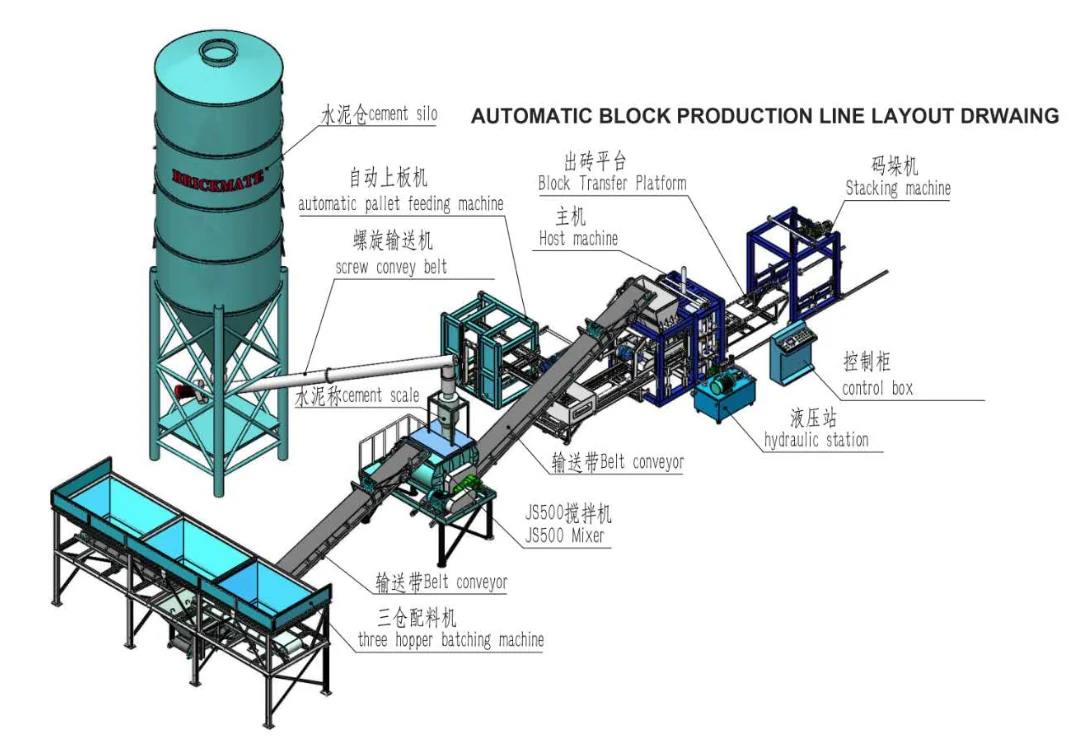
How To Choose Block Machine Capacity Without Overbuying
Machine capacity is decided by blocks per mould and cycle time, not by the model number. Here is how to work backwards from your order book.
Start From Blocks Per Shift Not Model Numbers
Every BRICKMATE capacity table gives three numbers for each block size: pieces per mould, pieces per hour and pieces per 8 hours. Those are the numbers to compare, because a model designation tells you nothing on its own. The QT4-15 produces 5,000 to 7,000 standard blocks per 8 hour shift. The QT6-15 produces 11,520 hollow blocks at 400 x 200 x 200 mm. The QT8-15 produces 15,360 and the QT12-15 produces 23,040 in the same size. Take your peak monthly demand, divide by working days and by shifts, and the shortlist writes itself.
Blocks Per Mould Is The Real Multiplier
Cycle times across the automatic range barely vary: 15 to 20 seconds on the QT4-15, QT5-15, QT6-15, QT8-15 and QT12-15, and 12 to 25 seconds on the QT10-15. What changes is how many blocks the mould holds. Five on the QT5-15, six on the QT6-15, eight on the QT8-15, ten on the QT10-15 and twelve on the QT12-15. That is why output roughly doubles between the QT5-15 and the QT12-15 while the cycle stays the same.
Small Blocks Change The Arithmetic Completely
A mould that holds ten 400 x 200 x 200 mm hollow blocks holds fifty 230 x 110 x 70 mm solid bricks. On the QT10-15 that is the difference between 1,800 to 2,100 pieces per hour and 7,800 to 12,500 pieces per hour. If most of your sales are solid bricks or pavers, size the machine on that product rather than on the largest hollow block.
Leave Headroom For Real Conditions
Every published capacity note on the source specifications says the same thing: capacity is indicative only and actual capacity varies with operator efficiency and material quality. Treat the published figure as the ceiling of a well-run shift, not as an average, and size with room above your current demand.
Machines Referenced In This Guide
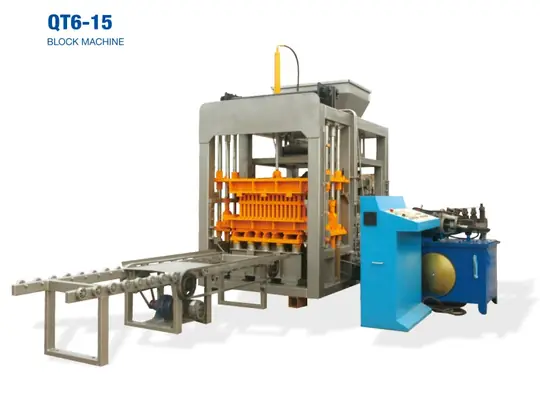
QT6-15 Medium Large Scale Cement Brick Machine
Hydraulic automatic press moulding six hollow blocks per cycle at 40.5 kW, for plants moving into medium large scale output.
1440 pcs/hour at 400 x 200 x 200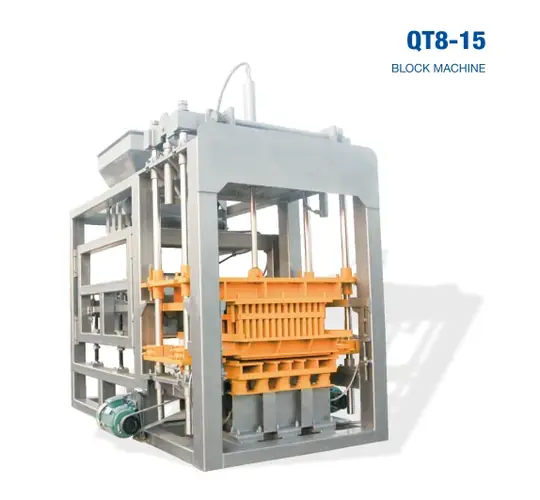
QT8-15 Automatic Hollow Block Making Machine
90 kN hydraulic automatic machine moulding eight hollow blocks per cycle, 15360 blocks per 8 hour shift.
1920 pcs/hour at 400 x 200 x 200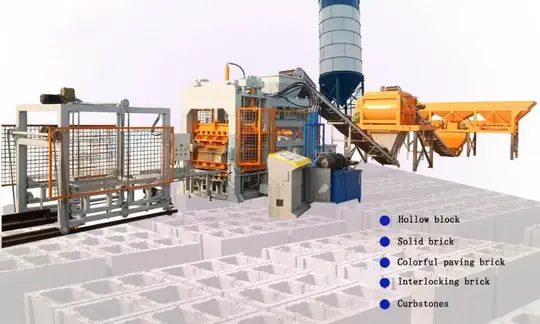
QT12-15 Full Automatic Concrete Block Production Line
Largest line in the range: twelve blocks per cycle, 102 kN vibration and 96000 standard bricks per 8 hour shift.
2880 pcs/hour at 400 x 200 x 200Questions About This Guide
Is a bigger machine always cheaper per block?
Which number should go in a business plan?
Can capacity be increased later?
Put This Into Practice
Send the block sizes and the output you need, and a machine recommendation with the published capacity table comes back.