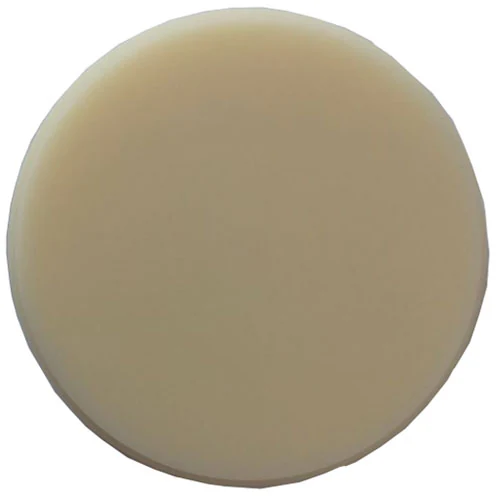
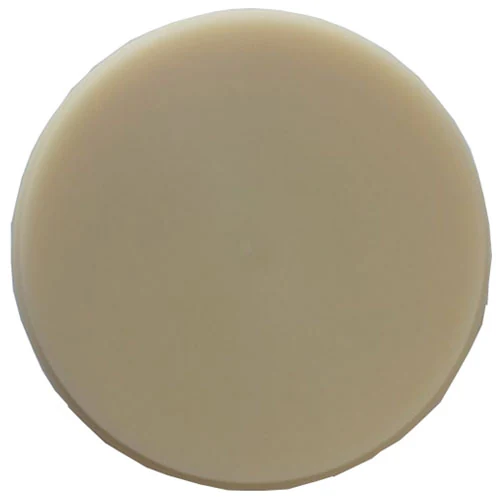
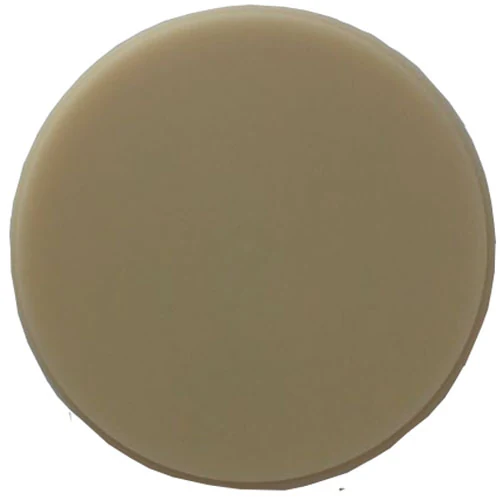
Three Materials One Workflow
These are not three competing options. In a working digital laboratory they are three stages: wax or PMMA to verify and provisionalise, zirconia to deliver. Treating them as alternatives is what leads labs to commit expensive material to designs that have not been checked.
Milling Wax
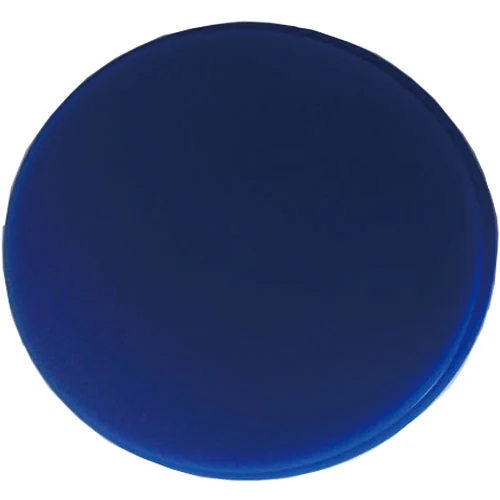
Milled wax produces castable patterns for pressing or conventional casting, and physical try-ins for checking a design. It mills fast and cheaply. Its limitation is fragility: thin sections chip if handled carelessly.
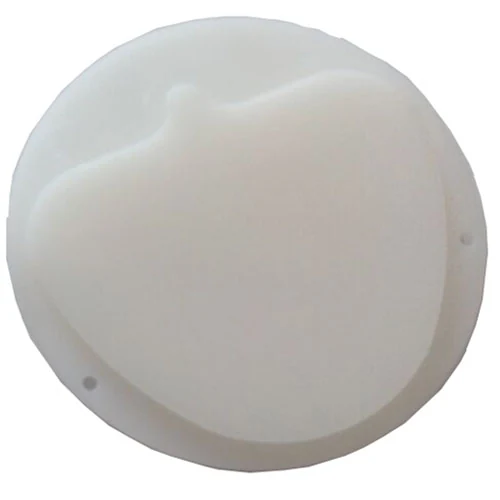
Colour is purely an inspection aid. Blue and grey give better contrast for checking margins; white resembles the final restoration for appearance try-ins.
PMMA
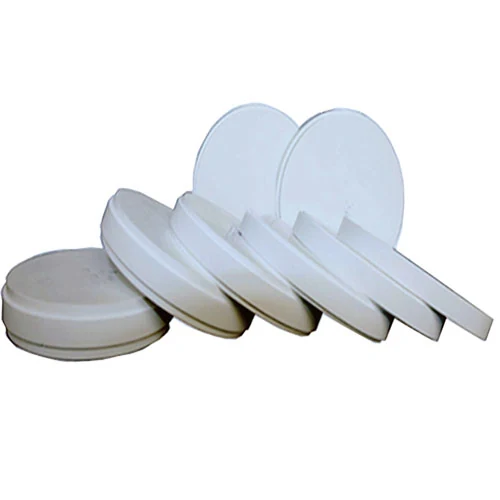
Milled PMMA is denser and more homogeneous than chairside self-cure acrylic, which is why it has become the standard for provisionals expected to last months rather than days. It is used for long-term provisionals, implant provisionals during healing, and aesthetic try-ins.
Available in clear and tooth shades, in 98 mm and 95 mm diameters. The diameters are not interchangeable, so check the machine's holder before ordering.
Zirconia
The definitive material: milled oversized, then sintered to final dimensions. Strength and fit come from a homogeneous industrial material rather than from technique.
The variable that matters is the shrinkage factor, which is batch-specific and supplied with the disc. Entering a remembered factor instead of the one printed on the batch in the machine is a common and entirely avoidable source of fit error.
Formats and Holders
98 mm is the common open-system format. 95 mm exists for certain machines. Amann Girrbach holders take their own cut. None of these are interchangeable, and a wrong-format disc is dead stock, so confirm the holder before the first order rather than after it.