Why Restorations Are Fired on Pins
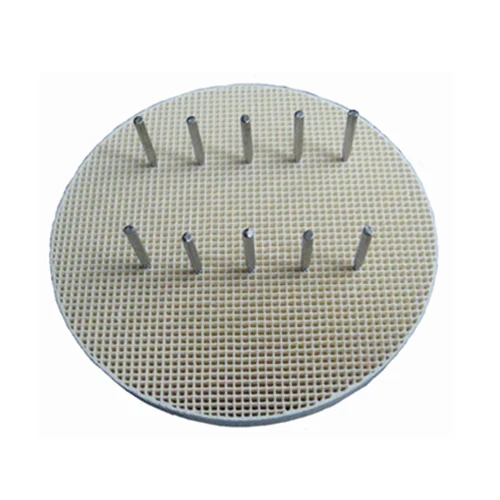
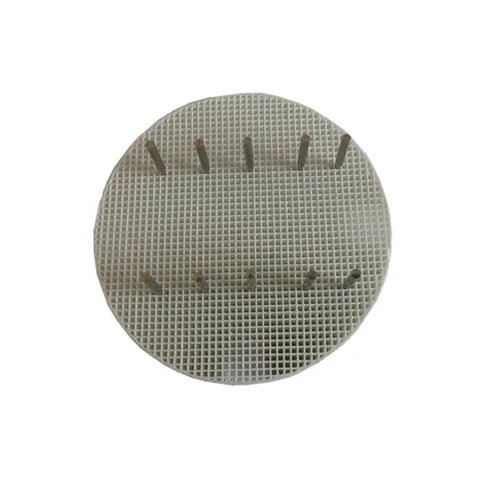
A restoration resting directly on a tray heats unevenly: the contact area conducts heat differently from the exposed surfaces, and the contact point leaves a mark. Pins support the unit clear of the surface so heat reaches it from all directions.
Choosing the Format
Round trays suit round furnace chambers and make the best use of the available area. Square trays fit square chambers and are easier to organise case by case. Multistation trays carry a full case in a single cycle, which matters when furnace time is the bottleneck.
Sizing is simple: measure the internal chamber and choose a tray that leaves clearance all round. A tray that touches the chamber wall heats unevenly on that side.
Ceramic Pins
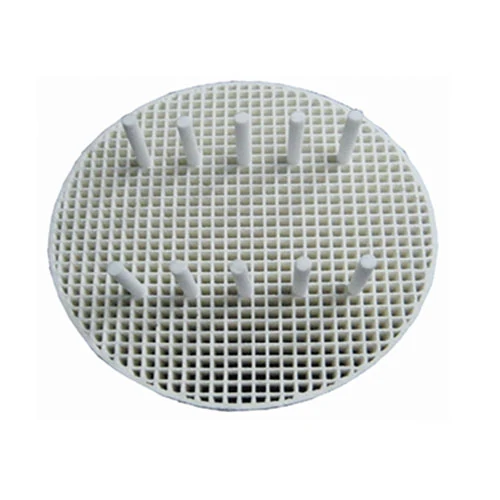
Ceramic pins conduct less heat into the restoration and do not oxidise. Over repeated high-temperature cycles they stay dimensionally stable, which is why they are the usual choice for porcelain work.
Metal Pins
Metal pins are more robust in handling and cheaper to replace. They conduct more heat and will oxidise over time. For general work where trays are handled frequently, they are entirely serviceable.
System-Specific Pins
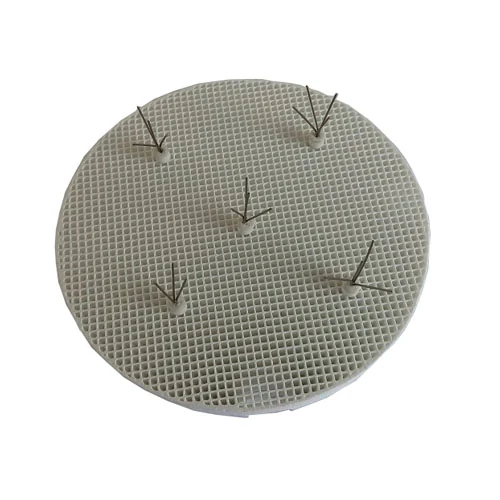
Some furnace and tray systems, Amann Girrbach among them, use their own pin format. These are not interchangeable with generic pins and are catalogued separately for that reason.
Replace Pins as a Set
Pins distort slowly with repeated firings. Replacing one pin in a tray of twenty leaves nineteen at a slightly different height, which is exactly the inconsistency the tray is supposed to remove. Change them as a set.