
The Property That Matters
An articulator has exactly one job: to return to the same position every time it closes. An instrument that does not do this is worse than no instrument, because the technician trusts it and builds occlusion against a moving reference.
Before anything else, check that the instrument closes repeatably into centric. A worn hinge is not a cosmetic problem.
Fixed Instruments
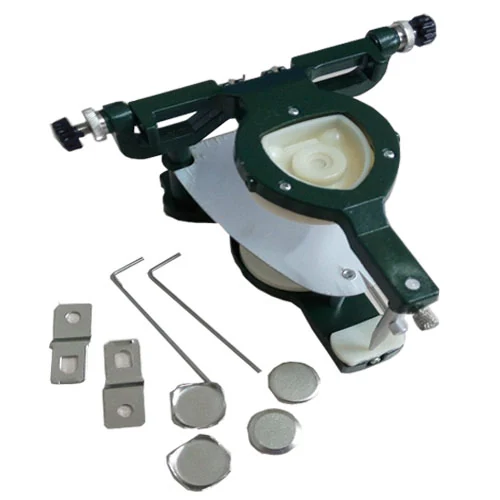
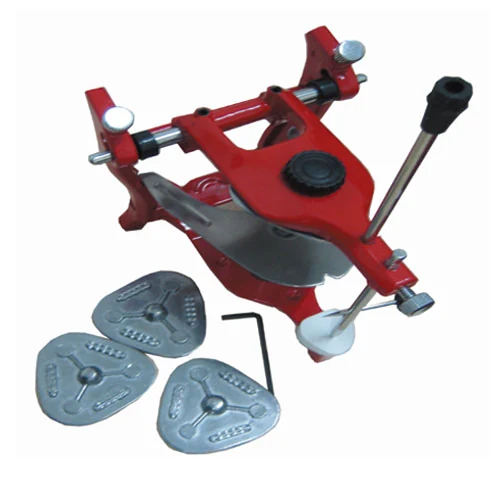
Alloy and brass articulators in various sizes cover most routine work. Brass is heavier and more rigid; alloy is lighter and cheaper. Size is chosen by the arch and by how much space the technician needs around the case.
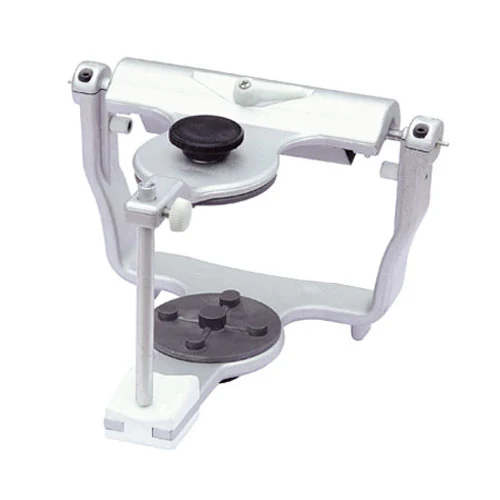
Magnetic Instruments
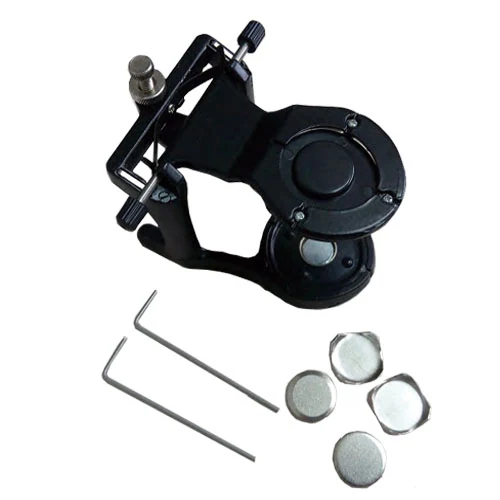
Mounted plates lift off the magnet and return to the same position. This is the practical advantage: a case can leave the instrument for another operation and come back without remounting. For laboratories that move cases between benches, it saves real time.
Disposable Instruments
Appropriate for single cases that leave the laboratory and for high-volume simple work where tying up a returnable instrument makes no sense. Not appropriate for anything requiring repeated remounting over a long case.
Spring and Specialty Types
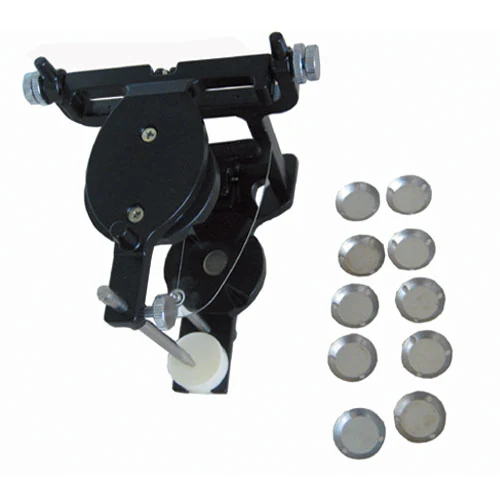
Spring articulators hold closure under light tension, which suits certain denture procedures. Match the instrument to the procedure rather than buying one type for everything.