
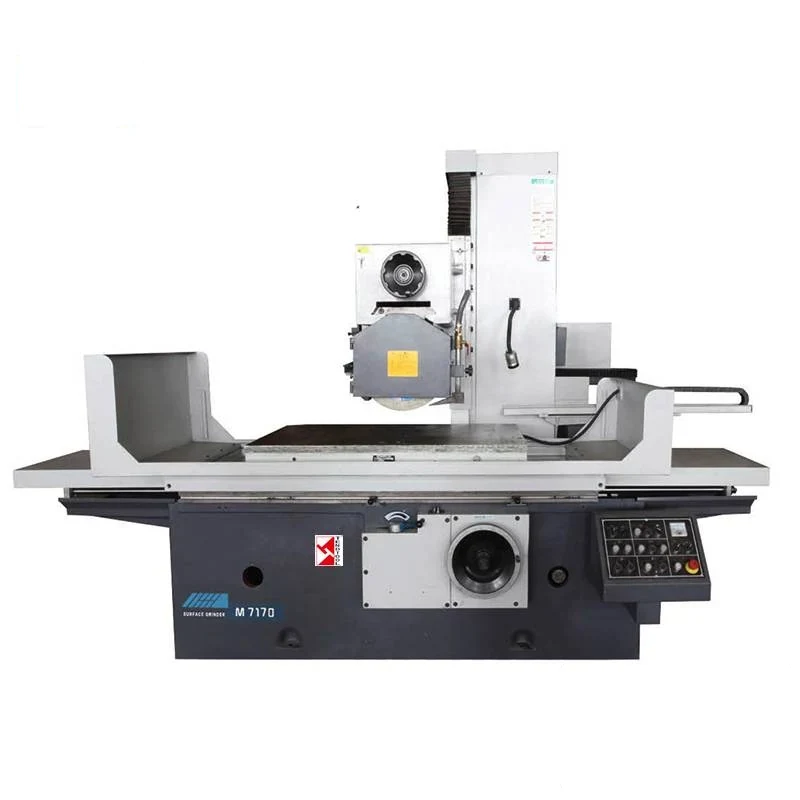
Surface Grinding Machine M7150/M7163/M7170/M7180
The M71 series grinds flat faces on steel, cast iron and non-ferrous parts for the machine manufacturing trade, in sizes from the M7150 up to the M7180 with its 2100mm table. These are the machines you put a part on when a milled face is not flat enough or not smooth enough for what comes next. Two wheel spindle builds...
What This Machine Does
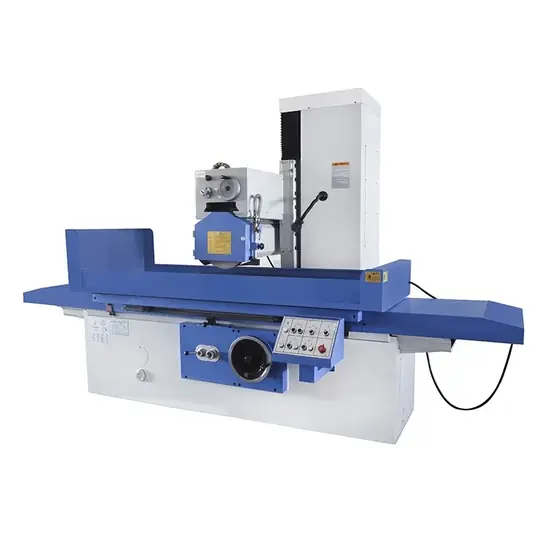
The M71 series grinds flat faces on steel, cast iron and non-ferrous parts for the machine manufacturing trade, in sizes from the M7150 up to the M7180 with its 2100mm table. These are the machines you put a part on when a milled face is not flat enough or not smooth enough for what comes next. Two wheel spindle builds are offered: high precision rolling bearings, and a hydrodynamic-hydrostatic bearing spindle where the oil film carries the load. Both are built rigid, because rigidity is what stops a wide wheel from chattering across a long face. The table traverses under hydraulic transmission, so feed stays even along the full stroke rather than surging at the ends. The machine carries a special hydraulic device and an automatic lubrication system, so the slideways are fed without an operator remembering to do it, and controls are grouped on a cantilever push-button unit at working height. Machine weights run from 2000kg up to 13500kg across the series.
Why Buyers Choose This Machine
- Grinds flat faces on steel cast iron and non-ferrous parts to a finish milling cannot reach
- Choice of high precision rolling bearing or hydrodynamic-hydrostatic wheel spindle to suit the accuracy you need
- Rigid spindle construction resists chatter when a wide wheel crosses a long face
- Hydraulic table traverse keeps feed even along the whole stroke
- Automatic lubrication system feeds the slideways without depending on an operator routine
- Cantilever push-button control unit puts the controls at working height beside the table
- Four sizes from M7150 to M7180 so table length is matched to the work rather than oversized
Where Surface Grinding Machine M7150 Earns Its Place
Problems It Solves
- A milled face is not flat or smooth enough to seal bolt down or slide on
- Hardened parts distort in heat treatment and need a flat reference restored
- Chatter marks from a flexible spindle leave a face that has to be reground
- Uneven table feed at the stroke ends leaves witness marks along the part
- Missed slideway lubrication wears the ways and the accuracy goes with them
- Grinding a long part in two setups leaves a step where the setups meet
Who It Is For
- Machine tool manufacturers grinding their own beds and slides
- Die and mould shops flattening plate and bolster faces
- Heavy engineering workshops finishing hardened components
- Subcontract grinding shops taking in flat work
- Distributors supplying surface grinders to the machine manufacturing trade
Application Scenarios
- Finishing machine tool bed and slide faces after milling
- Grinding die and mould plate faces flat and parallel
- Surface grinding hardened steel components after heat treatment
- Flattening cast iron housings and covers for sealing faces
- Grinding non-ferrous plate and fixture bases
- Long-bed work on the M7180 where a 2100mm table is needed in one setup
Technical Detail
Technical Features
- Wheel spindle on high precision rolling bearings with rigid construction
- Alternative wheel spindle on high precision hydrodynamic-hydrostatic bearings
- Hydraulic transmission of lengthways worktable movement
- Special hydraulic device
- Automatic lubrication system
- Cantilever push-button control device
- Table sizes up to 2100mm on the M7180
- Suitable for steel cast iron and non-ferrous metal parts
Specifications
| Machine type | Horizontal spindle surface grinding machine |
|---|---|
| Models | M7150 / M7163 / M7170 / M7180 |
| Workpiece materials | Steel, cast iron and non-ferrous metals |
| Wheel spindle options | High precision rolling bearing, or hydrodynamic-hydrostatic bearing |
| Table movement | Lengthways hydraulic transmission |
| Lubrication | Automatic lubrication system |
| Controls | Cantilever push-button device |
| Table length range | Up to 2100mm across the series |
| Machine weight | 2000kg to 13500kg depending on model |
Figures above are taken from the product information we hold. Send us your application and we will confirm the exact specification for the model quoted.
How It Is Built and What Can Be Changed
Operations Performed
- Surface grinding
- Flat face grinding
- Parallel face grinding
Materials Handled
- Steel
- Cast iron
- Non-ferrous metal
Quality Control
- Wheel spindle run-out measured on the assembled machine for both bearing builds
- Table flatness and parallelism checked along the full traverse length
- Hydraulic transmission tested for even feed at both ends of the stroke
- Automatic lubrication system verified as delivering to every slideway point
- Test grind run on a sample plate with flatness and surface finish checked before packing
Customisation Options
- Model selected from M7150 M7163 M7170 or M7180 against your workpiece size
- Wheel spindle specified as rolling bearing or hydrodynamic-hydrostatic to suit your accuracy target
- Supply voltage phase and frequency built for your market
- Grinding wheel specification and magnetic chuck chosen for your material and part size
- Manual and control markings prepared in your working language
How It Compares With the Alternatives
| Face milling | Milling removes metal fast but leaves a tool-marked face; the grinder is what brings it flat and smooth, and it works on hardened material where a milling cutter will not |
|---|---|
| XAIMC cylindrical grinders M1320 and M1420 series | Those grind round external and internal surfaces; the M71 series grinds flat faces. Most shops end up with both rather than choosing between them |
| The rolling bearing spindle build on the same machine | The hydrodynamic-hydrostatic spindle runs on an oil film, which damps vibration for the finest work; the rolling bearing build is the simpler machine to service |
| Hand scraping a flat reference | Scraping is skilled and slow; the machine gives a repeatable flat face across a batch of parts |
Running the Machine
Step 1
Clean the chuck and seat the workpiece with no swarf trapped under it
Step 2
Let the machine run until the spindle and hydraulics reach working temperature
Step 3
Dress the wheel before beginning the component
Step 4
Set the lengthways hydraulic traverse to cover the part with a clean run-out at each end
Step 5
Take light passes with coolant on the contact so heat does not distort the part
Step 6
Spark out on the final pass and measure flatness off the machine
Step 7
Check the automatic lubrication system delivery as part of routine maintenance
Other Machines in Grinding
Related Applications and Guides
General Machining Job Shops
Job shops take whatever work comes through the door, which means their equipment has to cover a wide range rather than do one thing perfectly. XAIMC s
Heavy Equipment and Plant Maintenance
Mines quarries plantations and processing plants cannot wait for imported spares. XAIMC supplies the boring gear cutting turning and grinding machines
Surface Grinder vs Cylindrical Grinder - Selecting the Right Machine
A surface grinder finishes flat faces held on a table, while a cylindrical grinder finishes round diameters held between centres or in a chuck. This c
Questions About Surface Grinding Machine M7150
Which model should we choose?
By part size. The series runs M7150 M7163 M7170 and M7180, with tables up to 2100mm on the largest. Send us the largest part you need to grind in one setup and we will confirm the model.
What is the difference between the two spindle options?
One uses high precision rolling bearings, the other high precision hydrodynamic-hydrostatic bearings. Both are rigid builds. The hydrodynamic-hydrostatic spindle runs on an oil film and is the choice where surface finish and vibration matter most; the rolling bearing build is simpler to service.
What materials can it grind?
Steel, cast iron and non-ferrous metals. Tell us your material and hardness and we will recommend the wheel specification with the machine.
How heavy are these machines?
From 2000kg up to 13500kg depending on the model. Confirm the model with us and we will give you the crated weight and dimensions for your forwarder.
What flatness can we expect on our parts?
That depends on part size, material, fixturing and how the part was heat treated. Send us the drawing with your flatness and finish requirement and we will tell you whether the machine holds it before you order.
Can it be supplied for our supply voltage?
Yes. Confirm your voltage phase and frequency at enquiry and the machine is wired for your market.
What are your payment and trade terms?
FOB CFR and CIF. Payment is 30 percent by T/T on order and 70 percent before shipment, or an irrevocable L/C at sight.
Request a Quote on the Surface Grinding Machine M7150
Send us the work you need it to do, the voltage on your site and the port you ship to. We will come back with the model, the tooling and the lead time.