
Surface Grinder vs Cylindrical Grinder - Selecting the Right Machine
A surface grinder finishes flat faces held on a table, while a cylindrical grinder finishes round diameters held between centres or in a chuck. This comparison is for toolroom managers and workshop buyers deciding which grinding machine their parts actually need, and when a shop needs both.
Grinding Machines Are Named After the Geometry They Produce
The simplest way to keep grinding machine types straight is to remember that each one is named for the shape it creates, not for the material it works on. A surface grinder produces flat surfaces. A cylindrical grinder produces round external and, on universal machines, internal diameters. A centreless grinder produces round diameters without holding the part on centres. A tool and cutter grinder produces the relieved angles on cutting tools.
All of them remove small amounts of material with an abrasive wheel to reach a dimension and a surface finish that turning or milling cannot economically hold, particularly after heat treatment when the material is too hard to cut with a single point tool. So the buying question is never which grinder is better; it is which geometry your parts need and how they can be held while it is produced.
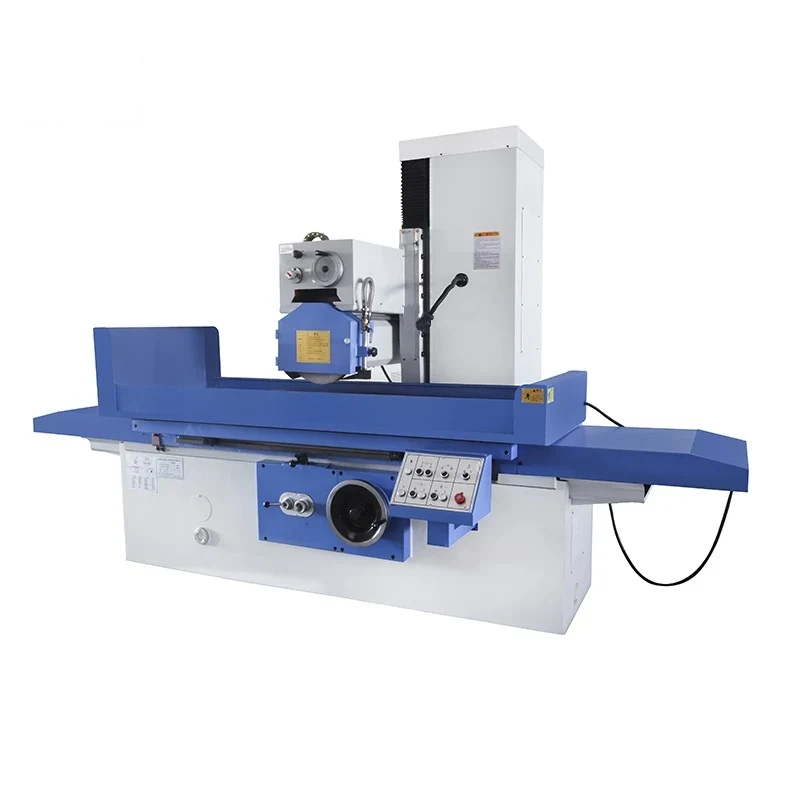
What a Surface Grinder Does
A surface grinder holds the work on a table, almost always on a magnetic chuck, and passes it under a rotating wheel. The table reciprocates along its length while the wheel head is stepped across and fed down, so the wheel sweeps the whole face. What comes out is a flat surface with a controlled finish, parallel to the face the part sits on.
This is the machine behind most toolroom work: die blocks, punch and die plates, gauge blocks, jig components, parallels, machine slides and any hardened part that has to be flat and to size. It is also the machine that produces the reference faces that other operations are set from, which is why a good surface grinder tends to be the most used machine in a toolroom.
Surface grinders range from small manual bench machines used for tooling and repair through to larger machines with powered cross feed and hydraulic table traverse for production. The larger the table, the more useful the machine on long slides and plates, but the more floor space and foundation care it demands.
- Produces flat faces and parallel surfaces
- Work held on a magnetic chuck or in fixtures on the table
- Typical parts - die plates, jigs, slides, gauges, hardened flat components
- Produces the reference surfaces other operations are set from
What a Cylindrical Grinder Does
A cylindrical grinder rotates the workpiece about its own axis while a wheel grinds the outside diameter. The part is held between centres, in a chuck or in a collet, and the table traverses so the wheel covers the length of the diameter. Because the part turns about its centres, the result is a diameter that is round and concentric to those centres, with the finish and size control that a bearing journal or a shaft seal surface requires.
Universal cylindrical grinders add a swivelling table for taper grinding and often an internal grinding attachment for bores. The swivel is what lets one machine produce tapers, shoulders and stepped shafts rather than only plain diameters, and it is the reason universal machines are common in toolrooms and repair shops that see mixed work.
Typical parts are shafts, spindles, pins, rolls, hydraulic rods, gear blanks and any journal that runs in a bearing or a seal. In engine work, crankshaft grinding is a specialised form of cylindrical grinding where the machine is built to offset the part so that big end journals can be ground about their own axis.
- Produces round external diameters and, with an attachment, internal bores
- Work held between centres, in a chuck or in a collet
- Universal machines swivel for taper grinding
- Typical parts - shafts, spindles, pins, rolls, journals
Work Holding Decides More Than People Expect
The practical difference between the two machines shows up in how the part is held. A surface grinder relies on a magnetic chuck, which is fast and leaves the whole top face accessible, but it only works on ferrous material and it holds against grinding forces by friction. Thin parts can lift or distort under magnetic pull, and non-magnetic materials need mechanical fixturing.
A cylindrical grinder relies on centres, and the quality of the centres in the part is the quality of the ground diameter. Worn, dirty or badly formed centre holes translate directly into runout, so shops doing serious cylindrical work keep a centre lapping or re-cutting routine. Where the part has no usable centres, a chuck or collet is used and concentricity then depends on the chuck rather than the part.
This is also where the centreless grinder earns its place: it supports the part on a blade between a grinding wheel and a regulating wheel, with no centres and no chuck. For high volumes of pins, rollers and plain shafts, it removes the loading time that dominates cycle time on a centres machine.
Accuracy Finish and Wheel Practice
Both machine types reach the surface finish and dimensional control that define grinding, but they are sensitive to different things. On a surface grinder, flatness depends on the machine's ways, on the chuck being ground true in place, and on the part not being heated and distorted by taking too much in one pass. On a cylindrical grinder, roundness depends on centres, on steady rests where the part is slender, and on the wheel being balanced and dressed properly.
Wheel dressing is the operation that decides finish on both machines. A wheel that has glazed or loaded will rub, generate heat and burn the surface rather than cut it. A dressed wheel cuts freely. Buying a grinder without a proper dressing arrangement and the discipline to use it is the fastest route to disappointment with an otherwise good machine.
Coolant matters for the same reason. Grinding puts heat into a small area, and on a hardened part that heat can cause surface cracking or softening that is invisible until the part fails in service.
- Dress wheels regularly rather than grinding with a glazed wheel
- Grind the magnetic chuck true in place on a surface grinder
- Maintain clean, correctly formed centres for cylindrical work
- Use steady rests on slender shafts to avoid deflection
Which Machine Does a Shop Need First
For a toolroom, a die shop, a mould shop or a general maintenance workshop, the surface grinder is almost always the first grinding machine. Flat, parallel, hardened surfaces are the everyday requirement, and a surface grinder is used almost daily once it is installed.
For a shop making or repairing shafts, spindles, rolls or hydraulic components, the cylindrical grinder comes first because nothing else will hold the diameter and the finish those parts need after hardening. Repair shops in particular benefit from a universal machine with an internal attachment, since incoming work is unpredictable.
For a shop producing large quantities of identical plain diameters, a centreless grinder outperforms both. And for a shop that sharpens its own milling cutters, reamers and form tools, a universal cutter and tool grinder is a separate and worthwhile machine that neither of the other two replaces.
Installation Foundation and Environment
Grinding machines are more sensitive to their surroundings than most machine tools. Vibration from a nearby press or saw shows up as chatter marks on ground surfaces, so place grinders away from impact machines and on a proper foundation. Level the machine on installation and check level again after the machine has settled.
Temperature stability helps too. Where a shop grinds to tight tolerances, letting parts and machine reach a stable temperature before final passes avoids chasing a dimension that moves as the part cools. Swarf and grinding dust are abrasive, so plan guarding, extraction and a cleaning routine that keeps grit off the ways.
Confirm voltage, phase and frequency at the order stage, and ask XAIMC for foundation and installation drawings and crated dimensions so the machine can be positioned before it arrives.
Enquiry Checklist
The specification becomes straightforward once these points are written down. Send them to XAIMC with your enquiry and the machine recommendation can be made against your actual parts.
- Geometry required - flat faces, external diameters, bores, tapers or tool angles
- Largest part dimensions and weight, and the longest diameter to be ground
- Materials and whether parts are hardened
- Surface finish and tolerance expected on the critical feature
- Work holding available - magnetic chuck, centres, chucks, collets, steady rests
- Production volume and whether loading time drives the cycle
- Voltage, phase, frequency and available floor area
Related Machines From XAIMC
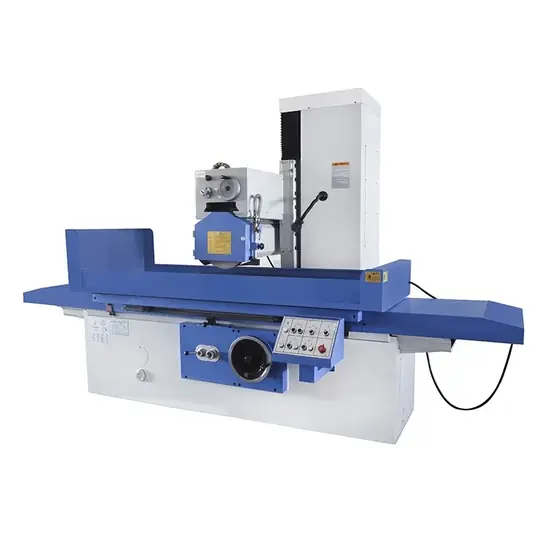
Surface Grinding Machine M7120/M7130/M7140
View Machine →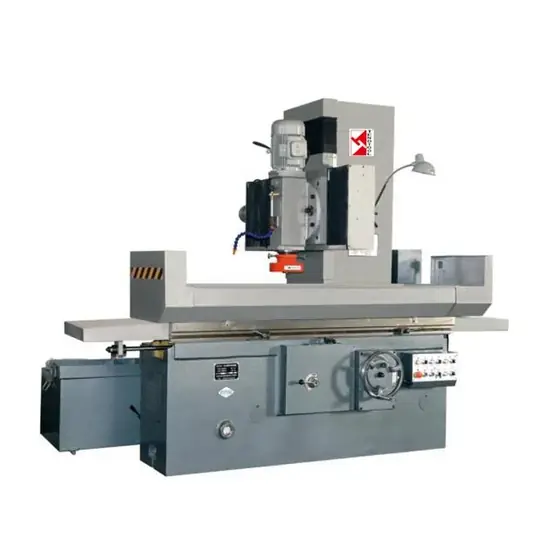
Surface Grinding Machines M7232/M7240
View Machine →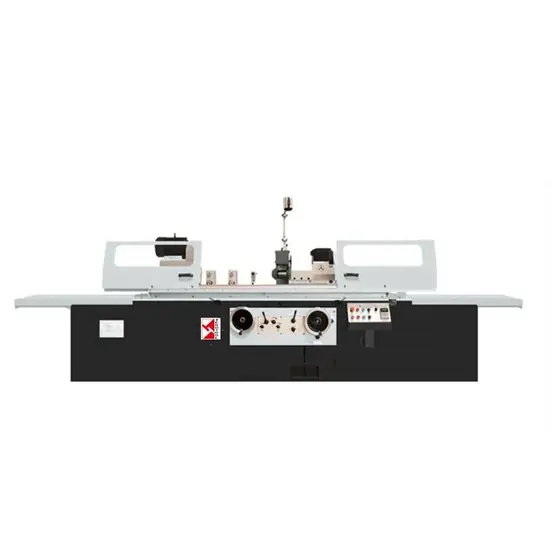
External Cylindrical Grinder M1320/M1332/M1350
View Machine →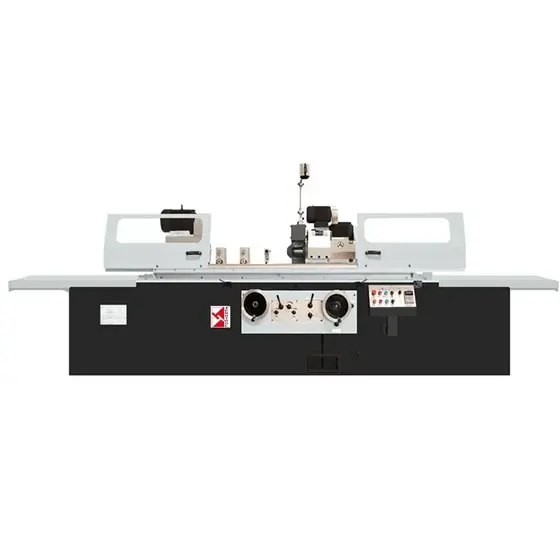
Conventional Universal Cylindrical Grinding Machine M1420/M1432/1450/M1463
View Machine →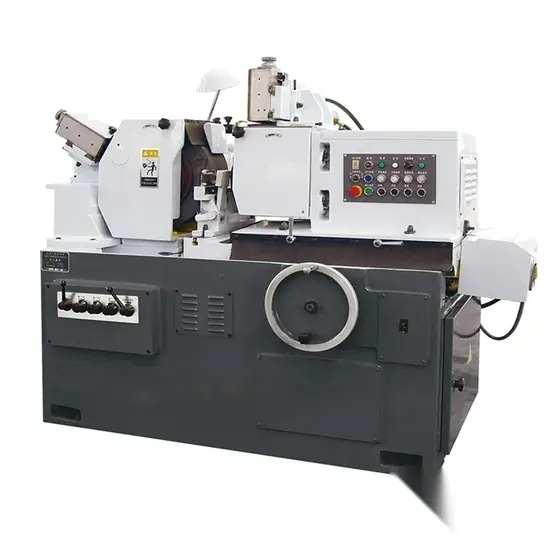
Centerless Grinding Machine M1050/M10100A
View Machine →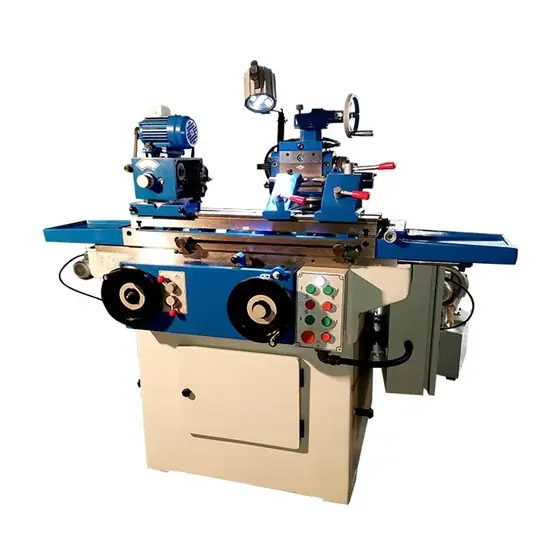
2M9120A Universal Cutter Tool Grinder
View Machine →Related Categories
Questions on This Topic
Can a cylindrical grinder also grind flat faces
It can grind the face of a shoulder or an end face to a limited extent, but it is not a substitute for a surface grinder on plates and die components. If flat, parallel surfaces are your regular requirement, a surface grinder is the correct machine.
What does a universal cylindrical grinder add over a plain one
A swivelling table for taper grinding and, where fitted, an internal grinding attachment for bores. That flexibility suits toolrooms and repair shops where incoming work varies, which is why universal machines are the common choice outside dedicated production.
When is a centreless grinder the right answer
When you grind large quantities of plain diameters such as pins, rollers and shafts, and loading the part on centres dominates the cycle. Centreless grinding removes that loading time, but it is less suited to short runs and complex parts.
Why do ground surfaces show burn marks
Usually a glazed or loaded wheel that is rubbing instead of cutting, too heavy a down feed, or insufficient coolant reaching the contact area. Dress the wheel, reduce the infeed and check coolant delivery before looking for other causes.
Do grinding machines need a special foundation
They need a stable, level foundation and separation from vibration sources such as presses and saws, since vibration shows up directly as chatter on the ground surface. Request the foundation and installation drawings from XAIMC before the machine ships.
Is a tool and cutter grinder a substitute for either machine
No. A universal cutter and tool grinder is built to sharpen cutting tools by producing relief and rake angles, not to finish flat plates or long diameters. Shops that sharpen their own cutters treat it as a third, separate machine.
Apply This to Your Own Workshop
Send us your parts, your volumes and your site conditions and we will answer for your case rather than the general one.