
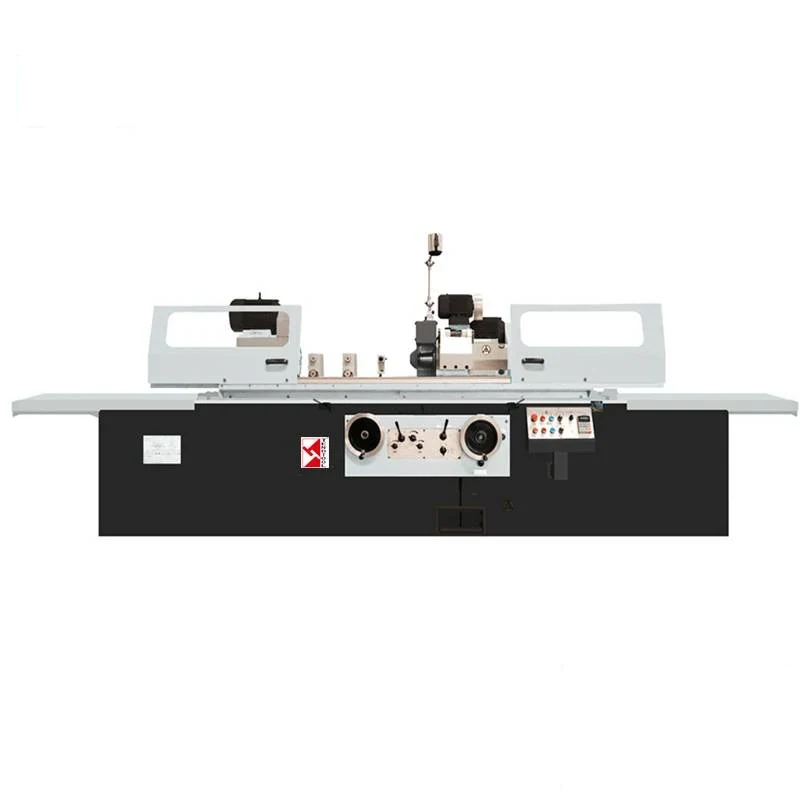
Conventional Universal Cylindrical Grinding Machine M1420/M1432/1450/M1463
The M1420, M1432, M1450 and M1463 are conventional universal cylindrical grinders for shops that grind both parallel and conical work on the same machine. For conical grinding the table swivels to either side and is positioned exactly against a scale, so a taper is set from a datum rather than dialled in by trial cuts....
What This Machine Does
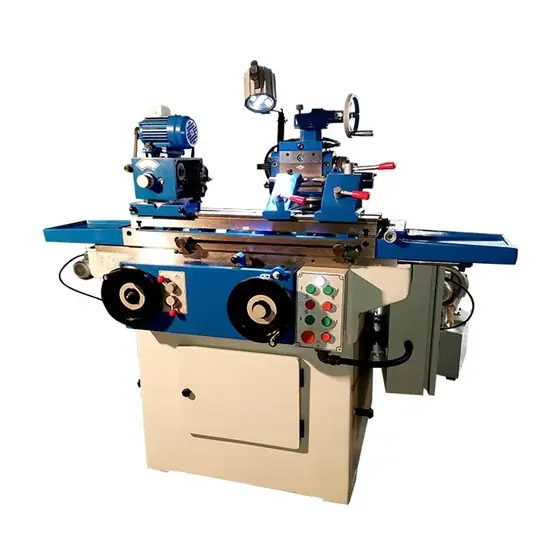
The M1420, M1432, M1450 and M1463 are conventional universal cylindrical grinders for shops that grind both parallel and conical work on the same machine. For conical grinding the table swivels to either side and is positioned exactly against a scale, so a taper is set from a datum rather than dialled in by trial cuts. The spindle runs in adjustable sliding bearings made up of three segments and is mounted from both sides, and an oil film between bearing and spindle keeps vibration to a minimum, which is what puts the finish on the part. The grinding head is solid and the spindle head is precisely balanced, so the machine behaves the same whether it is taking a roughing pass or a spark-out. The base is built with strong reinforcements and solidly designed panels, which makes it resistant to temperature fluctuation and deformation. That matters in a shop without climate control, because a base that moves with the ambient temperature takes the accuracy with it. The bearing segments are adjustable, so spindle clearance can be reset in service.
Why Buyers Choose This Machine
- Table swivels either side and locks against a scale so conical work is set from a datum not by trial
- Oil film between bearing and spindle keeps vibration down which is what holds the surface finish
- Three-segment sliding bearings are adjustable so spindle clearance can be reset in service rather than replaced
- Spindle mounted from both sides so it is supported at each end under grinding load
- Precisely balanced spindle head and solid grinding head behave the same from roughing to spark-out
- Reinforced base panels resist temperature fluctuation and deformation in a shop without climate control
- Universal configuration covers parallel and conical work on one machine
Where Conventional Universal Cylindrical Grinding Mach Earns Its Place
Problems It Solves
- Setting a taper by trial cuts wastes material and machine time on every new part
- Spindle vibration shows up directly as chatter marks in the ground surface
- Worn spindle bearings on a fixed-clearance design mean a rebuild rather than an adjustment
- A light machine base drifts with workshop temperature and takes the accuracy with it
- Buying separate machines for parallel and conical grinding ties up floor space and capital
- A spindle supported at one end deflects under a heavy roughing pass
Who It Is For
- Toolrooms grinding both parallel and tapered work
- Machine shops finishing hardened shafts and spindles
- Machinery repair and reconditioning workshops
- Manufacturers of precision shafts pins and bushes
- Distributors supplying conventional universal grinders to general engineering
Application Scenarios
- Grinding parallel shaft diameters to a bearing fit
- Conical grinding of tapered spindles seats and cones
- Finishing hardened components after heat treatment
- Toolroom work on arbors pins and gauges
- Regrinding worn shafts in a machinery repair shop
- Grinding in a workshop where ambient temperature swings through the day
Technical Detail
Technical Features
- Table swivels to either side with exact positioning against a scale
- Oil film between bearing and spindle for low vibration
- Adjustable sliding bearings consisting of three segments
- Spindle mounted from both sides
- Precisely balanced spindle head
- Solid grinding head construction
- Machine base with strong reinforcements and solidly designed panels
- Base resistant to temperature fluctuation and deformation
Specifications
| Machine type | Conventional universal cylindrical grinding machine |
|---|---|
| Models | M1420 / M1432 / M1450 / M1463 |
| Conical grinding | Table swivels either side, positioned by scale |
| Spindle bearings | Adjustable sliding bearings in three segments with oil film |
| Spindle mounting | Mounted from both sides |
| Grinding head | Solid construction with precisely balanced spindle head |
| Base | Reinforced panels resistant to temperature fluctuation and deformation |
| Operations | Parallel and conical external cylindrical grinding |
Figures above are taken from the product information we hold. Send us your application and we will confirm the exact specification for the model quoted.
How It Is Built and What Can Be Changed
Operations Performed
- External cylindrical grinding
- Conical grinding
- Parallel diameter grinding
Quality Control
- Spindle run-out measured with the oil film established before the machine is released
- Sliding bearing segment adjustment set and recorded on assembly
- Table swivel scale verified against a ground taper test piece
- Surface finish checked on a test grind for chatter and waviness
- Base and panel alignment checked after the machine has settled on its feet
Customisation Options
- Model selected from M1420 M1432 M1450 or M1463 against your workpiece diameter and length
- Supply voltage phase and frequency built for your market
- Grinding wheel specification chosen for your material and finish
- Workholding steadies and centres specified for your parts
- Manual and machine markings prepared in your working language
How It Compares With the Alternatives
| M1320 M1332 M1350 external cylindrical grinders | The M13 series leads on hydraulic periodical cross feed and a separate internal grinding spindle; the M14 series is built around swivelled conical work with adjustable segment sliding bearings |
|---|---|
| Finishing tapers on a lathe with a taper attachment | A lathe taper attachment will cut the form but cannot give the finish or hold the size on hardened material |
| Rolling element spindle bearings | The oil film sliding bearing damps vibration rather than transmitting it, and the three segments can be adjusted as they wear instead of scrapping the bearing |
Running the Machine
Step 1
Let the machine run until the oil film is established before taking a cut
Step 2
Mount the work between centres and check run-out
Step 3
Swivel the table to either side and set it exactly against the scale for conical work
Step 4
Dress the wheel before starting the component
Step 5
Rough to within finishing allowance then spark out on the final passes
Step 6
Keep coolant on the wheel contact throughout
Step 7
Check and adjust the three bearing segments as part of scheduled maintenance
Related Applications and Guides
General Machining Job Shops
Job shops take whatever work comes through the door, which means their equipment has to cover a wide range rather than do one thing perfectly. XAIMC s
Heavy Equipment and Plant Maintenance
Mines quarries plantations and processing plants cannot wait for imported spares. XAIMC supplies the boring gear cutting turning and grinding machines
Surface Grinder vs Cylindrical Grinder - Selecting the Right Machine
A surface grinder finishes flat faces held on a table, while a cylindrical grinder finishes round diameters held between centres or in a chuck. This c
Questions About Conventional Universal Cylindrical Grinding
Which model should we order?
The four models differ in working capacity. Send us the maximum diameter and length of the parts you grind and we will confirm which of M1420 M1432 M1450 or M1463 fits.
How is the taper set for conical grinding?
The table swivels to either side and is positioned exactly using the scale, so you set the angle from a datum rather than creeping up on it with test cuts.
What kind of spindle bearings does it use?
Adjustable sliding bearings made of three segments, with an oil film between bearing and spindle. The spindle is mounted from both sides. The segments are adjustable, so clearance can be reset in service.
Will it hold accuracy in an uncontrolled workshop?
The base is built with strong reinforcements and solid panels specifically to resist temperature fluctuation and deformation. As with any grinder, let the machine reach working temperature before cutting to size.
What tolerance can we expect on our part?
That depends on the material workholding wheel and coolant. Send us the drawing with the tolerance you need and we will tell you before you order whether the machine holds it.
What are your trade and payment terms?
FOB CFR and CIF. Payment is 30 percent by T/T on order and 70 percent before shipment, or an irrevocable L/C at sight.
How long does delivery take and how is the machine packed?
Ask us for a current lead time with your enquiry as it moves with the order book. Machines ship crated for sea freight with the crated dimensions and weight confirmed at order stage.
Request a Quote on the Conventional Universal Cylindrical Grinding
Send us the work you need it to do, the voltage on your site and the port you ship to. We will come back with the model, the tooling and the lead time.