
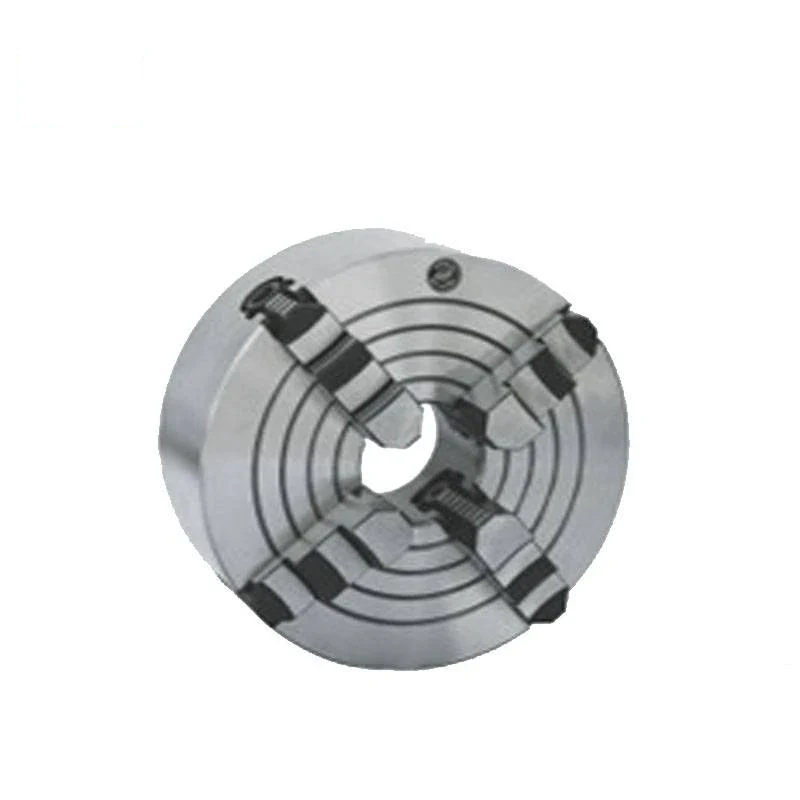
K72 Four-Jaw Independent Chucks
The K72 and K72(G) are four-jaw independent chucks, where each jaw is moved by its own screw instead of all four running off a common scroll. That is the whole point of the chuck: square, rectangular, cast and off-centre parts can be clamped and then dialled in to run true, and a part can be deliberately set off centre...
What This Machine Does
The K72 and K72(G) are four-jaw independent chucks, where each jaw is moved by its own screw instead of all four running off a common scroll. That is the whole point of the chuck: square, rectangular, cast and off-centre parts can be clamped and then dialled in to run true, and a part can be deliberately set off centre to bore an eccentric feature. Four jaws also spread the clamping load over four faces, which is what you want on a heavy casting or a thick-walled part that would distort in a three-jaw chuck. Because the jaws are independent and usually reversible, the same chuck holds a small block and a large diameter ring. Chucks in this class are used on manual lathes, on vertical lathes and on CNC five-axis machines and indexing devices, wherever the work is not simply round.
Why Buyers Choose This Machine
- Each jaw adjusts independently so irregular and square parts can be clamped and dialled true
- Off-centre setting allows eccentric features to be turned or bored without a special fixture
- Four clamping points spread the load so thin-walled and cast parts distort less
- Reversible jaws extend the holding range from small blocks to large diameter rings
- Suits vertical lathes CNC five-axis machines and indexing devices as well as manual lathes
- No scroll to wear so holding accuracy depends on setting rather than on chuck condition
Where K72 Four-Jaw Independent Chucks Earns Its Place
Problems It Solves
- Three-jaw chucks cannot grip square or irregular parts securely
- Eccentric bores need a special fixture unless the part can be set off centre
- Rough castings never run true in a self-centring chuck
- Thin-walled parts pull out of round when clamped at three points
- A worn scroll chuck holds the part off centre with no way to correct it
Who It Is For
- General machine shops turning castings and non-round parts
- Toolrooms and repair shops handling one-off and awkward work
- Vertical lathe and five-axis machining operations
- Distributors supplying lathe workholding accessories
Application Scenarios
- Holding square rectangular and cast workpieces on a lathe
- Boring eccentric features by deliberately offsetting the part
- First operation work on rough castings and forgings
- Large diameter ring and flange work with reversed jaws
- Workholding on vertical lathes and CNC five-axis machines
Technical Detail
Technical Features
- Four independently adjustable jaws each on its own screw
- Models K72 and K72(G)
- Jaws normally reversible for internal and external gripping
- Concentric rings on the chuck face for setting the part
- Suitable for circular and irregular shaped workpieces
- Used on vertical lathes CNC five-axis machines and indexing devices
Specifications
| Machine type | Four-jaw independent lathe chuck |
|---|---|
| Models | K72 and K72(G) |
| Jaw action | Each jaw adjusted independently |
| Workpiece shapes | Circular and any irregular shape |
| Typical machines | Manual lathes vertical lathes CNC five-axis machines and indexing devices |
| Jaws | Reversible for internal and external clamping |
Figures above are taken from the product information we hold. Send us your application and we will confirm the exact specification for the model quoted.
How It Is Built and What Can Be Changed
Operations Performed
- Turning
- Boring
- Facing
- Eccentric boring
Quality Control
- Chuck body face and register run-out checked after machining
- Jaw screws checked for free and even movement through full travel
- Jaw slot fit checked so jaws do not lift under clamping load
- Assembled chuck checked for setting accuracy on a test bar
Customisation Options
- Chuck size specified for the workpiece diameters you hold
- K72 or K72(G) model specified on the order
- Mounting plate prepared for your lathe spindle nose
- Spare jaw sets quoted with the chuck
How It Compares With the Alternatives
| 3K three-jaw hollow power chuck | The 3K self-centres and clamps hydraulically for production round work; the K72 is set jaw by jaw and is the chuck for irregular castings and eccentric work |
|---|---|
| 4K four-jaw hollow power chuck | The 4K holds irregular work but clamps all four jaws together under power for repeat production; the K72 gives independent adjustment for one-off setting |
| Clamping on a faceplate | A faceplate with clamps takes longer to set and balance for each part; the K72 gives four adjustable jaws in a single mounted unit |
Running the Machine
Step 1
Mount the chuck to the spindle and check the mounting face is clean
Step 2
Open the jaws to suit the part and reverse them where you need the wider range
Step 3
Set the part roughly using the concentric rings on the chuck face
Step 4
Clamp lightly then indicate the part and adjust opposing jaws to bring it true
Step 5
Tighten all four jaws evenly and re-check the indicator before cutting
Step 6
For eccentric work offset the part by the required amount and indicate to that offset
Step 7
Keep the jaw screws and slots clean and lightly oiled
Related Applications and Guides
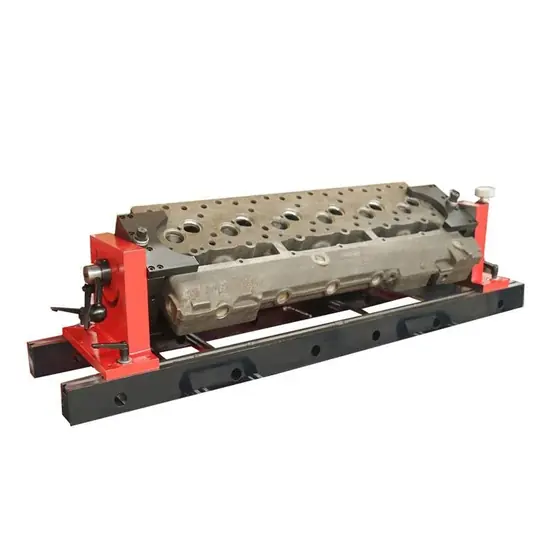
Engine Rebuilding Workshops
Engine rebuilding workshops recondition blocks heads crankshafts and valves to a geometry the engine will hold for a full service life. XAIMC supplies
General Machining Job Shops
Job shops take whatever work comes through the door, which means their equipment has to cover a wide range rather than do one thing perfectly. XAIMC s
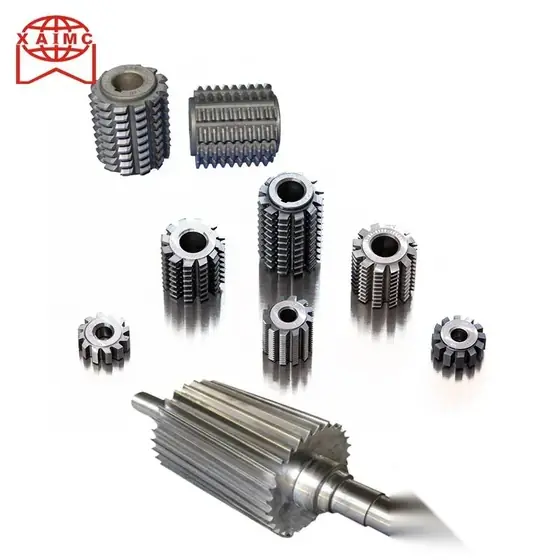
Gear Hobbing Explained for Buyers of Gear Cutting Machines
Gear hobbing cuts gear teeth by rolling a rotating hob against a rotating blank so that the tooth form is generated rather than copied from a formed c
Radial Drilling Machine vs Bench Drilling Machine
A bench drilling machine brings the work to a fixed spindle, while a radial drilling machine moves the spindle over a heavy stationary workpiece on an
Questions About K72 Four-Jaw Independent Chucks
When should I use a four-jaw independent chuck instead of a three-jaw?
Whenever the work is not simply round, when it is a rough casting that has to be dialled true, or when a feature has to be machined off centre.
What is the difference between K72 and K72(G)?
They are two builds of the same four-jaw independent chuck type. Tell us your machine and the work you hold and we will confirm which suits and quote the correct size.
Are the jaws reversible?
Four-jaw independent chucks are normally supplied with reversible jaws so the same chuck grips small parts externally and larger rings internally. Confirm the jaw type you need on the order.
Will it fit my lathe?
Send us your spindle nose designation and chuck diameter requirement and we will confirm the mounting arrangement and supply an adapter plate if one is needed.
How long does it take to set a part true?
That depends on the part and the operator. A four-jaw chuck is set by indicating and adjusting opposing jaws, so it is slower to load than a self-centring chuck and is used where the work demands it.
Can I buy replacement jaws?
Yes. Send us the chuck model and size and we will quote a jaw set against it.
What are your trade and payment terms?
FOB CFR and CIF. Payment is 30 percent by T/T on order and 70 percent before shipment, or an irrevocable L/C at sight.
Request a Quote on the K72 Four-Jaw Independent Chucks
Send us the work you need it to do, the voltage on your site and the port you ship to. We will come back with the model, the tooling and the lead time.