
Radial Drilling Machine vs Bench Drilling Machine
A bench drilling machine brings the work to a fixed spindle, while a radial drilling machine moves the spindle over a heavy stationary workpiece on an arm. This comparison is for workshop buyers deciding which drilling machine suits the size, weight and hole pattern of the parts they actually drill.
The Core Difference - What Moves
Both machines rotate a drill and feed it into metal, but they solve opposite problems. On a bench or pillar drilling machine the spindle is fixed in position above the table, so every hole is drilled by moving the workpiece under it. That is fine when the part can be picked up and repositioned by hand, and it is why bench drills dominate light fabrication, maintenance benches and toolrooms.
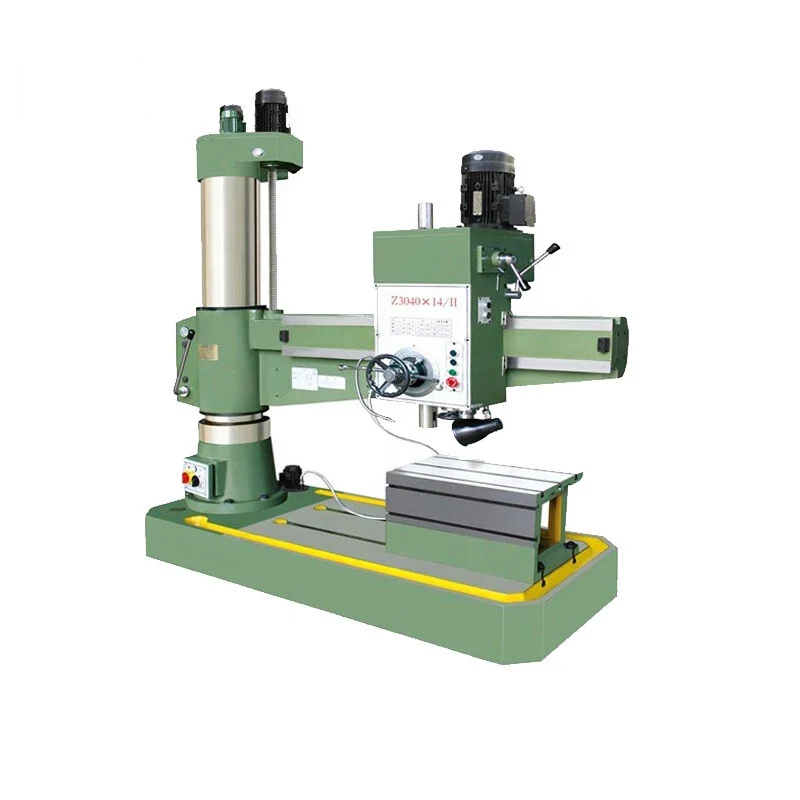
A radial drilling machine puts the drilling head on an arm that swings around a column and slides in and out along that arm. The workpiece stays clamped on the base or the table and does not move at all. The operator brings the spindle to each hole position instead. When the part weighs several hundred kilograms, or when it is a welded frame that cannot be lifted repeatedly, this is the only practical way to drill an accurate hole pattern.
Everything else that separates the two machine types follows from this one difference.
Workpiece Size and Weight
The deciding question is not hole diameter first; it is whether you can move the part. A plate you can lift and slide across a table with one hand belongs on a bench drill. A gearbox casing, a machine bed, a large flange or a fabricated frame does not, and once you are craning a part into position for every hole, productivity collapses and hole position accuracy suffers because each repositioning is a new setup.
Radial machines are built around this. The base is large and usually slotted so the work can be clamped directly to it, and heavy work can sit on the base rather than on a table. The arm elevates on the column so tall parts can be drilled without rebuilding the setup. Models with a swivelling head can also drill at angles without tilting the workpiece, which on a heavy fabrication is a substantial saving.
Bench machines, by contrast, gain from the constraint. A fixed spindle over a compact table is rigid, simple to align and quick to use for the hundreds of small holes a general workshop drills every week.
- Part liftable by hand or small hoist - bench or pillar drill
- Part heavy, long or awkward to reposition - radial drill
- Many holes across a large pattern - radial drill
- Repeated small holes in small parts - bench drill
Reach Rigidity and Accuracy
Radial drilling machines gain reach at the cost of some rigidity. The spindle is held out on an arm, so the further out the head travels the more the structure has to resist deflection and vibration. Well built radial machines clamp the arm to the column, the head to the arm, and often the column itself before cutting, and that clamping discipline is part of how the machine is operated, not an optional extra. An operator who drills with the clamps loose will get poor hole quality and blame the machine.
A bench drill has a short, direct load path from spindle to table to base, which makes it inherently stiff for its size. That is why small bench machines produce clean holes in thin material with very little fuss. Their limitation is throat depth: the distance from the spindle centreline to the column caps how far into a plate you can reach, and nothing about the setup can change it.
For hole position accuracy on a large pattern, a radial machine with the work clamped once and the head moved to each position will usually beat a bench machine where the part is repositioned for every hole, simply because there is one setup instead of many.
Drilling Capacity Feed and Power
Larger holes need torque, feed force and low spindle speeds, and that is where machine class matters. Small bench machines are built around smaller drill capacities and higher speed ranges suited to light material. Heavier pillar and box-type vertical machines extend that upward, and radial machines are the class normally used for the largest holes in heavy sections.
Auto feed is worth attention in the comparison. A machine with power feed drills at a consistent rate whatever the operator is doing, which improves hole finish, extends drill life and reduces the risk of grabbing as the drill breaks through. On a heavy drill, power feed is effectively a requirement rather than a convenience. XAIMC supplies auto-feed drilling machines as well as bench, pillar, box-type vertical and radial machines, so capacity and feed type can be matched to the job.
Consider tapping as well. Many shops drill and tap the same holes, and a machine with a suitable speed range and, where fitted, a tapping capability saves moving the part to another station.
- Match drill capacity in steel to the largest hole you actually drill
- Check the spindle speed range covers both large drills and small ones
- Power feed improves finish, drill life and break-through safety
- Consider whether tapping happens on the same machine
Floor Space Foundation and Installation
A bench drill sits on a bench or a light stand and can be moved by two people. A pillar drill stands on the floor and can usually be relocated with a pallet truck. A radial drilling machine is a different proposition: it is heavy, its footprint includes the full swing of the arm, and it normally needs a prepared foundation and levelling before it will hold accuracy.
Plan the swing circle, not just the base dimensions, or the arm will be unable to reach part of its own working area because a wall or another machine is in the way. Allow space to crane work onto the base, and remember that a long part may overhang the base and need support stands.
Ask for foundation and installation drawings before the machine ships. Confirm voltage, phase and frequency at the order stage, and check crated dimensions and weight against your doorway and lifting equipment.
Cost of Ownership
Purchase price is only part of the comparison. A bench machine is inexpensive to buy, to install and to maintain, and a shop can justify several of them so that different setups stay standing. A radial machine costs more to buy, needs a foundation, takes more floor area, and is worth it when it removes handling time from heavy parts or when it is the only machine that can do the job at all.
The honest test is to count handling. If your operators spend more time craning, clamping and repositioning parts than they spend cutting, a radial machine will pay back in throughput. If most work is small, a second bench machine set up for a different operation returns more than one large machine.
- Bench and pillar - low cost, easy install, ideal in multiples
- Radial - higher cost, foundation required, removes handling time
- Count handling time on heavy parts to justify the radial machine
- Several simple machines can beat one large machine for mixed light work
Which Machine for Which Shop
A maintenance workshop, a toolroom or a light sheet metal shop is normally best served by bench and pillar drilling machines, chosen for throat depth and a speed range that suits its material. A structural fabrication shop, a heavy repair works, a foundry finishing department or an engineering works handling castings and welded frames needs a radial machine, because its parts are not liftable.
Many shops end up with both, and that is the sensible outcome rather than a compromise. The radial machine handles the heavy work and the large hole patterns; the bench machines handle the constant flow of small holes without tying up the big machine. Send XAIMC the largest hole diameter, the largest part size and weight, and your voltage and phase, and the drilling machines can be matched to that range.
Work Holding and Tooling Notes
Whichever machine you choose, the work must be clamped. A drill that grabs on break-through will spin an unclamped part, and that is the most common serious injury on a drilling machine. Machine vices, step clamps and T-slot hardware are part of the purchase, not spares to add later.
Tooling choice also differs with machine class. Small machines typically hold straight shank drills in a chuck; larger drilling machines use taper shank drills directly in the spindle with sleeves and drifts. Check which taper the spindle has before ordering drills, and buy sleeves and a drift with the machine so the first job is not delayed by missing adapters.
- Always clamp the work - never hold it by hand
- Include a machine vice and T-slot clamping set in the order
- Confirm the spindle taper and order sleeves and a drift with the machine
- Keep a drill sharpening arrangement so blunt drills do not become normal
Related Machines From XAIMC
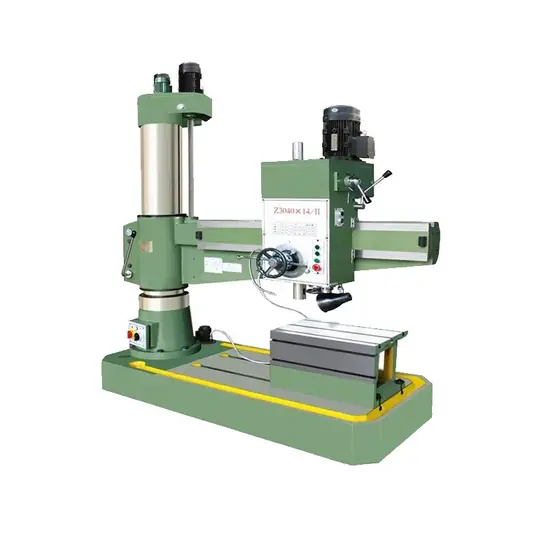
Radial Drilling Machine Z3040x16/1 Z3050x16/1 and ZQ3050x20/1
View Machine →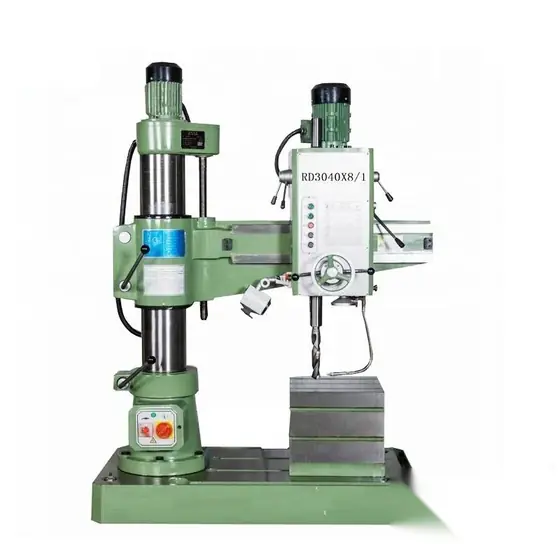
Mechanical Radial Drilling Machine Z3032x8/1 and Z3040x8
View Machine →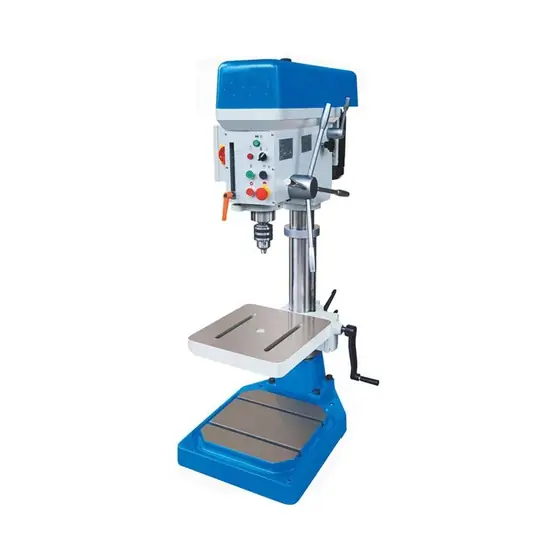
Bench Strong Drilling Machine Z4006G Z4116G Z4120G Z4132G Z5032G & Z5032GP
View Machine →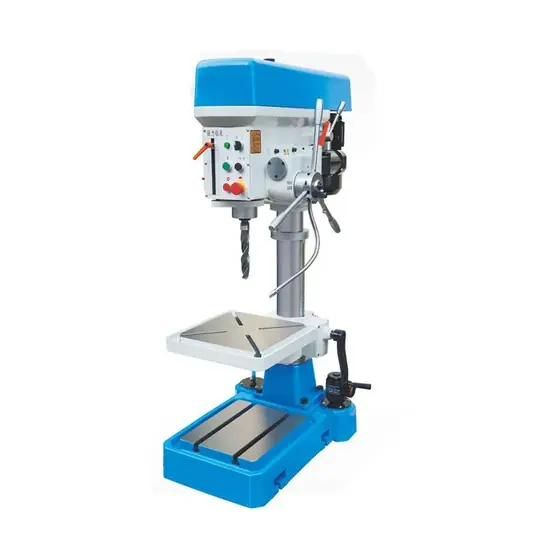
Auto-Feed Drilling Machine ZB4116G ZB4120G ZB4132G ZB4132GP ZB5032B & ZB5032GP
View Machine →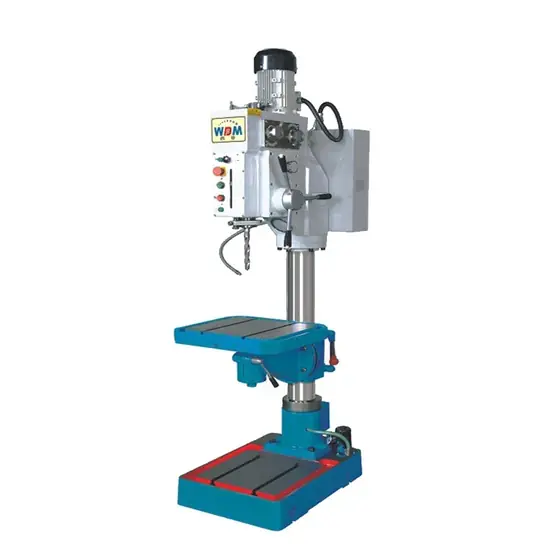
Pillar Type Vertical Drilling Machine Z5030 Z5035 Z5040 and Z5050
View Machine →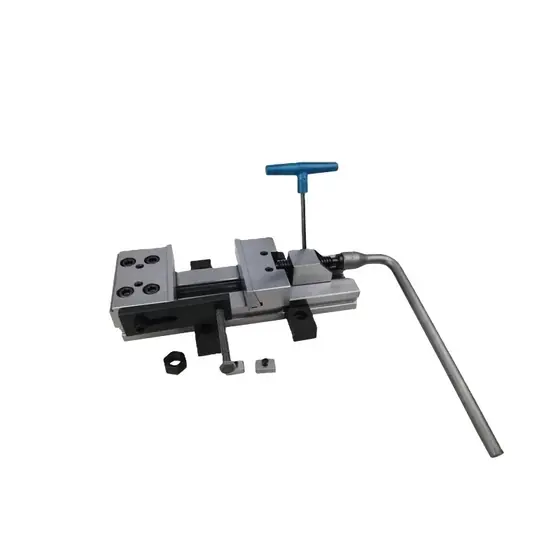
GT Modular Manual Clamping Milling Vise
View Machine →Related Categories
Questions on This Topic
When is a pillar drill enough instead of a radial machine
When the workpiece can be lifted and repositioned quickly and the hole pattern is small enough to fit within the throat depth. Once you are craning the part for every hole, the radial machine is faster and more accurate because the work is clamped once.
Does a radial drilling machine need a foundation
Radial machines are heavy and hold accuracy through being level and properly supported, so a prepared foundation and levelling are part of a correct installation. Ask XAIMC for the foundation and installation drawings before the machine ships.
What is the advantage of auto feed
Power feed drives the drill at a consistent rate independent of operator effort, which gives a better hole finish, longer drill life and safer break-through on larger drills. On heavy drilling it is effectively a requirement rather than an option.
Can a radial drilling machine drill at an angle
Models with a swivelling head can drill at an angle without tilting the workpiece, which matters when the part is too heavy to reposition. Confirm the head swivel capability against the angles you need when you enquire.
How do I choose the size of machine
Start from the largest hole diameter you drill in steel, the largest part dimensions and weight, and the deepest reach required from the edge of the part. Send those figures to XAIMC with your voltage, phase and frequency so the machine is matched to real work.
Do I need separate machines for drilling and tapping
Not always. Some drilling machines cover tapping within their speed range, and XAIMC also supplies dedicated tapping machines. If your work involves a lot of threaded holes, say so at enquiry stage so the recommendation covers both operations.
Apply This to Your Own Workshop
Send us your parts, your volumes and your site conditions and we will answer for your case rather than the general one.