
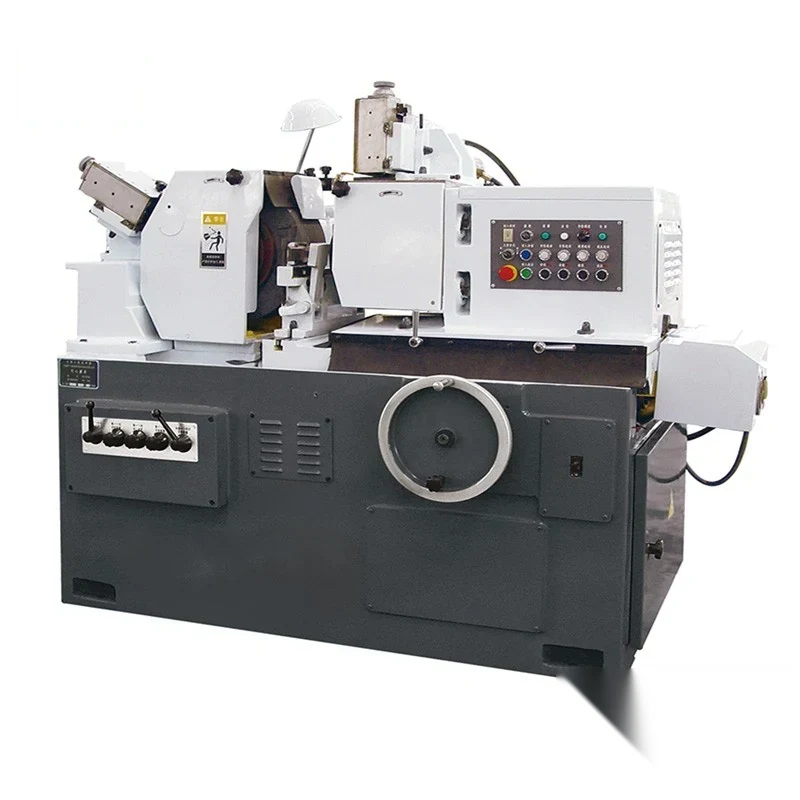
Centerless Grinding Machine M1050/M10100A
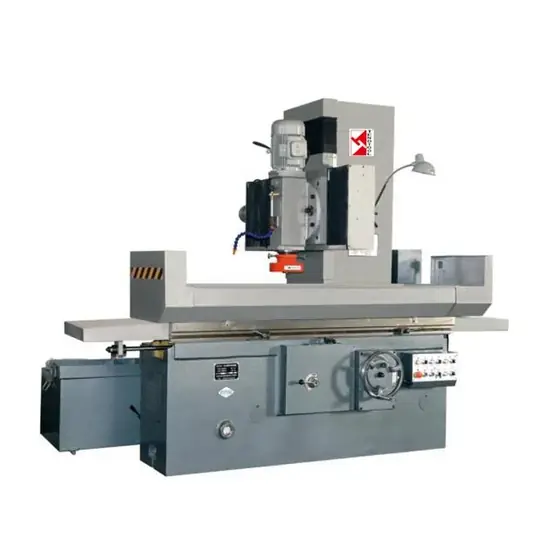
The M1050 and M10100A grind round parts without centres. Instead of holding the work between centres or in a chuck, the part rests on a work blade between a grinding wheel and a regulating wheel, and the regulating wheel drives it and controls its speed. Because the part is not clamped, there is no loading and unloadin...
What This Machine Does
The M1050 and M10100A grind round parts without centres. Instead of holding the work between centres or in a chuck, the part rests on a work blade between a grinding wheel and a regulating wheel, and the regulating wheel drives it and controls its speed. Because the part is not clamped, there is no loading and unloading time per piece and no centre holes to drill first, which is why centreless grinding is the method used where round parts are made in quantity: pins, shafts, rollers, bushes and bar. It also means the ground diameter is referenced to the part's own surface rather than to centre holes that may not be true, so roundness improves pass after pass. The two models cover different diameter ranges, the M10100A being the larger. Both run through-feed work for plain parallel parts and in-feed work for shouldered or formed parts. XAIMC also builds internal, cylindrical and surface grinders, so the machine can be specified alongside the rest of a grinding shop.
Why Buyers Choose This Machine
- No chucking or centring per part so cycle time is loading the part on the blade and taking it off
- No centre holes to drill before grinding which removes a whole operation from the route
- Diameter is referenced to the part's own surface so roundness improves rather than repeating a centre hole error
- Through-feed work suits plain parallel parts run continuously
- In-feed work handles shouldered and formed diameters on the same machine
- Two models so diameter range is matched to your parts rather than bought oversize
- Suited to quantity production where a between-centres grinder becomes the bottleneck
Where Centerless Grinding Machine M1050 Earns Its Place
Problems It Solves
- Chucking and centring every part dominates cycle time on a between-centres grinder
- Drilling centre holes adds an operation and a source of error before grinding even starts
- An out-of-true centre hole is copied into every diameter ground from it
- Long slender parts deflect between centres and come out barrelled
- Volume round-part grinding on a cylindrical grinder becomes the production bottleneck
Who It Is For
- Manufacturers of pins shafts rollers and bushes in quantity
- Bar and rod producers supplying ground stock
- Hydraulic and pneumatic component makers
- Bearing and fastener manufacturers
- Distributors equipping production grinding lines
Application Scenarios
- Through-feed grinding of pins dowels and parallel shafts in quantity
- Sizing bar stock to a ground diameter before it goes to a machining line
- In-feed grinding of shouldered shafts and stepped parts
- Grinding hardened bushes and rollers after heat treatment
- Finishing hydraulic rod and piston diameters
- Volume grinding work that has outgrown a cylindrical grinder
Technical Detail
Technical Features
- Centreless grinding configuration with grinding wheel regulating wheel and work blade
- Regulating wheel drives and controls workpiece rotation
- Through-feed grinding capability
- In-feed grinding capability for shouldered and formed parts
- Work blade support in place of centres or chuck
- Wheel dressing arrangement for both grinding and regulating wheels
- Two model sizes M1050 and M10100A
Specifications
| Machine type | Centreless grinding machine |
|---|---|
| Models | M1050 / M10100A |
| Workholding | Work blade between grinding wheel and regulating wheel, no centres or chuck |
| Grinding methods | Through-feed and in-feed |
| Workpiece drive | Regulating wheel |
| Typical work | Round parts such as pins shafts rollers bushes and bar |
| Wheel dressing | Grinding wheel and regulating wheel dressing |
Figures above are taken from the product information we hold. Send us your application and we will confirm the exact specification for the model quoted.
How It Is Built and What Can Be Changed
Operations Performed
- Centreless grinding
- Through-feed grinding
- In-feed grinding
- Wheel dressing
Materials Handled
- Cast iron
Quality Control
- Grinding wheel and regulating wheel spindle run-out measured on the assembled machine
- Work blade height and angle set and verified against a test component
- Regulating wheel speed range checked through its working range
- Test grind run on sample parts with roundness and diameter consistency checked across a batch
- Dressing units checked for repeatable wheel form before packing
Customisation Options
- Model chosen from M1050 or M10100A against your workpiece diameter range
- Supply voltage phase and frequency built for your market
- Grinding wheel and regulating wheel specification chosen for your material
- Work blade and guide tooling specified for your part diameters
- Feed and exit conveyor arrangement specified for through-feed production
- Manual and control markings prepared in your working language
How It Compares With the Alternatives
| XAIMC cylindrical grinders M1320 and M1420 series | Those hold the part between centres, which gives length control and taper capability; the centreless machine drops the fixturing time and is the right choice once you are grinding round parts in quantity |
|---|---|
| Internal grinding machines | An internal grinder finishes bores; the centreless machine finishes outside diameters. Shops making bushes often run both |
| Turning a diameter on a lathe | A lathe cannot size or finish hardened material after heat treatment; the centreless grinder is the operation that follows it |
| Through-feed against in-feed on the same machine | Through-feed runs plain parallel parts continuously; in-feed is the setting for a shouldered or formed diameter that cannot pass straight through |
Running the Machine
Step 1
Set the work blade height and angle for the part diameter you are grinding
Step 2
Dress both the grinding wheel and the regulating wheel before starting
Step 3
Set the regulating wheel angle for through-feed or square it up for in-feed work
Step 4
Run a first part and check diameter and roundness before starting the batch
Step 5
Keep coolant on the grinding contact through the run
Step 6
Check part diameter at intervals through the batch and redress when size starts to move
Step 7
Clear swarf from the blade and guides between runs so parts seat correctly
Other Machines in Grinding
Related Applications and Guides
General Machining Job Shops
Job shops take whatever work comes through the door, which means their equipment has to cover a wide range rather than do one thing perfectly. XAIMC s
Heavy Equipment and Plant Maintenance
Mines quarries plantations and processing plants cannot wait for imported spares. XAIMC supplies the boring gear cutting turning and grinding machines
Surface Grinder vs Cylindrical Grinder - Selecting the Right Machine
A surface grinder finishes flat faces held on a table, while a cylindrical grinder finishes round diameters held between centres or in a chuck. This c
Questions About Centerless Grinding Machine M1050
What diameter range do these machines cover?
M1050 and M10100A cover different ranges, with the M10100A the larger machine. Send us the smallest and largest diameter you grind and we will confirm which model fits.
Do we need to drill centre holes in the parts?
No. The part rests on a work blade between the grinding and regulating wheels, so there is no centring operation before grinding at all.
Can it grind shouldered parts?
Yes, by in-feed grinding. Plain parallel parts are run through-feed. Tell us which of the two your parts need and we will specify the tooling.
What tolerance and roundness can we expect?
That depends on the material, the wheel specification and how the part was heat treated. Send us a drawing of a typical part with the tolerance you need and we will confirm before you order.
What wheels are supplied with the machine?
Grinding wheel and regulating wheel specification are chosen against your material and diameter range. Tell us what you grind and we will quote the wheels and dressing tooling with the machine.
Can it be supplied for our voltage?
Yes. Give us your voltage phase and frequency at enquiry and the machine is wired for your market.
What are your trade and payment terms?
FOB CFR and CIF. Payment is 30 percent by T/T on order and 70 percent before shipment, or an irrevocable L/C at sight.
Request a Quote on the Centerless Grinding Machine M1050
Send us the work you need it to do, the voltage on your site and the port you ship to. We will come back with the model, the tooling and the lead time.