
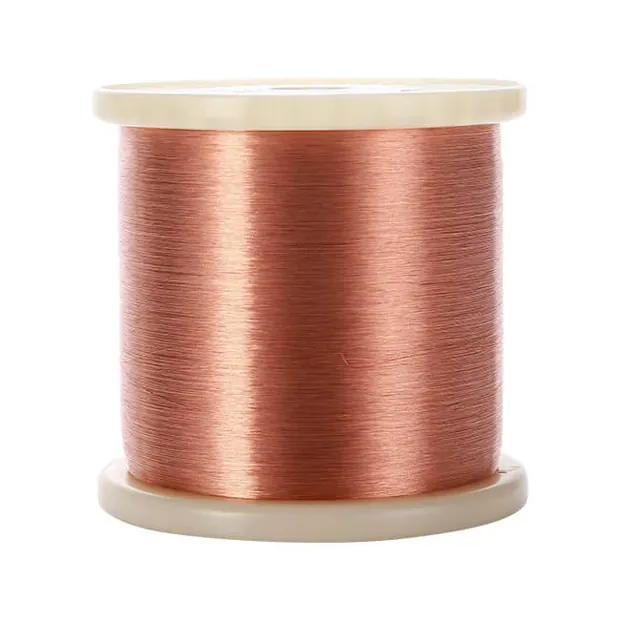
Tinsel Wire
Bare Copper Tinsel Wire
Highest conductivity per unit of foil in the range, with no plating layer in the current path.
View specifications
Built for swing performance, which is the actual failure mode in a driver lead.
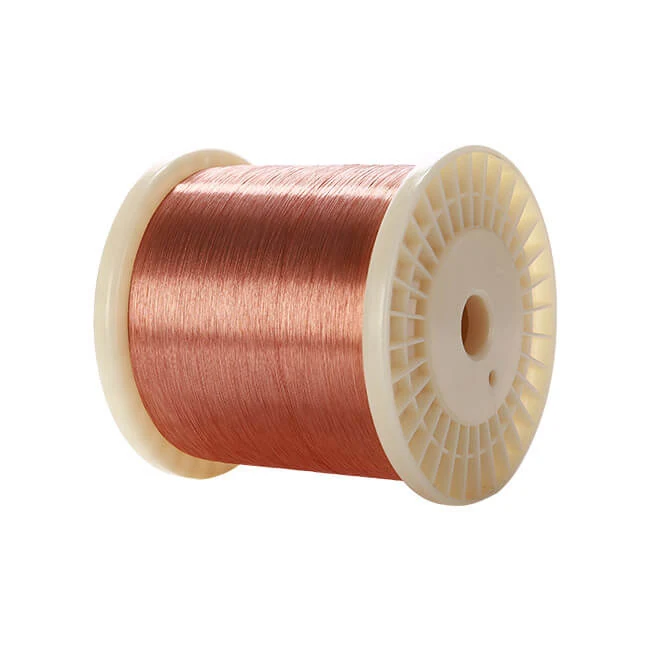
A speaker lead carries current into a moving assembly and then moves with it, every cycle, for the life of the driver. That makes flex life rather than conductivity the number that decides whether the design works. We build speaker lead wire as tinsel wire, foil wound over a soft textile fiber core, because that construction greatly improves bending strength and tensile strength against a solid wire of comparable size while keeping specific gravity low, so the lead does not load the diaphragm. Foil material, fiber core, twist and plating are then set against the excursion, resistance and soldering conditions of your driver.
Values that depend on your application are set against your targets rather than fixed here.
| Construction | Metal foil wound over soft textile fiber core |
|---|---|
| Single Wire Outer Diameter | 0.04 mm - 0.40 mm |
| Surface Options | bare copper foil, tin-plated copper foil, nickel-plated copper foil, silver-plated copper foil, tin-copper alloy foil, iron-copper alloy foil and silver-copper alloy foil |
| Fiber Core Options | nylon, polyester, aramid, liquid crystal fiber, heat-resistant cotton yarn and glass fiber |
| Plating Thickness | 0.3 um - 2 um, customizable |
| Conductor Resistance | Customized to your target |
| Minimum Order For Samples | None |
No third-party certification is published for this product line. Test data from our own resistance, tensile, elongation and salt spray equipment is supplied with samples and with every shipment loading report.
Tinsel Wire
Highest conductivity per unit of foil in the range, with no plating layer in the current path.
View specifications
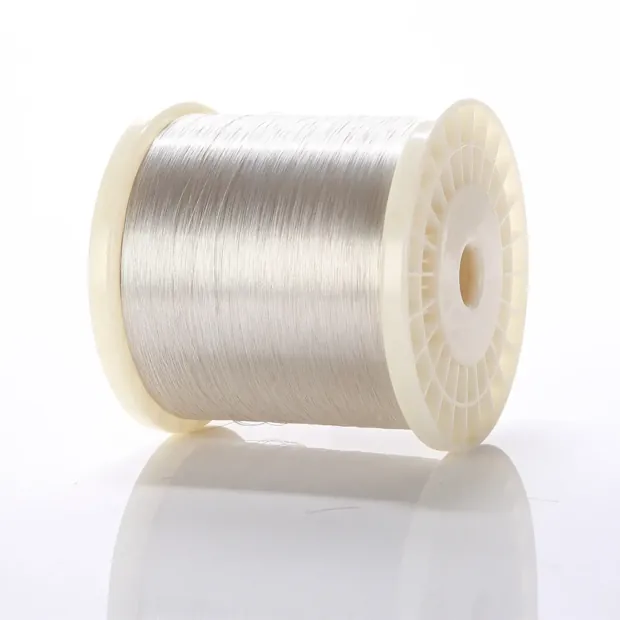
Tinsel Wire
Silver surface for demanding termination and contact requirements.
View specifications
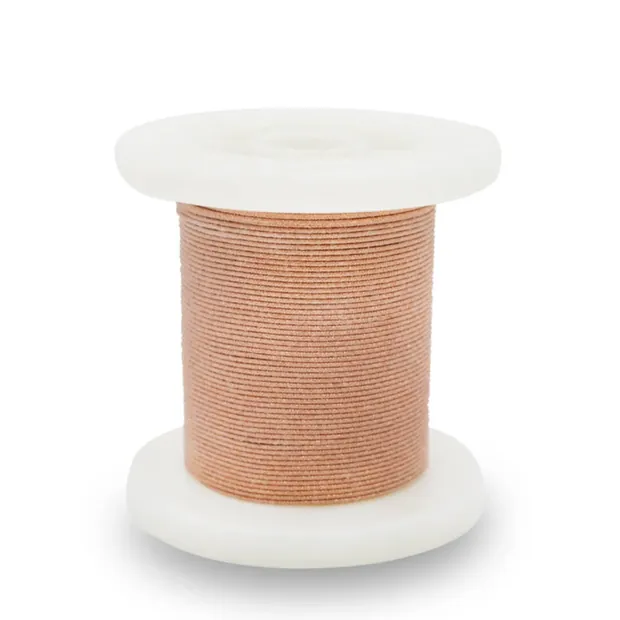
Tinsel Wire
Alloy foil raises the mechanical ceiling over pure copper at the same construction.
View specifications
technical guide
The construction, the materials and the reason a foil-over-fiber conductor beats a solid wire of the same size on flex life.
Read the guide
material guide
What each fiber core actually gives a tinsel wire, and which service conditions should point you at which one.
Read the guide
Give us the excursion the lead has to survive, the resistance target, the outer diameter ceiling and how it will be soldered. Those four drive the foil material, the fiber core, the twist and the plating.
That is the point of the foil-over-fiber construction. It carries a low specific gravity while improving bending strength and tensile strength over a solid wire of comparable size.
Yes. Sample testing is available for both conventional and customized products, with no minimum order quantity.
Tell us the resistance, outer diameter and flex life you need. Samples on conventional and customized products carry no minimum order quantity.