
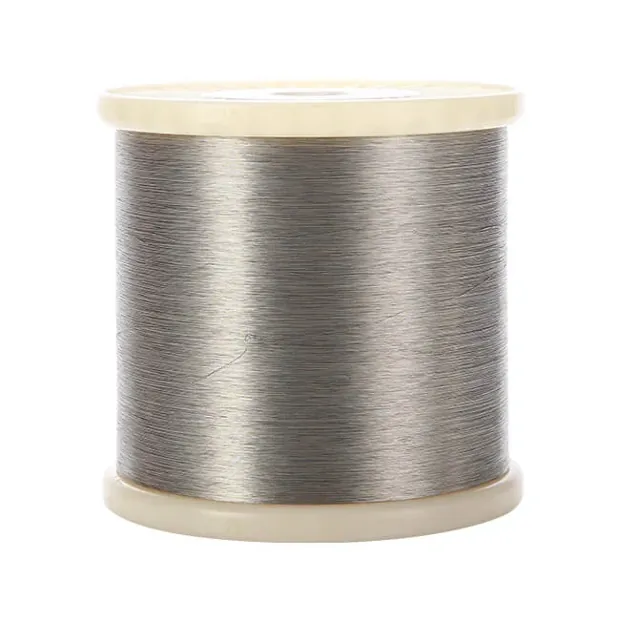
Tinsel Wire
Tin-Plated Alloy Tinsel Wire
Alloy foil strength combined with a tin-plated, oxidation-protected surface.
View specifications
Alloy foil raises the mechanical ceiling over pure copper at the same construction.
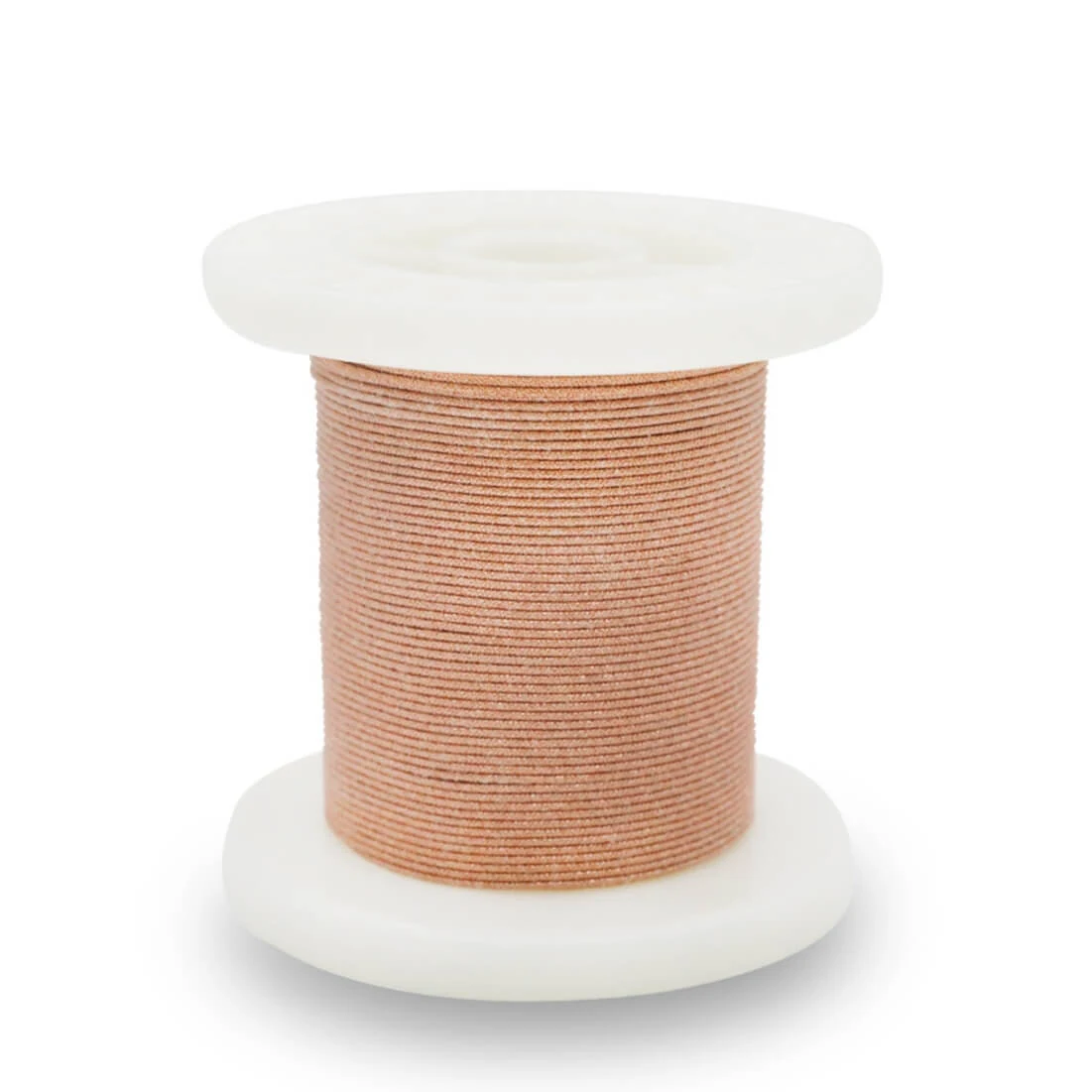
When the conductor has to be stronger than pure copper allows, the answer is to change the foil rather than to thicken it. Copper alloy tinsel wire uses tin-copper, iron-copper or silver-copper alloy foil wound over the fiber core, which raises the mechanical properties of the conductor while keeping the foil-over-fiber construction that gives it its flex life. This is the version specified for stranded, high-swing constructions where breaking load is the governing number and a pure copper foil would reach its limit first.
Values that depend on your application are set against your targets rather than fixed here.
| Construction | Metal foil wound over soft textile fiber core |
|---|---|
| Surface Material | tin-copper, iron-copper or silver-copper alloy foil |
| Single Wire Outer Diameter | 0.04 mm - 0.40 mm |
| Foil Structure | Single-layer or multi-layer |
| Fiber Core Options | nylon, polyester, aramid, liquid crystal fiber, heat-resistant cotton yarn and glass fiber |
| Stranding | Single, twisted into tinsel strands, or mixed with copper wires |
| Foil Alloy | Tin-copper, iron-copper or silver-copper |
| Plating | Optional tin, silver or nickel at 0.3 um - 2 um |
| Conductor Resistance | Customized to your target |
| Minimum Order For Samples | None |
No third-party certification is published for this product line. Test data from our own resistance, tensile, elongation and salt spray equipment is supplied with samples and with every shipment loading report.
Tinsel Wire
Alloy foil strength combined with a tin-plated, oxidation-protected surface.
View specifications
Tinsel Wire
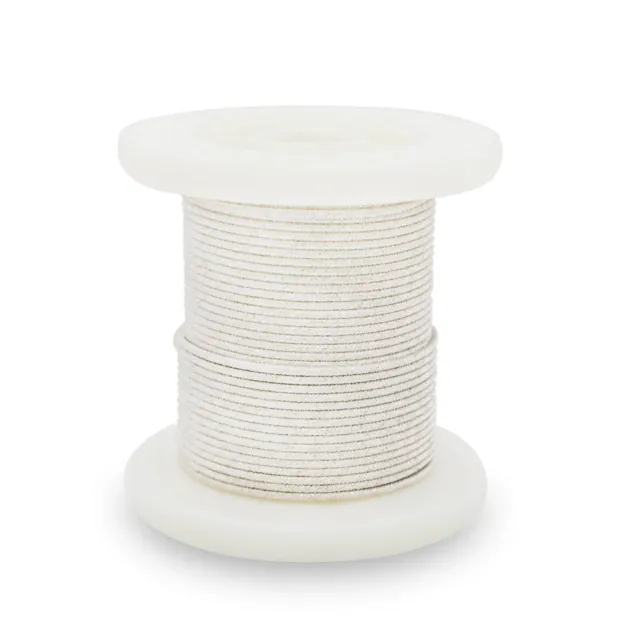
Silver-copper alloy foil with silver plating: strength and surface both at the top of the range.
View specifications
Tinsel Wire
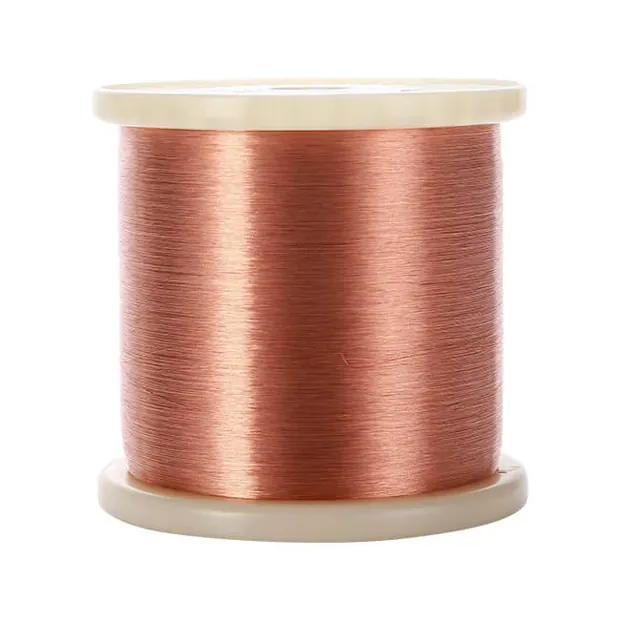
Highest conductivity per unit of foil in the range, with no plating layer in the current path.
View specifications
technical guide
The construction, the materials and the reason a foil-over-fiber conductor beats a solid wire of the same size on flex life.
Read the guide
material guide
What each fiber core actually gives a tinsel wire, and which service conditions should point you at which one.
Read the guide
It follows the property you need to lift. Tin-copper, iron-copper and silver-copper alloy foils are all available, and the choice is made against the resistance, tensile strength and swing targets you give us rather than from a fixed catalogue.
Alloys generally trade some conductivity for mechanical strength, which is why resistance is one of the values we set as a target at the start. The multi-layer foil design and multi-strand twisting are the levers we use to bring resistance back down without growing outer diameter.
Yes. Tin, silver and nickel plating are available over the alloy foil, at a customizable coating thickness between 0.3 um and 2 um.
Tell us the resistance, outer diameter and flex life you need. Samples on conventional and customized products carry no minimum order quantity.