
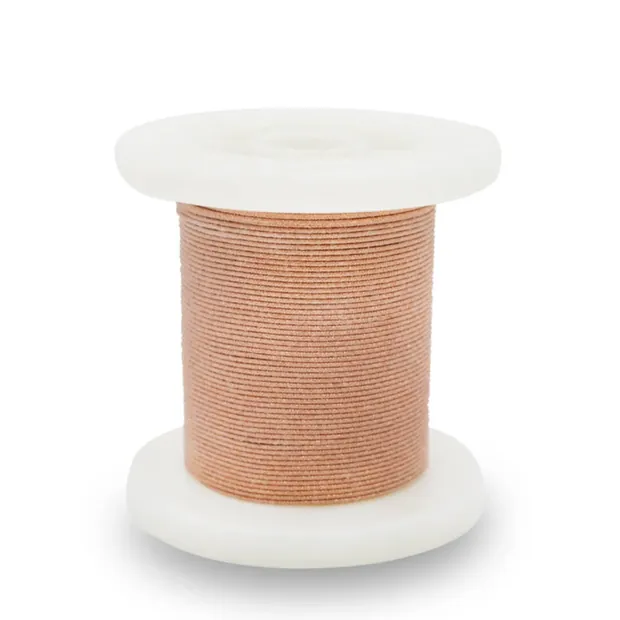
Tinsel Wire
Copper Alloy Tinsel Wire
Alloy foil raises the mechanical ceiling over pure copper at the same construction.
View specifications
Alloy foil strength combined with a tin-plated, oxidation-protected surface.
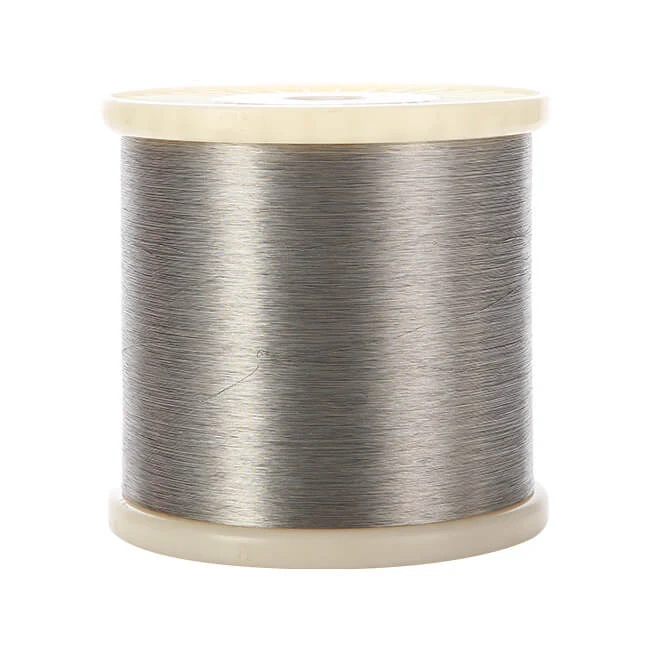
This is the combination specification: alloy foil for mechanical strength, tin plating for a surface that stores and solders predictably. It exists because a lot of real cable designs are constrained at both ends at once, needing a breaking load and swing life that pure copper foil will not reach, and an assembly process that cannot tolerate variable solder wetting. Taking the alloy from the foil and the surface behaviour from the plating lets both requirements be met without compromising either.
Values that depend on your application are set against your targets rather than fixed here.
| Construction | Metal foil wound over soft textile fiber core |
|---|---|
| Surface Material | tin-plated copper alloy foil |
| Single Wire Outer Diameter | 0.04 mm - 0.40 mm |
| Foil Structure | Single-layer or multi-layer |
| Fiber Core Options | nylon, polyester, aramid, liquid crystal fiber, heat-resistant cotton yarn and glass fiber |
| Stranding | Single, twisted into tinsel strands, or mixed with copper wires |
| Foil Alloy | Tin-copper, iron-copper or silver-copper |
| Plating | Tin, 0.3 um - 2 um customizable |
| Conductor Resistance | Customized to your target |
| Minimum Order For Samples | None |
No third-party certification is published for this product line. Test data from our own resistance, tensile, elongation and salt spray equipment is supplied with samples and with every shipment loading report.
Tinsel Wire
Alloy foil raises the mechanical ceiling over pure copper at the same construction.
View specifications
Tinsel Wire
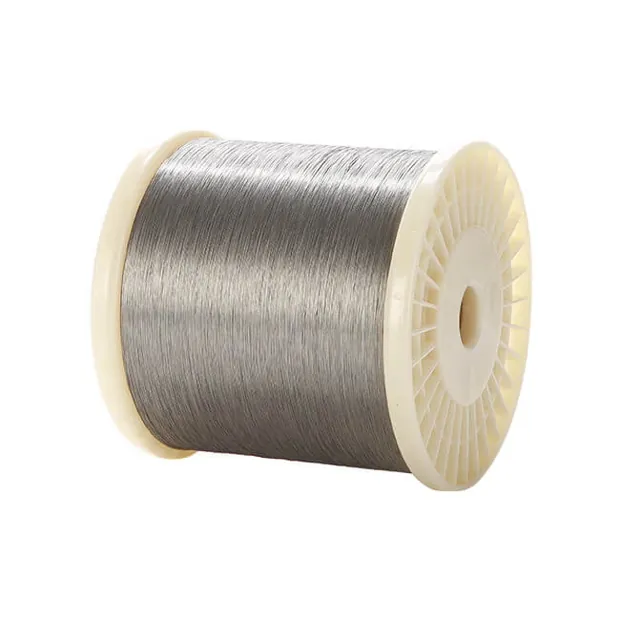
Tin layer protects the copper foil surface from oxidation through storage and handling.
View specifications
Tinsel Wire
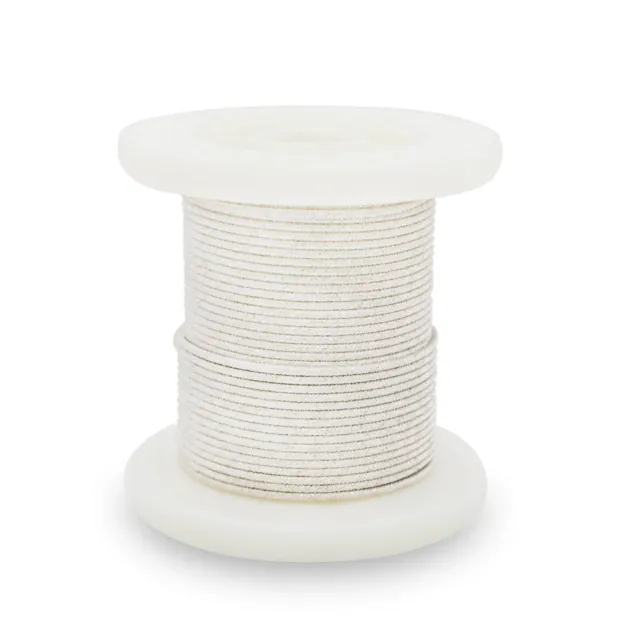
Silver-copper alloy foil with silver plating: strength and surface both at the top of the range.
View specifications
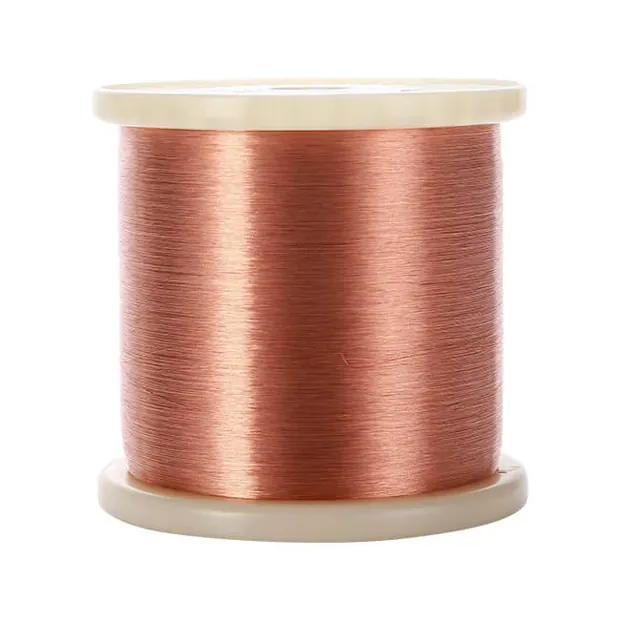
technical guide
The construction, the materials and the reason a foil-over-fiber conductor beats a solid wire of the same size on flex life.
Read the guide
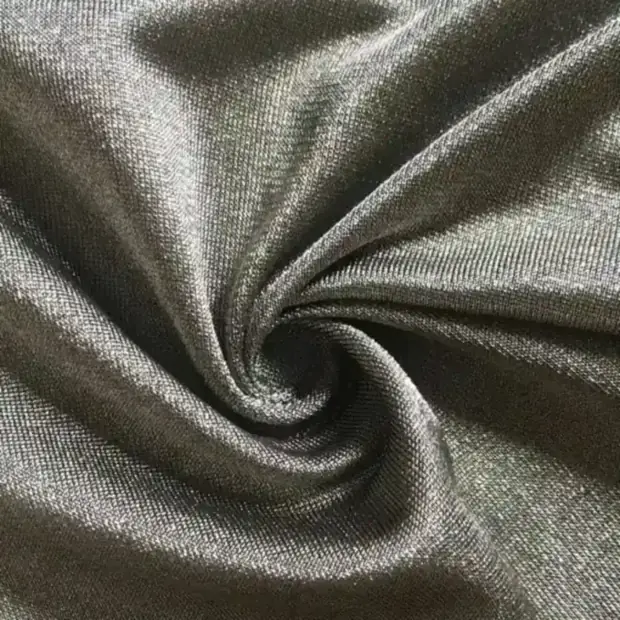
material guide
What each fiber core actually gives a tinsel wire, and which service conditions should point you at which one.
Read the guide
A tin-copper alloy foil and a tin plating layer do different jobs. The alloy sets the mechanical properties of the conductor, while the plating protects the surface from oxidation so the conductor still solders cleanly after storage.
The terminating surface is the same tin coating, applied uniform and continuous with strong adhesion. What changes underneath is the alloy foil, which is a mechanical property rather than a soldering one.
Yes. The alloy is chosen against your tensile and swing targets and the plating thickness against your termination and storage conditions.
Tell us the resistance, outer diameter and flex life you need. Samples on conventional and customized products carry no minimum order quantity.