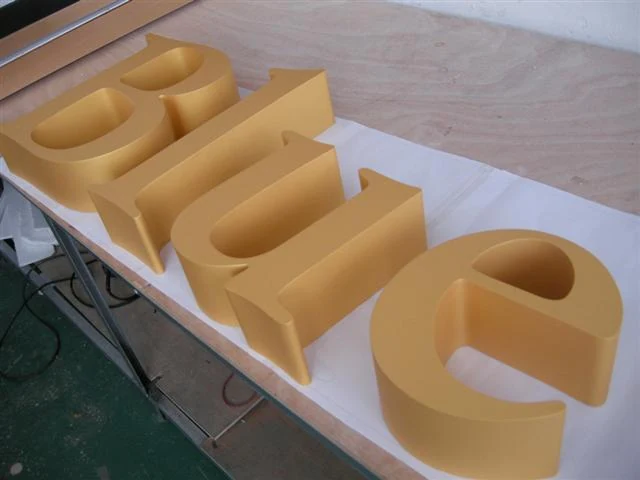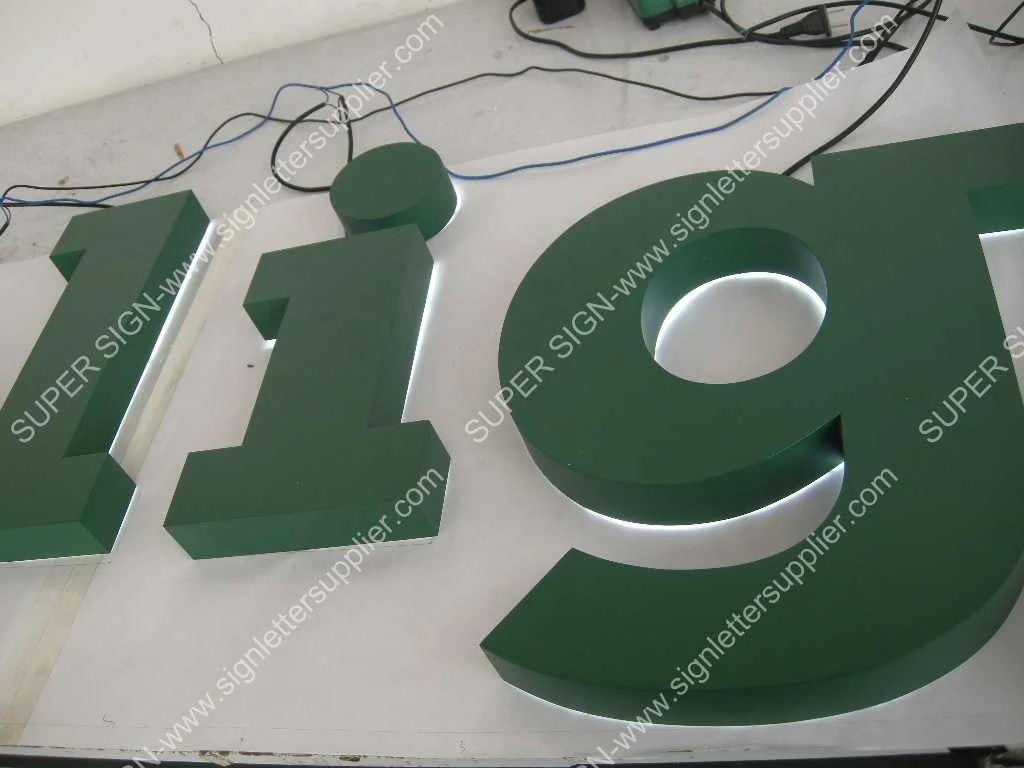
The single most common cause of a rejected sign order is colour. Not because the factory cannot match a colour, but because nobody supplied one. A logo file, a photograph or a screenshot carries the lighting and the screen profile with it. A Pantone or RAL code does not.
The five routes
| Route | Applied to | Colour range | Notes |
|---|---|---|---|
| Powder coating | Stainless and aluminium | Any Pantone or RAL | Baked on, hard wearing, applied to the whole batch at once |
| Wet paint | Stainless, aluminium, alloy, acrylic, PVC | Any Pantone or RAL | Suits geometries that cannot go through the oven |
| Anodising | Aluminium only | Narrow | Grows into the metal, gives a brushed metal look |
| Electroplating | Polished or brushed stainless | Gold | Colour sits in the plating; recommended for indoor use |
| Film on acrylic | Translucent LED faces | Wide | Used when the brand colour is not a stock acrylic shade |
Why the code has to arrive first
Recoating a finished letter means stripping it first. That is why the colour reference goes on the order before production starts rather than being confirmed against a sample afterwards. The code also stays on the order, so a second site ordered months later gets the same number rather than a fresh interpretation.
Where matching gets harder
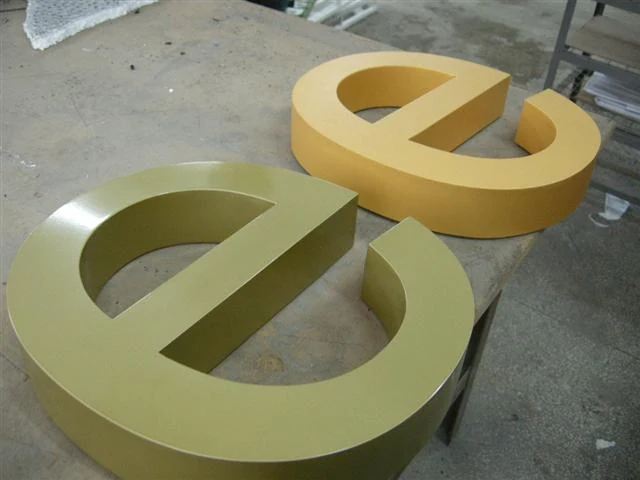
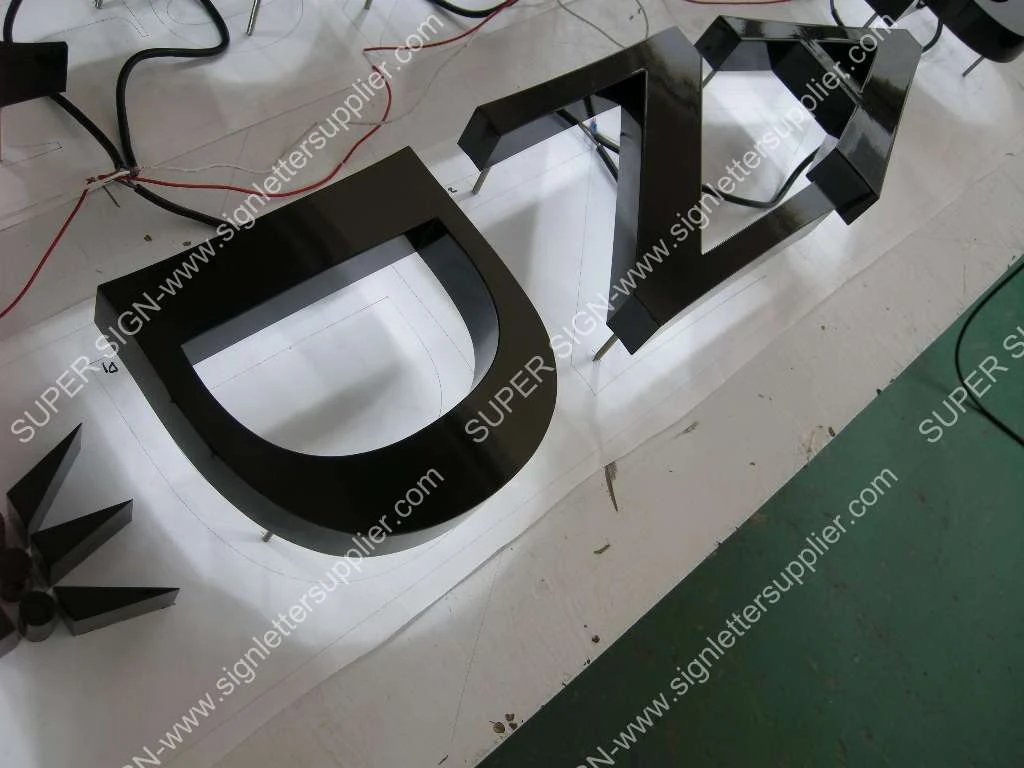
- Face and return in different materials will not match automatically. Acrylic and powder coat take colour differently; ask for a sample of both if they have to agree.
- Filmed acrylic and solid coloured acrylic age differently, so a multi-site rollout should use one method throughout.
- Powder coating is applied to the whole batch together. Adding a letter months later risks a visible shift.
- Painted gold and electroplated gold look different side by side. Electroplated has more depth; painted can be repainted later.
A practical sequence
- Decide whether the sign is indoor or outdoor, because that rules electroplated gold in or out immediately.
- Pick the substrate: stainless for finish and durability, aluminium for size and weight, acrylic or PVC for interior budget work.
- Supply the Pantone or RAL code with the artwork, not after the quotation.
- If face and return must match across materials, request a physical sample before the batch runs.
- Record the final code somewhere you will find it again when the second store opens.
Screens differ, print differs, and daylight differs from showroom lighting. The only thing that reproduces is a code.