
Backlit LED Channel Letters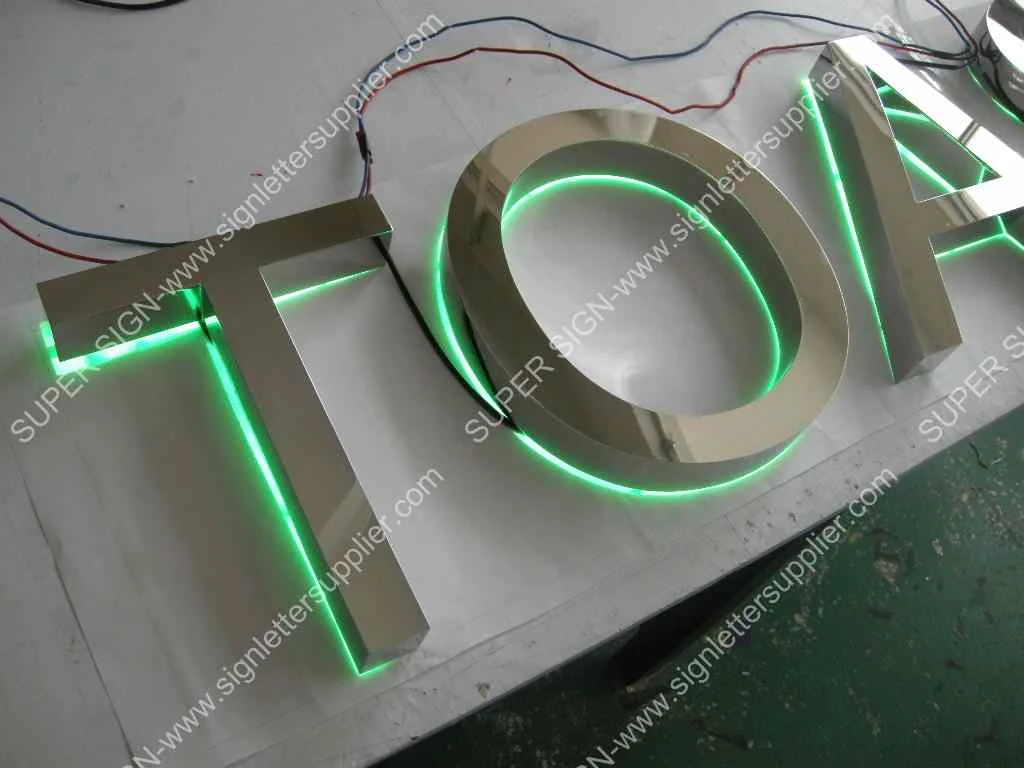
Backlit LED Letters 03
Reception walls and facades where the brand colour should appear as light on the wall, not on the letter.
View specification
A halo is produced by the wall, not by the letter. Four decisions control the result and only one of them is about the letter itself.
Taken in this sequence, each decision narrows the next one. Taken out of order, they contradict each other.
Pale, smooth and flat gives a clean outline. Dark paint absorbs the light and textured render scatters it. If the wall is already dark, a frontlit build will serve the project better than a halo.
Stud length controls how tight or how soft the halo is, and it changes the whole look. It is a specification, not a factory default, so put it on the drawing.
304 or 316 polished or brushed stainless, aluminium or a painted colour. A dark painted face makes the halo look brighter by contrast; a pale face needs more LED to compete with it.
Warm LED renders wall paint differently from cool white. If the interior scheme is fixed, tell us the wall colour and we will confirm the LED against it.
Reception walls and facades where the brand colour should appear as light on the wall, not on the letter.
View specification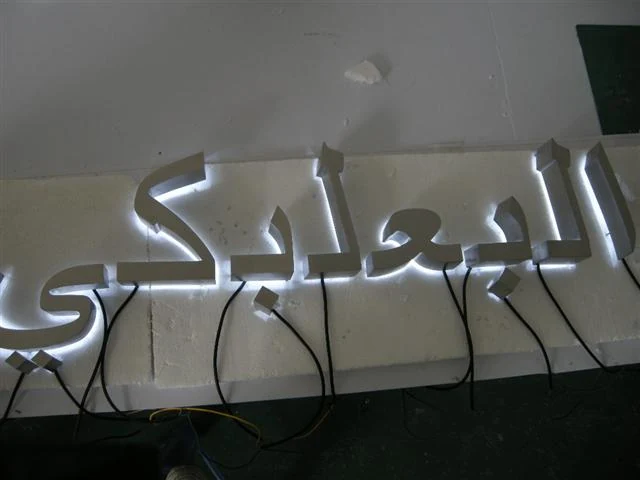
Corporate identity walls where the halo is the whole design intent.
View specification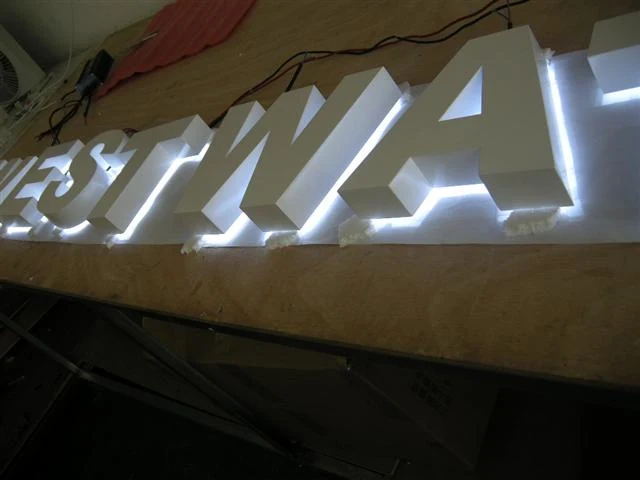
Hotel and office lobbies where the letters are read against an evenly lit feature wall.
View specification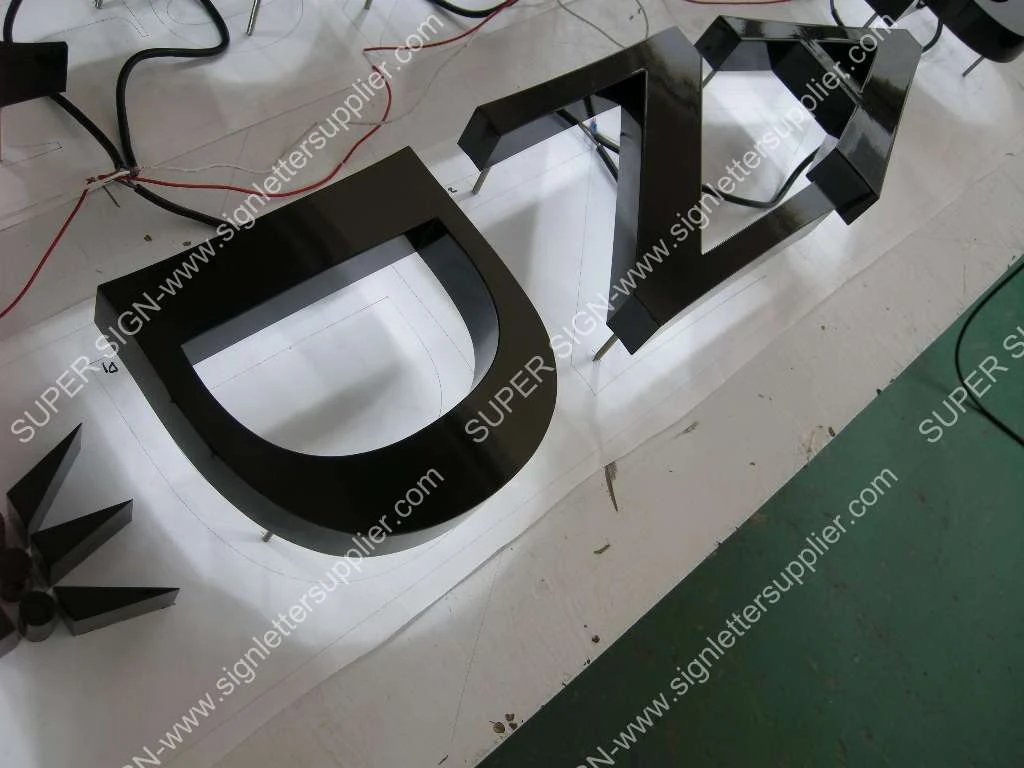
Brands whose mark is a specific colour but who also want the night-time halo look.
View specification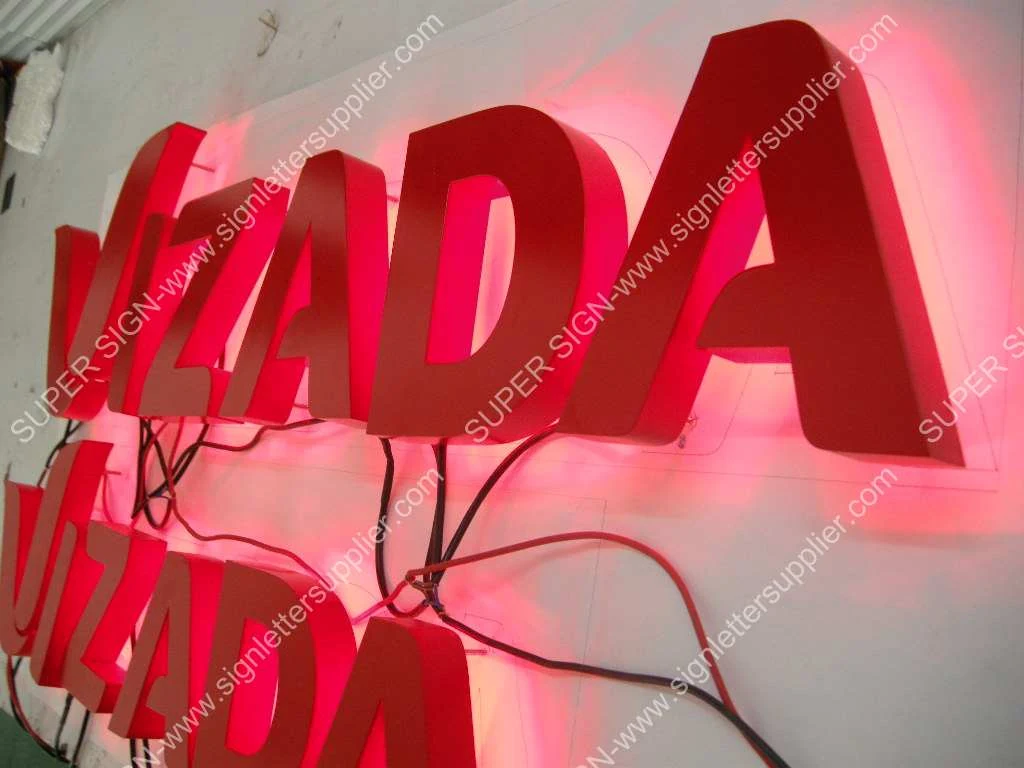
Minimal wordmarks where any unevenness in the halo would be immediately visible.
View specification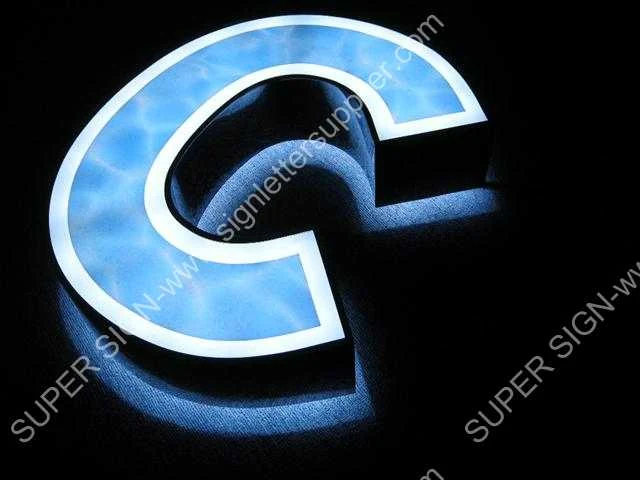
Flagship stores that want the face lit for daytime readability and the halo for a night look.
View specificationNineteen builds where the face stays solid metal and the LED throws light onto the wall behind, producing the halo or corona outline.
25 productsThe largest group in the catalogue: 25 builds of fabricated 304 and 316 stainless, separated by how the surface is finished rather than by how the letter is made.
IndustryA reception wordmark is looked at from two metres by people with nothing else to do. Every seam, every kerning error and every uneven reflection is visible.
IndustryHospitality signage is read at night, at close range, and in rooms whose lighting has already been designed. The sign has to join that lighting scheme rather than fight it.
Comparison GuideThree ways of putting light into a metal letter, and the one question that separates them: where do you want the light to come out?
Installation GuideFour fixing methods, one template, and the handful of site conditions that decide which one you can actually use.
Yes. One catalogue build has a stainless return, a translucent acrylic front and separate frontlit and backlit LED inside. It draws power on two circuits, so the transformer capacity has to be confirmed on site.
Usually the wall rather than the letter. Texture scatters the light, and an obstruction such as a skirting or a picture rail breaks the gap behind the letter.
Yes. Open counters in O, G and Q can show a bright arc unless the LED is spaced for the shape, which is why the layout is set per character.
The letters, a transformer, the screws and a 1:1 scale mounting template. Back stud fixing is the standard method.
Describe the site and the constraint and we will tell you which build answers it, with the production window attached to the price.