
Stainless Steel Letters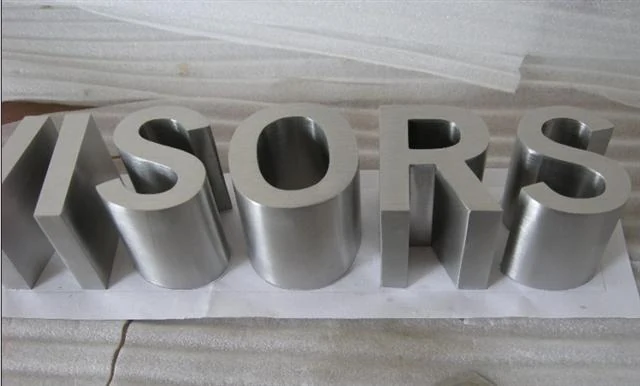
Brushed Stainless Steel Letters 23
Coastal hotels and marina buildings that need anti-rust metal with a low-glare face.
View specification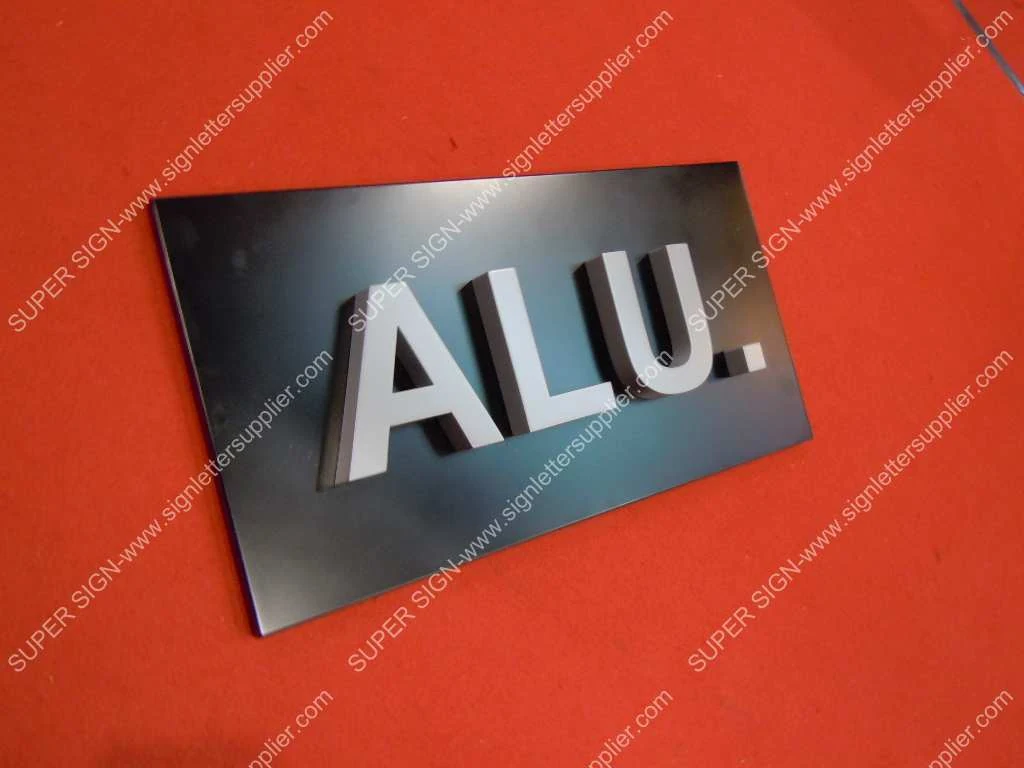
Everything in this catalogue can be made for outdoor use. What changes outdoors is the grade, the construction and the fixing, and those decisions are made before production rather than after.
Taken in this sequence, each decision narrows the next one. Taken out of order, they contradict each other.
316 stainless contains molybdenum and resists chloride pitting, which is what matters within reach of sea spray or pool chemistry. 304 performs identically inland and costs less. Aluminium alloy is the third route and is specifically recommended for marine environments.
Fabricated letters are built as closed boxes so rain and insects stay out of the cavity. That is also why a closed letter cannot be converted to illuminated later; the decision belongs at this stage.
Anodising grows the anti-rust layer into aluminium. Powder coating bakes colour on over either metal. Electroplated gold is recommended for indoor use only and is the wrong finish for an exposed facade.
Back stud and back screw bolt fixings are supplied with a 1:1 scale template. On illuminated work the cable entry at the wall is sealed by the installer, and that joint is where water ingress actually happens.
Coastal hotels and marina buildings that need anti-rust metal with a low-glare face.
View specificationOversized building letters and coastal installations where weight and salt are both problems.
View specification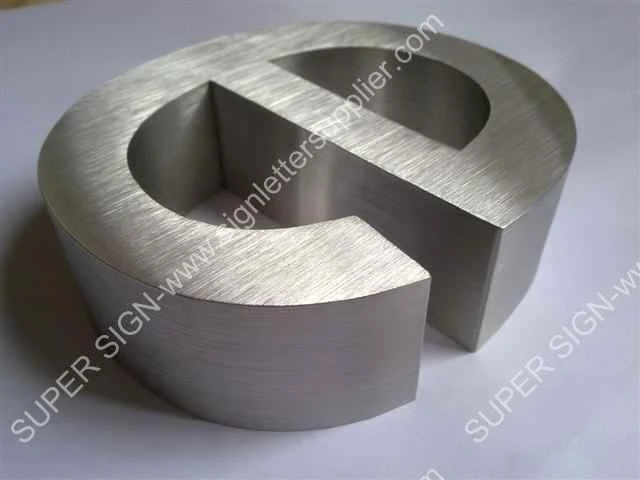
Retail fascias and office entrances where the client wants metal that reads as solid but stays matte under spotlights.
View specification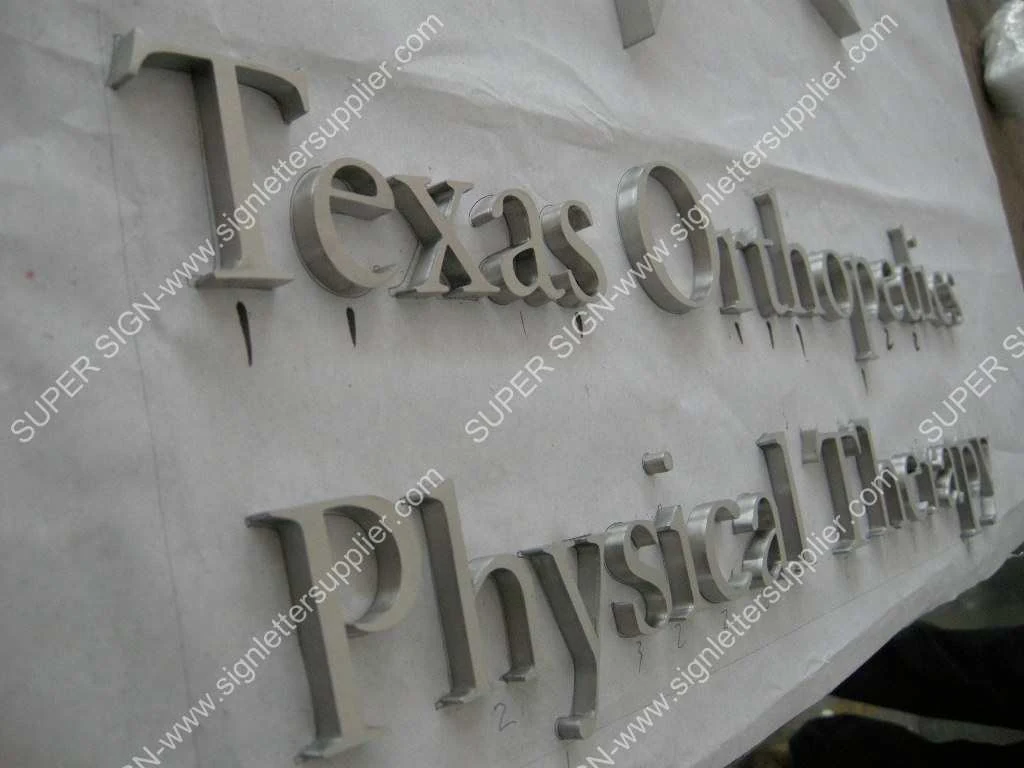
Medical, legal and consultancy practices that use a serif wordmark and need it to survive outdoors.
View specification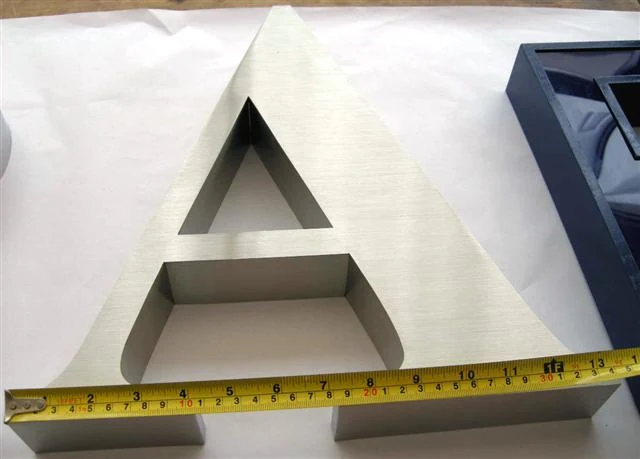
Interior reception walls lit by ceiling downlights, where mirror steel would glare.
View specification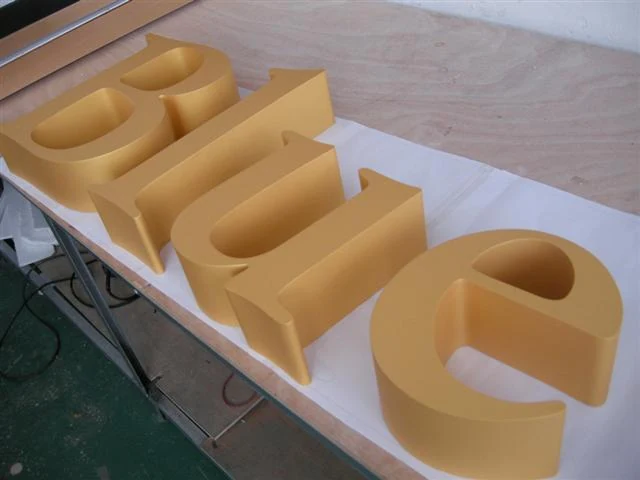
Brands with a fixed corporate colour that still want a metal substrate outdoors.
View specificationThe largest group in the catalogue: 25 builds of fabricated 304 and 316 stainless, separated by how the surface is finished rather than by how the letter is made.
4 productsWelded aluminium letters, chosen when the sign is large, the wall is weak, or the air is salty.
26 productsTwenty-six builds where the light comes out of the front. A metal return, a translucent acrylic face, and waterproof LED on a PVC, stainless or aluminium back plate.
IndustryVehicle brand signage is sculptural. The mark is usually a formed shape rather than a letterform, and that changes both the price and the lead time before anything else is decided.
IndustryRetail signage is bought against a landlord specification, a fit-out date and a fascia that already exists. Those three constraints decide the build more often than the design does.
Material GuideThe grade question has a short answer that depends almost entirely on how close the sign is to salt water.
Installation GuideFour fixing methods, one template, and the handful of site conditions that decide which one you can actually use.
No. Inland, 304 performs the same and the price difference grows with letter height. Within a few hundred metres of the sea, or around a pool, 316 is the right call.
Different, not better. Aluminium is lighter, cheaper at large sizes and specifically recommended for marine environments. Stainless gives you a steel finish and dents less in transit.
Powder coated and wet painted metal letters are both suitable for outdoor use. Painted PVC is not; it is specified for interiors and will move in colour under sustained sunlight.
A wipe down. Mirror finishes show water spotting in hard water areas, and halo letters collect dirt in the stand-off gap behind the letter.
Describe the site and the constraint and we will tell you which build answers it, with the production window attached to the price.