
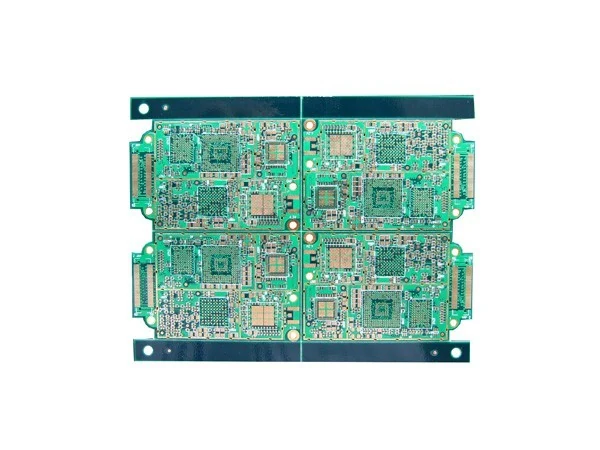
Comparing Lead Free HASL Immersion Gold And Gold Plating
Three surface finishes cover almost every board we build. Choosing between them is not a quality decision, it is a fitness decision: each one is right for a different job, and the wrong choice shows up at assembly or in service rather than at goods-in.
On This Page
The Finish Is Not A Quality Grade
Buyers often treat gold as the premium option and HASL as the cheap one. That is the wrong frame. A surface finish has a job: keep copper solderable until assembly, and in some cases survive being touched or mated. Which finish does that job best depends entirely on the board.
Lead Free HASL
Hot air solder levelling coats the pads in solder and blows off the excess with hot air. What is left is a thick, robust, genuinely solderable surface with a long shelf life. Its weakness is flatness: the solder forms a slight crown on each pad, and on fine pitch parts that crown tips the component during placement.
- Cheapest of the three finishes
- Longest shelf life before assembly
- Not suitable below roughly 0.5 mm component pitch
- Used on our 2 layer and 6 layer rigid boards
Immersion Gold
A thin gold film is deposited over nickel by chemical displacement. The result is flat to within microns, which is exactly what a BGA needs in order to self-align during reflow. Gold does not oxidise, so boards can be built now and assembled months later without a re-tinning step.
The limitation is thickness. An immersion deposit is too thin to survive being mated repeatedly, so it is a soldering finish rather than a contact finish.
- Flat enough for BGA and 0.4 mm pitch parts
- Does not oxidise, so long storage is safe
- Too thin for edge fingers or repeated mating
- Used on our 4, 10 and 12 layer rigid boards
Electroplated Gold
Gold is electroplated over nickel, which puts down a much thicker and harder deposit than displacement chemistry can. That makes it a mechanical surface: edge connector fingers, membrane switch contacts and pogo pin landing pads all need it. It is also the finish used where a chip is wire bonded directly to the board.
- Hard enough to survive repeated insertion cycles
- Suitable as a wire bonding surface
- More expensive than immersion gold
- Used on our 8 layer rigid board
OSP And The Flexible Circuit Finishes
OSP is an organic coating applied over bare copper. It is flat, cheap and perfectly solderable, but it has a short shelf life and gives no mechanical protection. We use it across the aluminium range, where boards are usually assembled soon after delivery.
Flexible circuits have a wider menu again: plated or immersion tin, plated or immersion gold, and OSP, plus carbon ink and silver paste for contact pads on keypad circuits.
| Finish | Flatness | Shelf life | Mating | Typical board |
|---|---|---|---|---|
| Lead-free HASL | Crowned | Long | No | 2 and 6 layer rigid |
| Immersion gold | Flat | Long | No | 4, 10 and 12 layer rigid |
| Gold plating | Flat | Long | Yes | 8 layer rigid with edge fingers |
| OSP | Flat | Short | No | Aluminium boards |
| Carbon ink | Printed | Long | Yes | Keypad flex contact pads |
Boards This Guide Applies To
Catalogue items where the decisions in this guide have already been made one way or another.
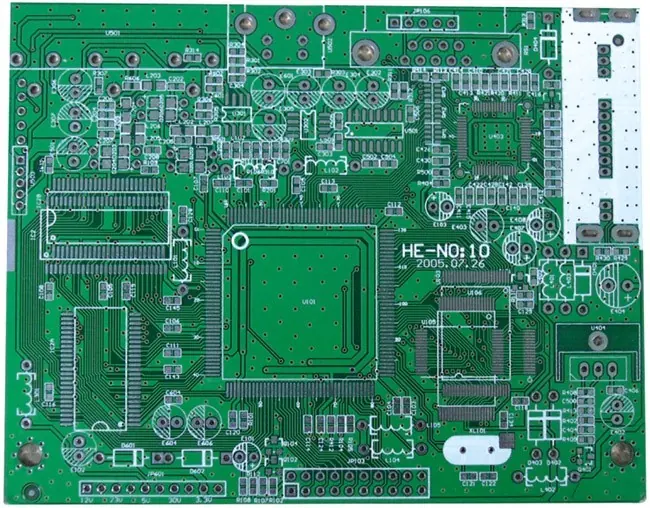
Double Sided FR4 Board With Lead Free HASL
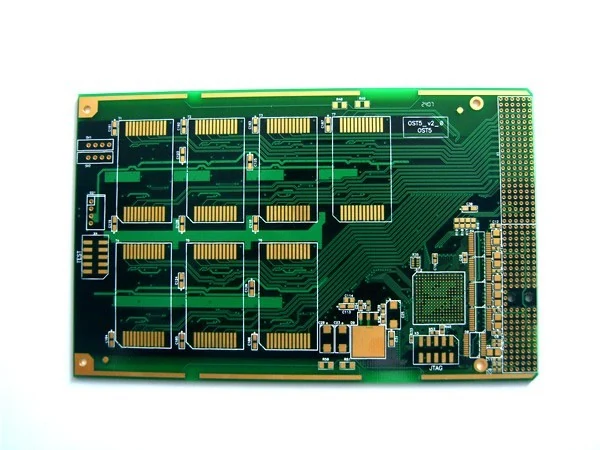
Four Layer Immersion Gold Board For Dense SMD Routing
Eight Layer Board With Electroplated Gold For Contact Surfaces
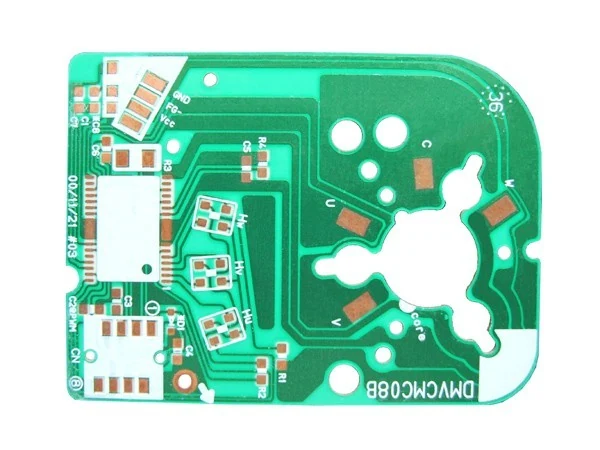
Single Sided Aluminium Board With OSP For Motor And Driver Circuits
Other Guides In The Knowledge Center
Eight guides in total, covering layer count, finishes, thermal management, flex design, tolerances and buying.
Layer count is the single decision that most affects the price and the electrical behaviour of a board. This guide sets ...
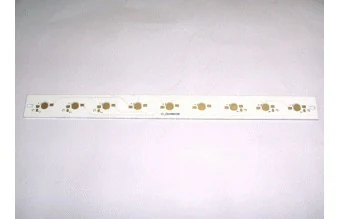
When a board runs hot the usual fixes are a bigger heatsink or a bigger enclosure. A metal core board attacks the proble...
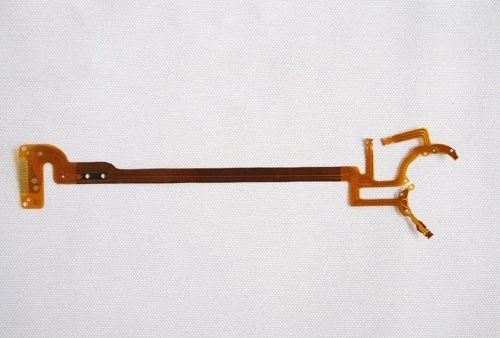
Flexible circuits fail in ways rigid boards do not: creases in the wrong place, copper fatigue at a fold, tails that buc...
Questions About This Topic
Can I have two finishes on one board?
A panel takes one surface finish. Selective plating of an edge finger area is a different process and needs to be discussed with the drawing in front of us.
How long can I store an immersion gold board?
Gold does not oxidise, which is the main reason to choose it for boards built ahead of assembly. Tell us your storage conditions and expected delay and we will confirm.
Is lead free HASL RoHS compliant?
Yes. The lead-free process is what the RoHS note against our rigid boards refers to.
Have A Board That This Guide Does Not Answer
Send the files and the question. We will tell you what the published capability allows and where your design sits against it.