
Aluminium PCB Versus FR4 For Thermal Management
When a board runs hot the usual fixes are a bigger heatsink or a bigger enclosure. A metal core board attacks the problem earlier by changing what the board itself does with the heat. This guide covers when that trade is worth making.
On This Page
FR4 Is An Insulator And That Is The Problem
FR4 is a glass reinforced epoxy. It is a good electrical insulator, which is why boards are made from it, and it is also a good thermal insulator, which is a problem the moment a device on it dissipates real power. Heat generated under a package has nowhere to go except up into the air or sideways through thin copper.
An aluminium-based board replaces the bulk of the substrate with metal. A thin dielectric separates the copper circuit from the aluminium core, and heat crosses that dielectric and spreads through the metal into whatever the board is bolted to.
The Numbers That Matter
Our aluminium laminate is characterised rather than described. Thermal resistance measures 1 degree Celsius per watt against an index value of 1.5, tested on a TO-220 package. Maximum working temperature is 125 degrees Celsius. Dielectric strength is above 1.3 kV/mm and insulation resistance sits at 10 to the power 12 ohms at normal condition.
| Property | Aluminium laminate value | Test basis |
|---|---|---|
| Thermal resistance | 1 °C/W tested, 1.5 index | TO-220 package |
| Maximum working temperature | 125 °C | Published capacity table |
| Dielectric strength | >1.3 kV/mm | Published capacity table |
| Breakdown voltage | 6 kV DC tested, 4 index | GJB1651 clause 5040 |
| Peel strength | 2.2 N/mm tested, 1.8 index | GJB1651 clause 4010 |
| Thermal shock | No bubble, no delamination | GB/T4722 clause 17, 260 and 288 °C |
| Flammability | FV-0 | GB/T4722 clause 26 |
| Bow and twist | <0.01 mm/mm | Published capacity table |
What You Give Up
Aluminium is not a free upgrade. Minimum hole size is 0.5 mm against 0.20 mm on FR4, and minimum track and space are 0.15 mm against 0.075 mm. Outline tolerance is ±0.2 mm rather than ±0.10 mm. Single sided construction is the norm, and double sided work needs plated holes through the core, which is a different process.
So a dense digital board does not belong on aluminium. A power stage or an LED array does.
The Decision In Practice
- Is any single device dissipating more than a couple of watts? Aluminium is worth costing.
- Is the enclosure sealed with no airflow? Aluminium moves heat to the housing wall.
- Are there LEDs whose lumen maintenance matters? Junction temperature is the main driver of LED life.
- Is the circuit dense with fine pitch parts? Keep it on FR4 and split the power stage onto aluminium.
That last option is common and often the cheapest answer: a rigid FR4 control board and a separate aluminium output stage, which is exactly the arrangement in our DC-DC power and LED driver assembly.
Boards This Guide Applies To
Catalogue items where the decisions in this guide have already been made one way or another.
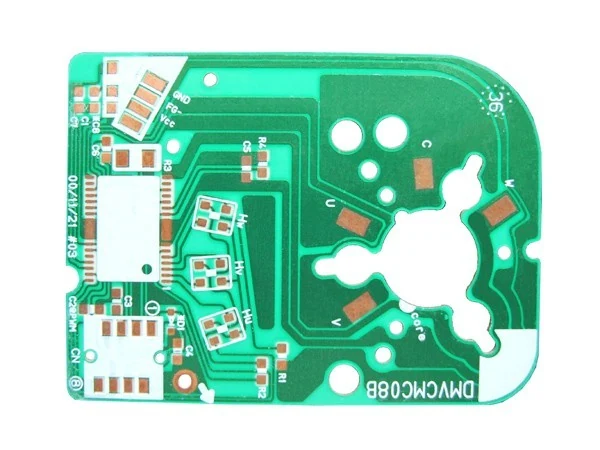
Single Sided Aluminium Board With OSP For Motor And Driver Circuits
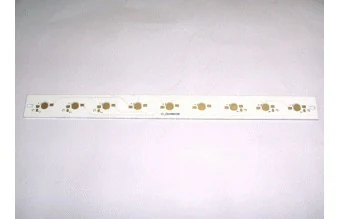
Single Sided Aluminium LED Bar With OSP Finish
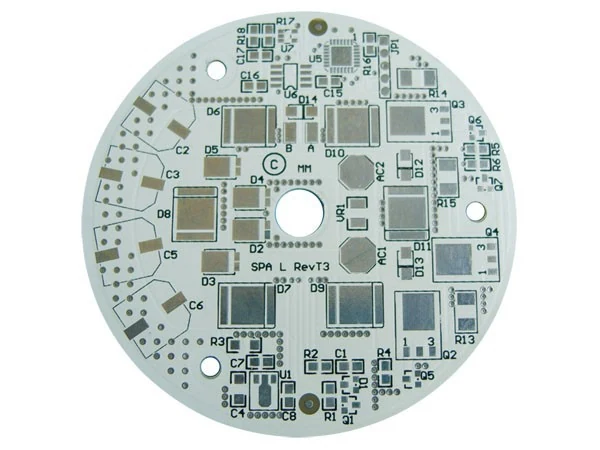
Double Sided Aluminium Board For Round Driver Modules
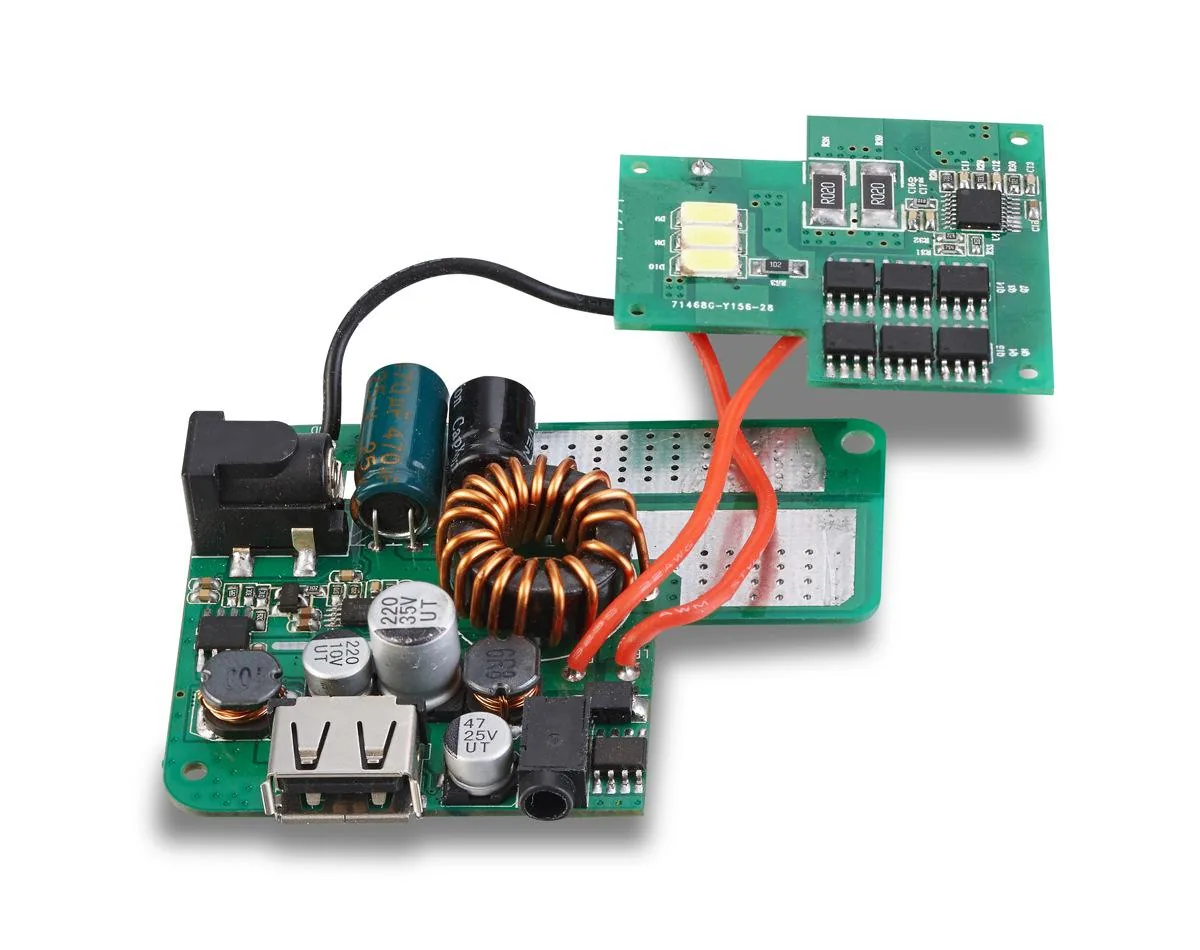
Assembled Power Converter With Toroidal Inductor And LED Output Board
Other Guides In The Knowledge Center
Eight guides in total, covering layer count, finishes, thermal management, flex design, tolerances and buying.
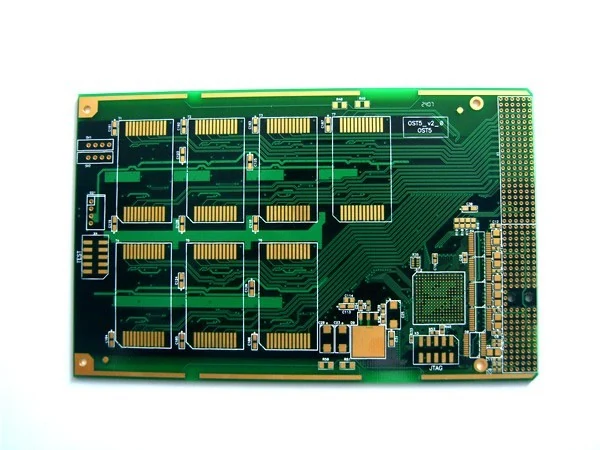
Layer count is the single decision that most affects the price and the electrical behaviour of a board. This guide sets ...
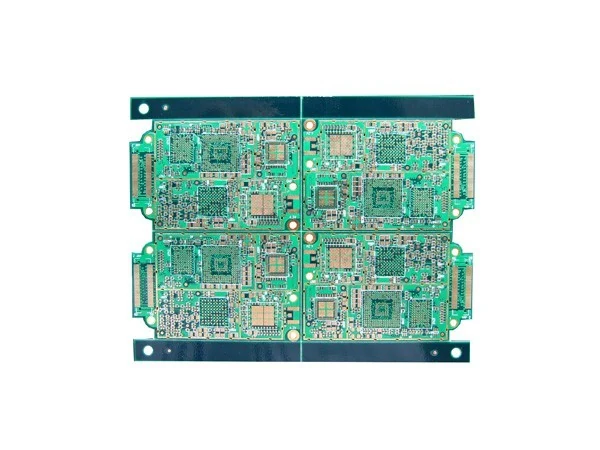
Three surface finishes cover almost every board we build. Choosing between them is not a quality decision, it is a fitne...
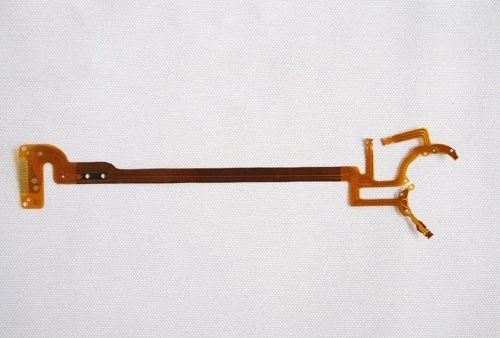
Flexible circuits fail in ways rigid boards do not: creases in the wrong place, copper fatigue at a fold, tails that buc...
Questions About This Topic
Can I put fine pitch parts on an aluminium board?
Minimum track and space on aluminium are 0.15 mm against 0.075 mm on FR4, so dense fine pitch routing belongs on FR4.
How thick is the aluminium core?
Total board thickness runs from 0.3 to 3.0 mm.
Does an aluminium board still need a heatsink?
Often not, because the board conducts into the chassis it is bolted to. Give us the power dissipated and the mounting arrangement and we can talk it through.
Have A Board That This Guide Does Not Answer
Send the files and the question. We will tell you what the published capability allows and where your design sits against it.