Density Decides Dot Visibility
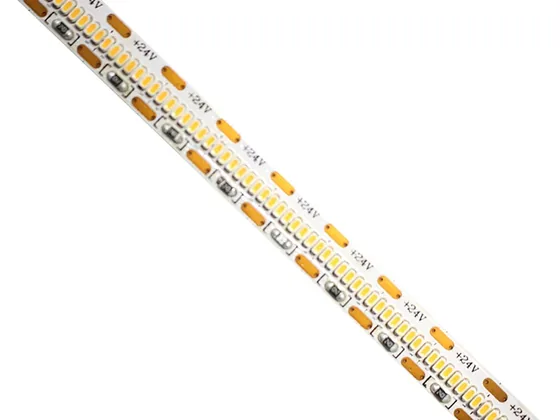
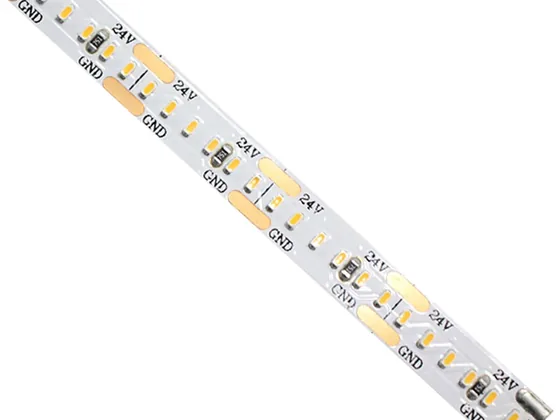
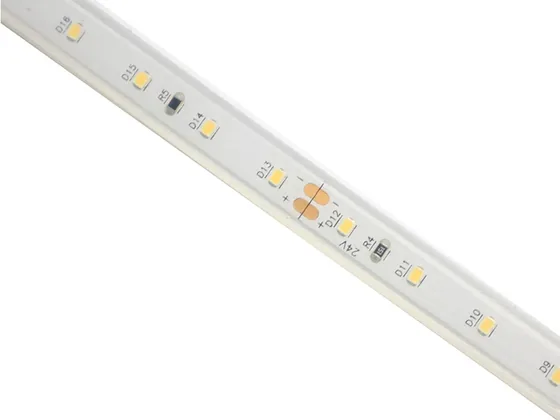
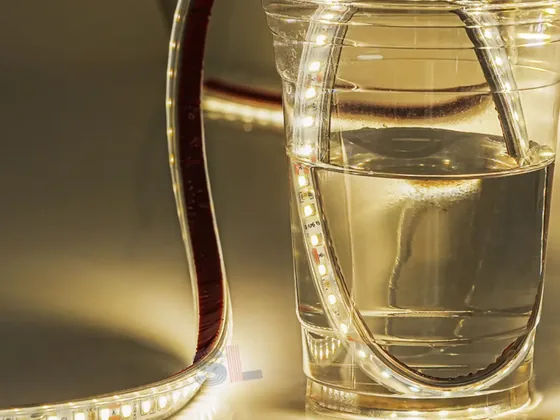
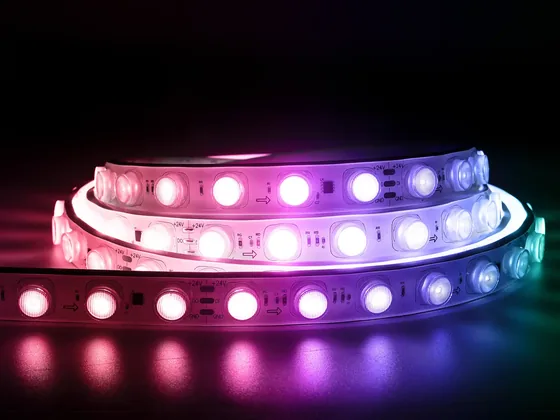
At 60 LEDs per metre behind a deep diffuser you see a line. At 60 LEDs per metre in an open profile you see 60 dots. The 2110 strip runs at 300 or 700 LEDs per metre precisely so that the line reads as continuous in a shallow profile.
See LED Strip Light 2110 700LED →
Package Size Sets The Ceiling
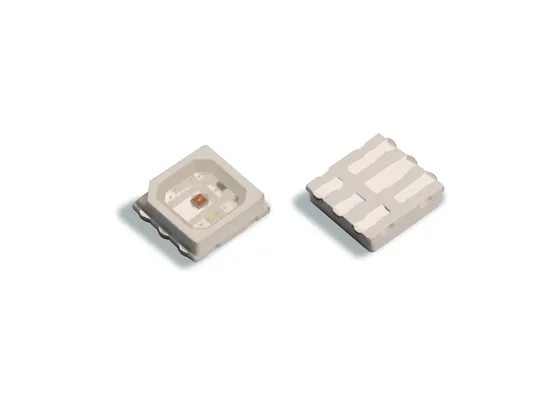
You cannot fit 700 emitters per metre using a 5050 package. Small packages such as 2110 and 2216 are what make very high density possible; large packages such as 5050 are what make multi die colour possible. Neither is better, they solve different problems.
COB Removes The Question Entirely
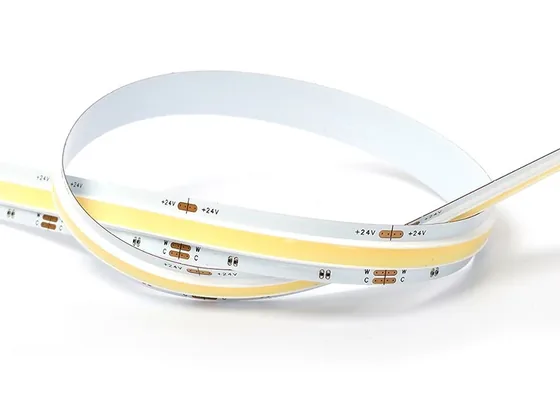
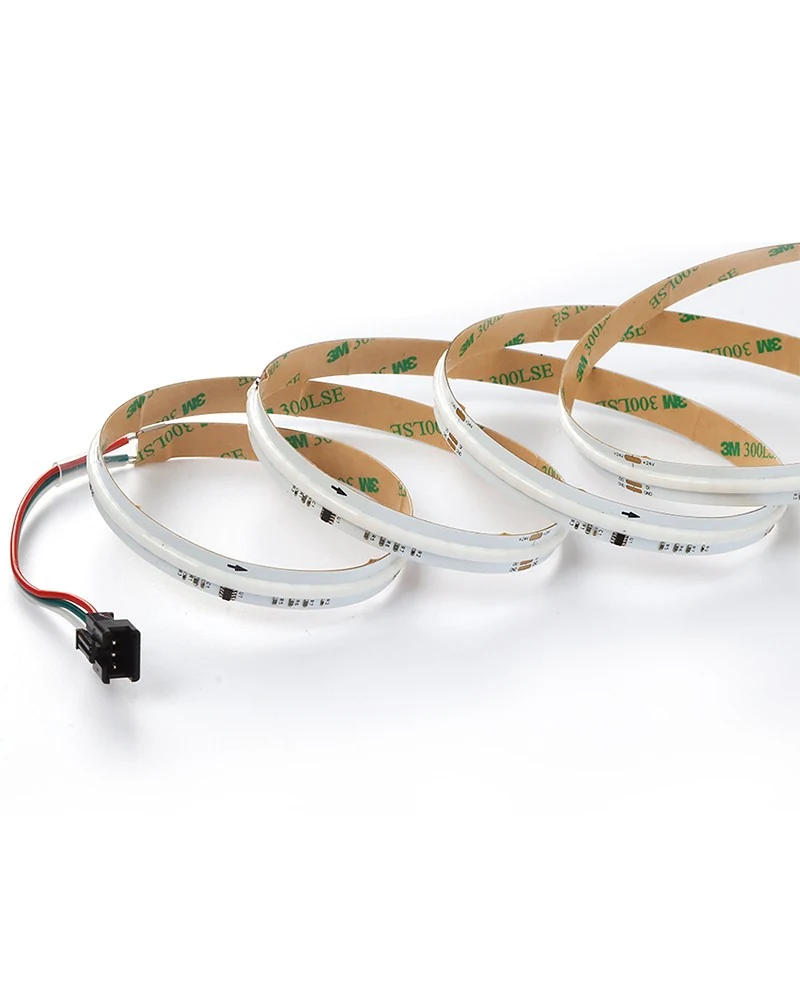
A COB strip has a continuous phosphor line rather than discrete emitters, so there is no dot pattern at any viewing distance and no diffuser needed. The trade-off is lower peak flux per metre than the densest discrete strips.
Cut Unit Is Where Material Gets Wasted
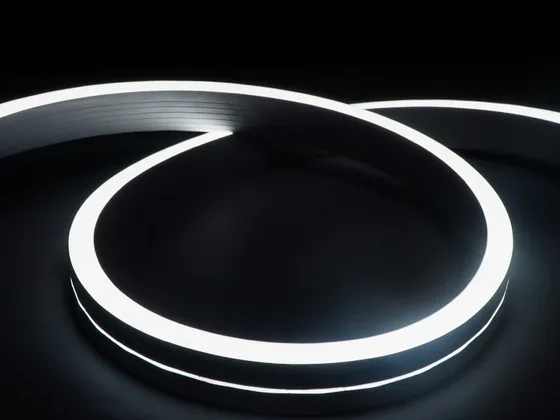
Every strip has a minimum cut unit set by its series wiring. On the neon flex range that is 50 mm on single colour builds and 100 mm on colour builds. On a job made of many short pieces a free cutting product saves a surprising amount of material.
See Neon Strip 3D Bending And Free Cutting →
Check Current Before Length
High density does not always mean high current. The 2110 at 700 LEDs per metre draws 0.8 A per reel because the emitters sit in long series strings, while the 2216 at 2100 LEDs per reel draws 5 A. That difference decides how many reels one driver can carry.