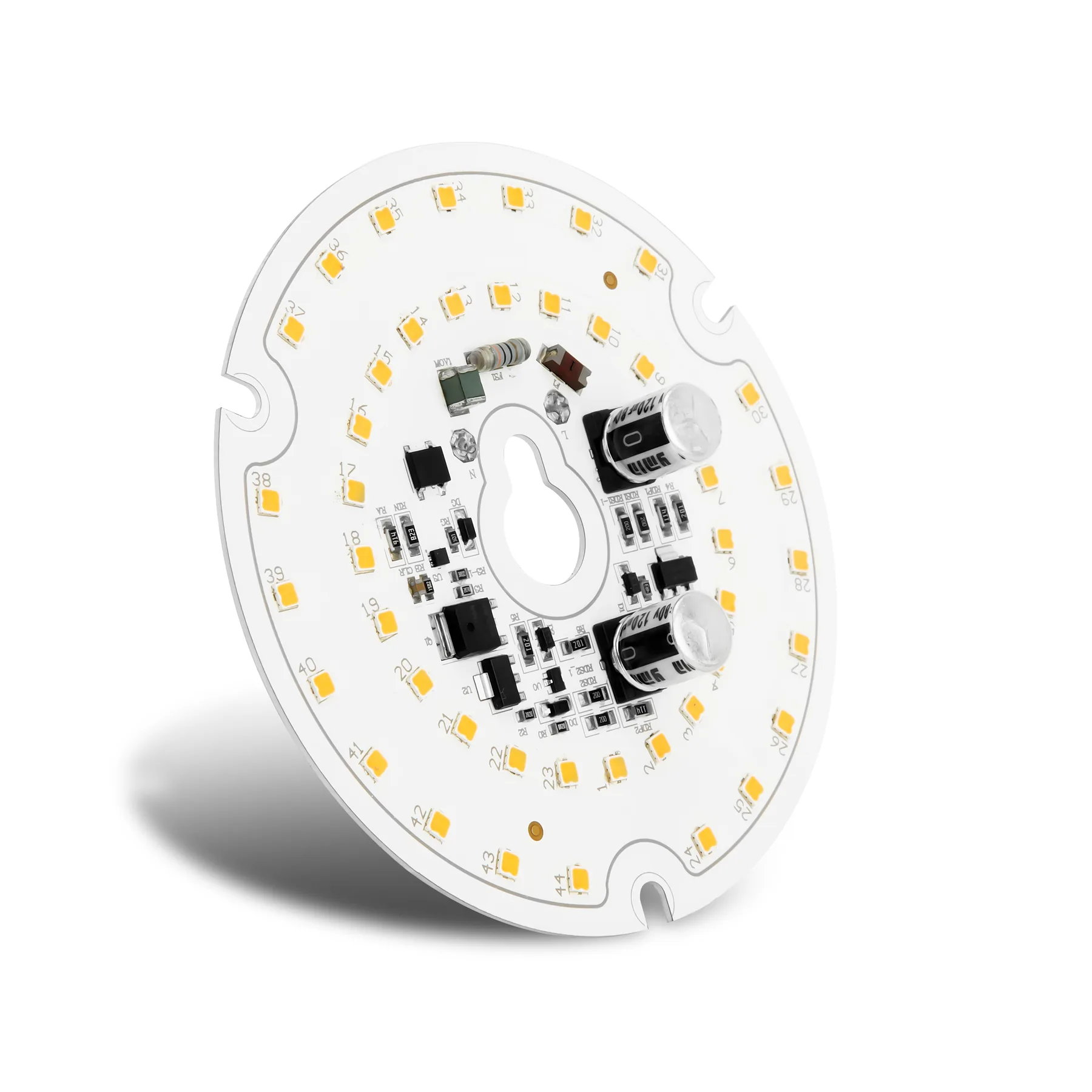
What An AC Module Actually Removes
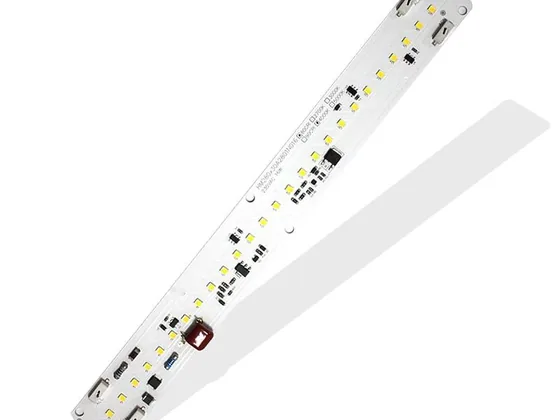
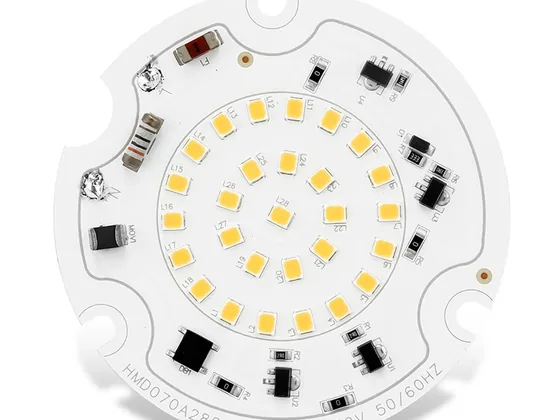
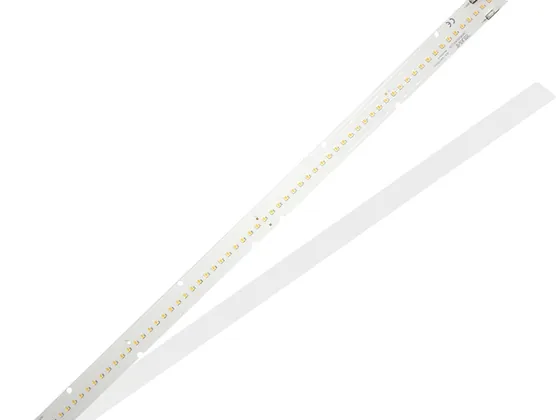
An AC module carries its drive circuit on the same board, so the fitting needs no driver box, no driver cavity and no driver wiring step. In a shallow ceiling fitting that is often the difference between a product that can be built and one that cannot. LUK AC modules hold a 0.95 power factor on both 120V and 230V.
What You Give Up In Efficacy
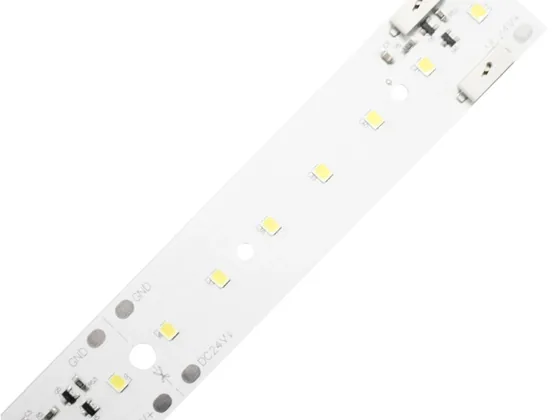
AC modules in this range run at 100 to 120 lm/W. DC modules reach 160 to 207 lm/W. If the fitting has to meet an efficacy regulation, that gap usually settles the argument before any other consideration.
See DC Module High Efficiency 24V Linear →
Dimming Changes The Calculation
A dimmable DC fitting needs a dimmable driver, which is where cost and dimmer compatibility problems come from. A triac dimming AC module dims from the wall dimmer that is already installed, which is why it suits refurbishment work.
See AC Module Triac Dimming Round Series →
Flicker Is An AC Specific Question
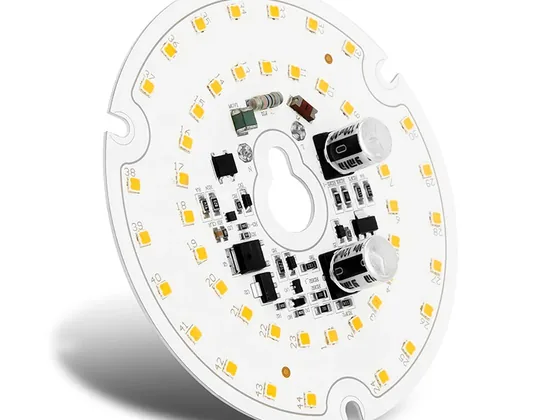
Because an AC module rectifies mains directly, flicker performance depends on the circuit design. Where the room has cameras or long occupancy, specify the low flicker series rather than assuming any AC board will do.
See AC Module Low Flicker Round Series →
A Simple Way To Decide
If the fitting is shallow, cheap to build and driven from a wall dimmer, use AC. If the fitting has to hit an efficacy figure, carry high CRI or scale across several sizes, use DC and accept the external driver.