
Keyboards and Mice in Industrial and Medical Settings
The Gap an Enclosure Cannot Close
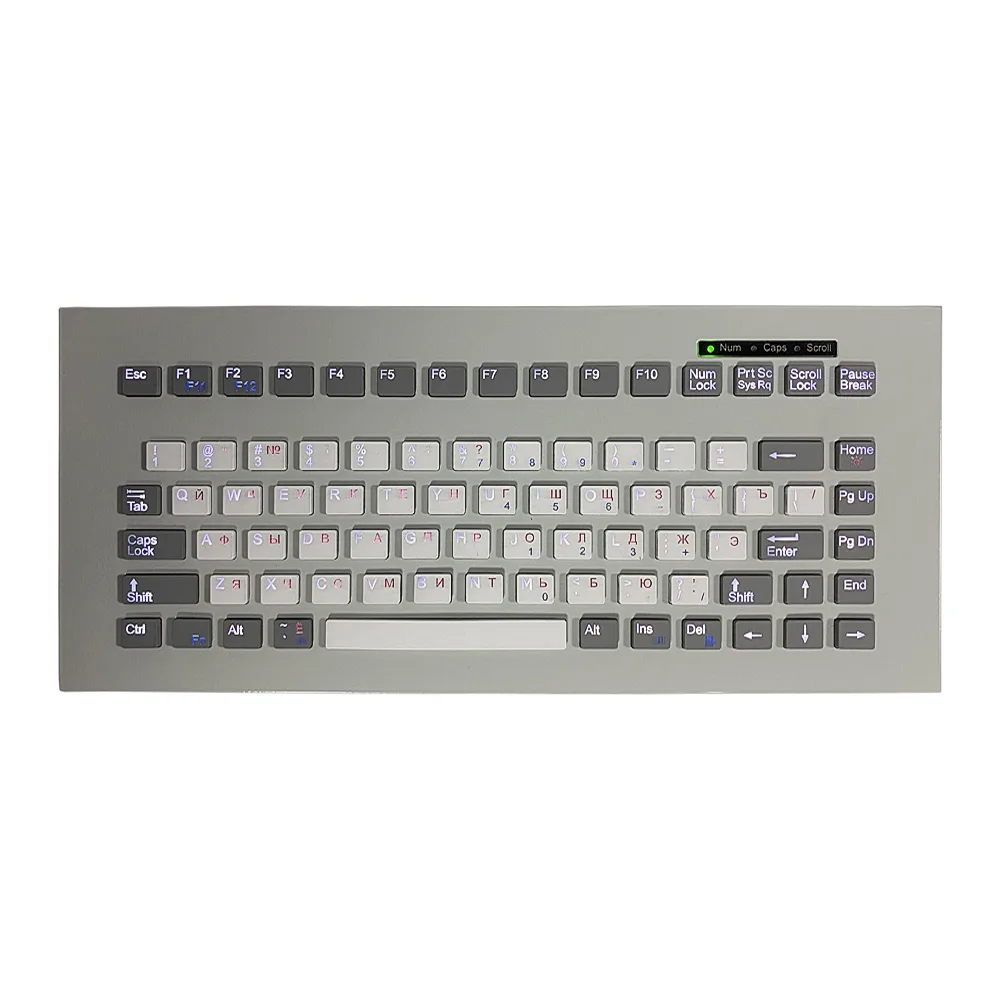
Computers are no longer just office equipment; they are used across almost every industry and environment, and computer control with data storage has made most jobs and procedures simpler and more efficient. That progress brings a physical problem. Computers can be damaged in harsh industrial environments, which is why an industrial computer housing and an LCD monitor enclosure are normally installed to protect the hardware. But the input devices cannot be protected by a shell. The keyboard and the mouse have to remain accessible to the operator's hands by definition, so they sit outside whatever protection the rest of the system enjoys and absorb the environment directly.
Why Touch Screens Do Not Remove the Need
Touch screens are commonly used in industrial settings to control programs, and for that purpose they work well. They are not suited to data input or to other types of information entry, where an operator has to enter values, codes or text rather than select from a defined set of options. That limitation is why a great many industrial installations still require a keyboard and a mouse alongside the screen rather than instead of it. Any specification exercise that assumes a touch interface removes the input device requirement usually discovers the gap during commissioning, when operators need to enter batch numbers, part codes or measurement values into the system.
What Happens to Standard Peripherals on a Plant Floor
The use of keyboards and mice in industry is one of the most common problem areas. In an industrial environment, standard keyboards and mice are quickly affected by dust, grease and similar contaminants and stop working properly. Protective plastic covers are of limited use, since they degrade, trap contamination underneath and make the keys harder to operate. The practical outcome is that standard peripherals have to be replaced frequently, which carries both a purchase cost and a downtime cost every time a unit fails mid-shift. The replacement cycle is usually what pushes a plant to look at rugged input devices in the first place.
Rugged Keyboards and Mice as the Answer
In these harsh environments, industrial keyboards and mice are the necessary specification rather than an upgrade. These rugged peripherals resist almost any harsh environment or harmful substance found in the industrial sector, which means the production process is not interrupted because a keyboard or mouse has clogged. The value is measured in continuity rather than in the unit price of the device. When you build the business case, compare the cost of a rugged unit against the combined cost of repeated standard keyboard purchases plus the production time lost each time one fails, rather than against the purchase price of the office keyboard alone.
Flexible Silicone Keyboards for Space-Limited Stations
A less common but useful option is the flexible silicone keyboard. It can be rolled up for storage and spread out again when needed, which saves space at stations where a permanent keyboard would be in the way or would be damaged between uses. The silicone construction is waterproof and keeps dust and similar contaminants from interfering with normal operation. This suits occasional-use points such as an inspection bench or a mobile trolley, where a full panel-mount installation is not justified but an office keyboard would not survive. It is worth considering wherever the keyboard is needed periodically rather than continuously.
A Different Problem in Healthcare
In some settings the environment does not threaten the keyboard; the keyboard threatens the setting. In hospitals and medical facilities, keyboards and mice become breeding grounds for bacteria and a route for the spread of infectious disease. Traditional keyboards and mice are difficult to clean in this context, because water reaches the internal circuitry and damages the device, so staff are left wiping a surface they cannot properly disinfect. The requirement therefore inverts: the device has to tolerate the cleaning process rather than merely tolerate the room, and that is a different design problem from the one the plant floor presents.
Antibacterial Silicone for Medical Use
A silicone medical keyboard answers that requirement directly. It can be rinsed thoroughly because the construction does not expose internal circuitry to water. It is made from antibacterial silicone, and the surface has no bumps or raised edges where bacteria could establish themselves on the keyboard. Critically, it can be cleaned with the standard hospital disinfectant solutions already in use on the ward, so the keyboard fits the existing cleaning protocol rather than requiring a separate one. For an infection control team, that last point is often the deciding factor, because a device that needs its own special procedure tends not to get cleaned consistently.
Products Mentioned
IP65 Waterproof Silicone Keyboard KY-GJ305
View Specification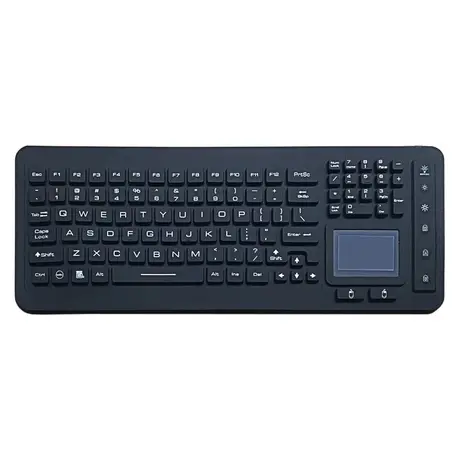
KY-GJ-98-BL Washable Silicone Keyboard With 98 Keys and Backlight
View Specification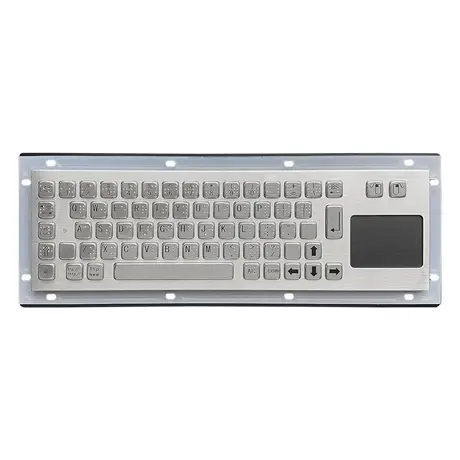
67 Key Metallic Keyboard With Braille KY-PC-NT3 BR
View Specification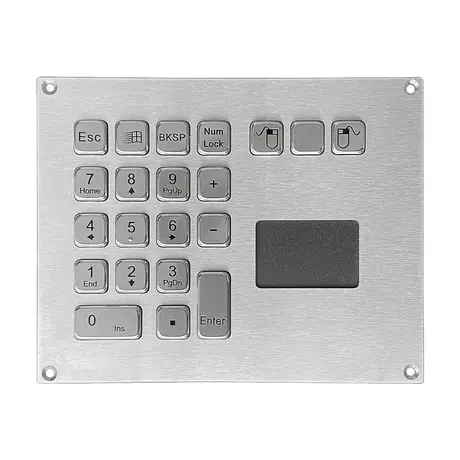
IP65 Mini Keyboard With Trackpad KY-PC-VG160T
View Specification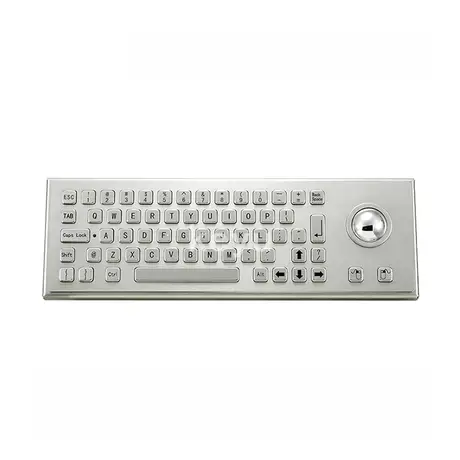
KY-PC-LF IP68 Metal Keyboard With 62 Keys and Photoelectric Trackball
View Specification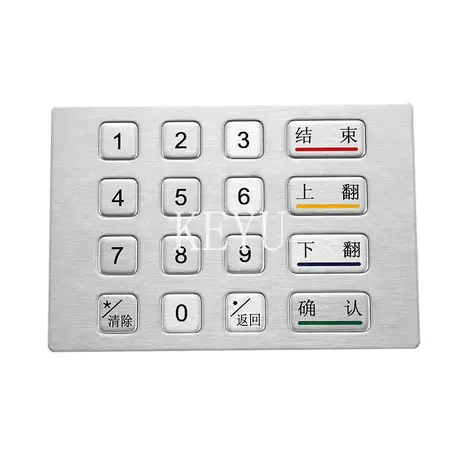
KY2130 Outdoor Metal Keypad With Function Keys
View SpecificationQuestions On This Topic
Why can't an enclosure protect the keyboard and mouse?
Can a touch screen replace the keyboard in a plant?
Do plastic keyboard covers work?
How is a medical keyboard cleaned?
Put This Into A Specification
Send us the application and we will tell you which of these choices actually matter for your terminal.