
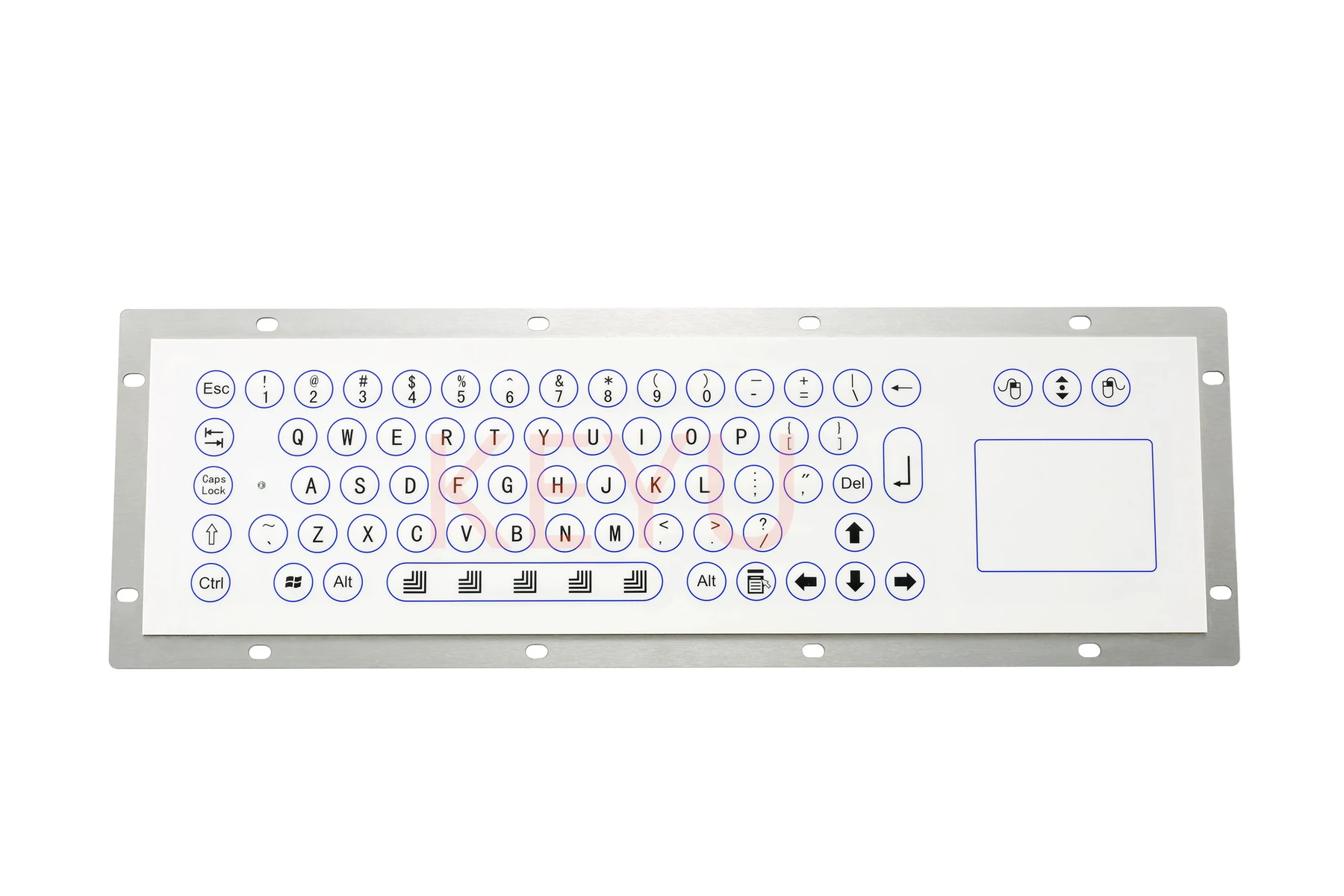
Industrial Membrane Keyboards Features and Applications
How Membrane Switch Technology Works
An industrial membrane keyboard uses flexible membrane switch technology, in which the key triggering function is achieved by printing circuits onto a membrane layer. Pressing the key brings the printed contacts together and registers the input. There are no individual mechanical switch bodies, which is the source of most of the advantages that follow. The construction is inherently reliable, gives a long service life, and resists water and dust because the working parts are enclosed within the layers rather than exposed at the surface. It is a fundamentally different design approach from a mechanical keyboard rather than a cheaper version of one.
Durability Under Industrial Conditions
Industrial membrane keyboards go through demanding design and testing before release, and the resulting units are built to hold up under conditions that would disable ordinary hardware. That includes high temperatures, humidity and dust, all of which are routine in a production environment rather than exceptional. Durability here is not simply a matter of tough materials; it comes from the sealed layered construction keeping contaminants away from the circuit in the first place. For a buyer, the practical consequence is a lower failure rate across a fleet of workstations and less unplanned downtime on the equipment the keyboards control.
Water and Dust Resistance
The membrane design gives the keyboard strong resistance to both water and dust. Liquids and debris are prevented from entering the keyboard interior, so the unit keeps working normally in conditions where an unsealed keyboard would fail within weeks. This is the single most valuable property of the technology for most industrial buyers. Contamination reaching the contacts is the dominant failure mode for keyboards in dirty environments, and a construction that structurally excludes it removes that failure mode rather than merely delaying it. It also means the keyboard can be cleaned properly instead of cautiously.
Cleaning and Daily Handling
The surface of an industrial membrane keyboard is generally a smooth material, which makes cleaning quick. A damp cloth or a detergent is enough, and there are no key gaps or removable caps for material to lodge in. That matters operationally more than it sounds: a keyboard that takes ten seconds to wipe down at the end of a shift will actually be cleaned, while one that requires disassembly will not. In settings with hygiene requirements, the flat sealed surface is also what makes a documented cleaning procedure realistic for the people who have to follow it.
Space Saving and Weight
The membrane layer design produces a smaller unit than a traditional mechanical keyboard, which makes it suitable for industrial equipment where installation space is restricted. Panel depth is often the binding constraint on a machine control enclosure, and a slim membrane assembly can fit where a mechanical keyboard cannot. The overall structure is also lightweight and flexible, so the keyboard is easy to carry and move and can be paired with a range of devices. For mobile equipment and portable control stations, that combination of thin profile and low weight is frequently the reason membrane is specified.
Customisation Options
Industrial membrane keyboards can be designed to the user's requirements, covering key layout, function settings and appearance including colours. This is where the technology has a clear edge: because the graphics and the circuit are printed, changing the legend set, the key arrangement or the branding is a change to artwork and tooling rather than a redesign of physical switch positions. That flexibility is what lets a membrane keyboard meet the specific demands of different industrial applications instead of forcing the application to adapt to a stock layout. KEYU works to OEM and ODM requirements with in-house tooling capability.
Where Membrane Keyboards Are Deployed
Three application areas dominate. In industrial automation, membrane keyboards control machine tools, production lines and industrial robots, giving operators a durable interface to the equipment. In medical equipment, the waterproof and dustproof properties make them suitable for operating room equipment and medical monitoring instruments where cleaning is frequent and contamination control is required. In transport, they appear in the instrument panels and control systems of ships, aircraft, trains and road vehicles. The common factor across all three is an environment where a conventional keyboard would be a maintenance liability rather than a tool.
Products Mentioned
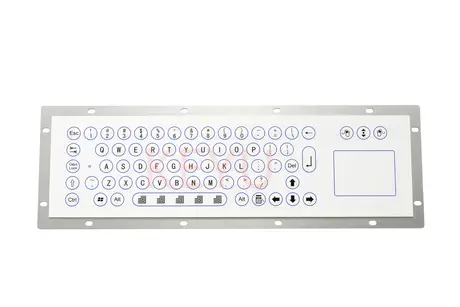
KY-UT385 Medical Membrane Keyboard With Touchpad
View Specification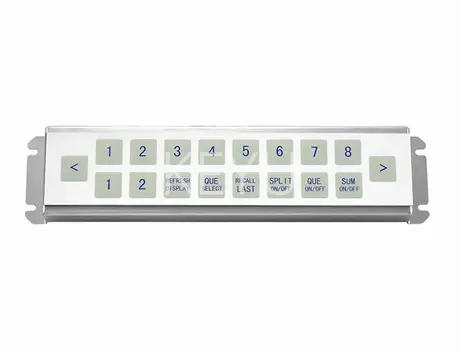
KY2060B Thin Panel Metal Membrane Keypad
View Specification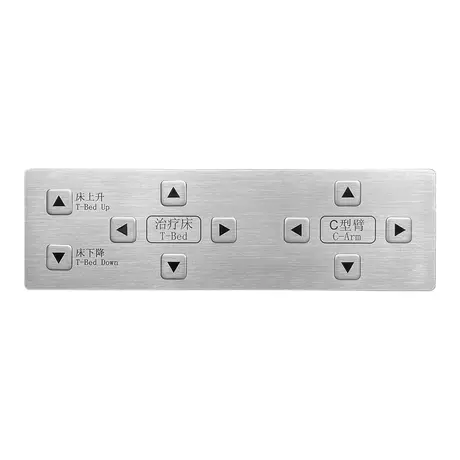
Custom Medical OEM Stainless Steel Keypad KY-2123
View Specification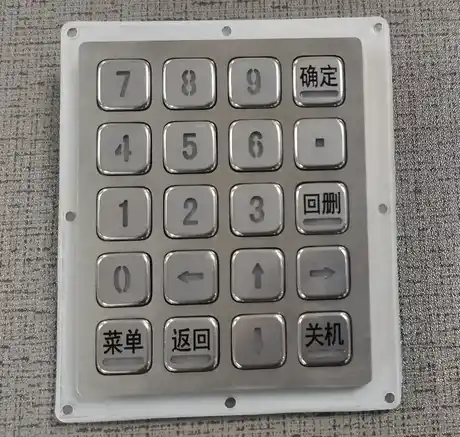
KY-55A02 20 Key Stainless Steel Side Keypad
View Specification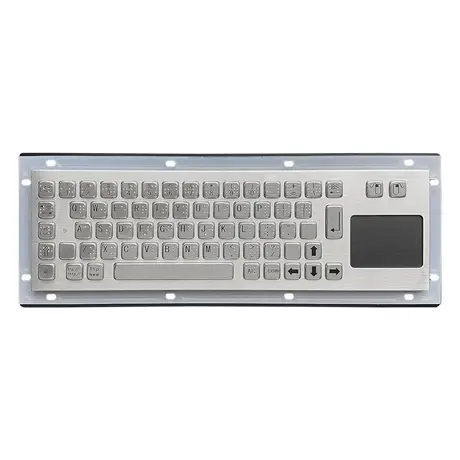
67 Key Metallic Keyboard With Braille KY-PC-NT3 BR
View Specification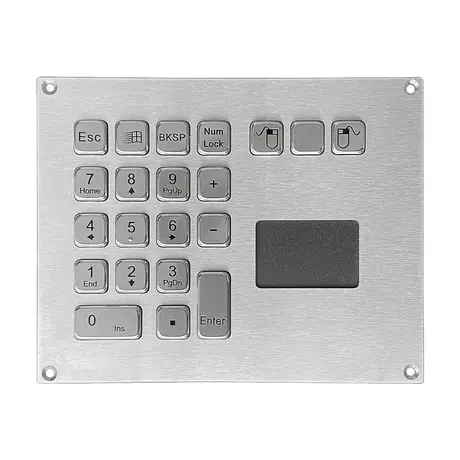
IP65 Mini Keyboard With Trackpad KY-PC-VG160T
View SpecificationRelated Ranges
Questions On This Topic
How does a membrane switch register a keypress?
Why are membrane keyboards easier to clean?
What can be customised?
Where are industrial membrane keyboards typically used?
Put This Into A Specification
Send us the application and we will tell you which of these choices actually matter for your terminal.