
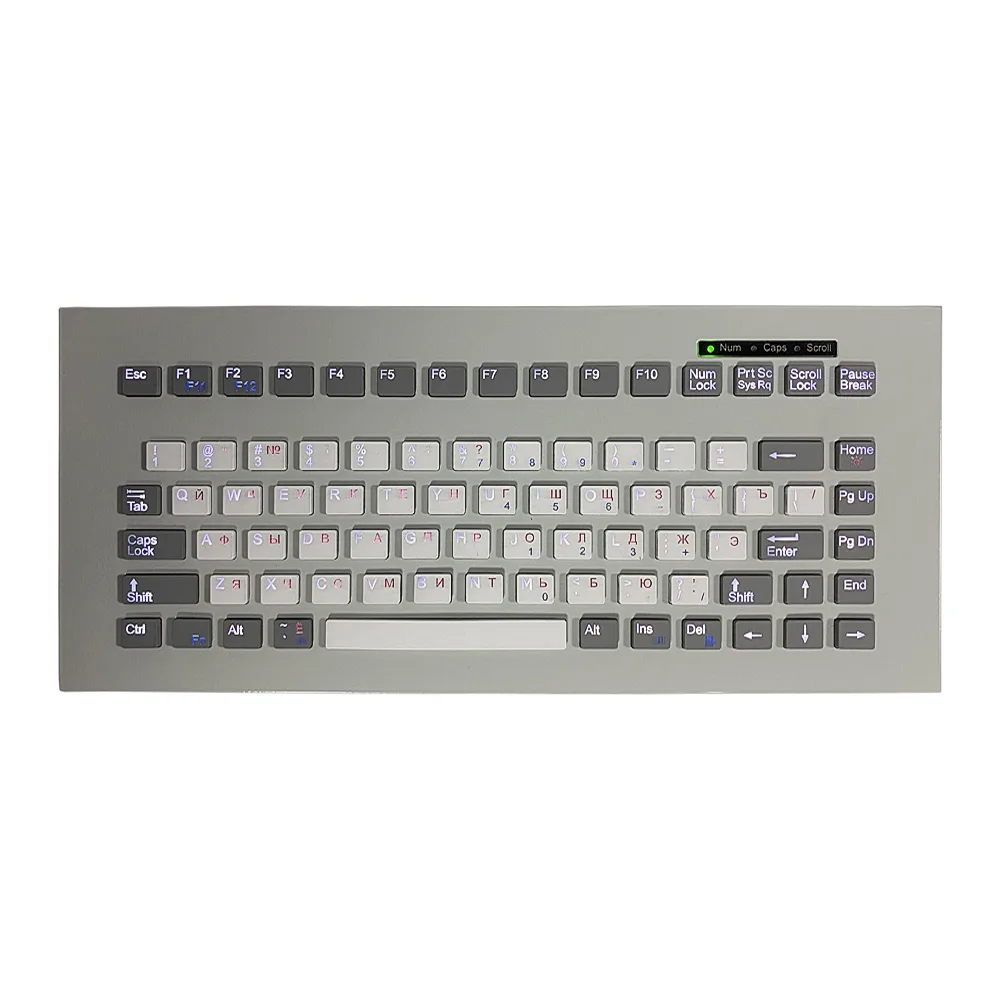
Choosing a Medical Keyboard for Clinical Workstations
Why Clinical Workstations Need Different Hardware
In hospitals and clinics, doctors and nurses enter data at workstations using computers, keyboards and mice, and those items are in direct contact with staff throughout a shift. That contact is the reason a purpose-built medical keyboard matters: it has to be straightforward to disinfect and clean while still giving a usable typing experience. A standard office keyboard fails on the first requirement. Its key gaps and separate caps trap material that cannot be reached without disassembly, and it will not tolerate the cleaning agents a clinical environment requires. The specification question is therefore not about typing comfort alone but about what the surface survives.
The Medical Silicone Keyboard
A medical silicone keyboard has its surface formed from medical grade silicone. The one-piece silicone sheet has no cracks or seams, which is what allows the unit to be cleaned thoroughly by flushing and sterilised with medicinal alcohol. Typing is light and quiet, with no noise from the keys and no wrist strain from a heavy action. Internally the switching can be silicone carbon particles or scissor feet, both giving a light, comfortable feel. Function matches a traditional plug-and-play keyboard, and different language layouts can be produced to order for the region the equipment is deployed in.
Silicone Keyboard Specification Points
Material is medical silicone. Switching technology is optionally silicone carbon or scissor switch. Keyboard colour is available in white or black. Configuration and layout options cover alphanumeric or fully functional layouts, with an integrated touchpad, backlight and wired or wireless operation available. Installation is either mobile desktop or embedded. Protection is offered as IP68 washable, or IP67 on the surface. The interface is USB or PS/2, plug and play. Confirm each of these against the actual workstation before ordering, particularly the installation type and the interface, since these are the two that cannot be changed on site.
The Tempered Glass Keyboard
The medical glass keyboard is a capacitive input device with sensitivity control and audible feedback signals. It can be produced in different sizes, colours and styles, giving a clean appearance on a clinical cart or bench. The glass surface is durable and wear resistant with a long service life, and it is available as a removable desktop unit or for panel installation. A lock function disables the keys so the unit can be disinfected without being unplugged from the computer, which is a practical advantage during a cleaning round. Operation is plug and play and any language layout can be supplied.
Disinfection and Cross-Contamination Control
Both constructions are built around cleaning. The glass keyboard can be disinfected and sanitised to prevent cross-contamination and washed with a hospital-grade disinfectant or with soap and warm water. The silicone unit is flushed and sterilised with medicinal alcohol. The key-lock function on the glass version removes the awkward step of disconnecting hardware before cleaning, which in practice is what determines whether a cleaning protocol is actually followed. When comparing models, ask specifically which agents the surface is rated for rather than accepting a general claim that the keyboard is washable.
Why White Is the Standard Colour
Standard medical keyboards are supplied in white or another light colour, and this is a functional choice rather than an aesthetic one. A light surface makes dirt, debris and blood immediately visible, so staff can see that the keyboard needs cleaning instead of relying on a schedule. On a dark surface the same contamination is effectively invisible until it is substantial. Black is available on the silicone units and the glass keyboards can be produced in any colour, but for a clinical deployment where infection control drives the purchase, the visibility argument usually settles the decision in favour of white.
Glove and Wet Hand Operation
Clinical staff wear medical gloves for most of the working day, so a keyboard that only responds to bare fingertips is unusable in practice. Both constructions are designed for operation with gloves on and with wet hands. This is worth verifying at sample stage with the actual glove type your site uses, since glove thickness and material affect capacitive sensing in particular. The glass keyboard includes sensitivity control, which is the adjustment that makes glove operation workable. Test with gloves before committing to a volume order rather than after.
Products Mentioned
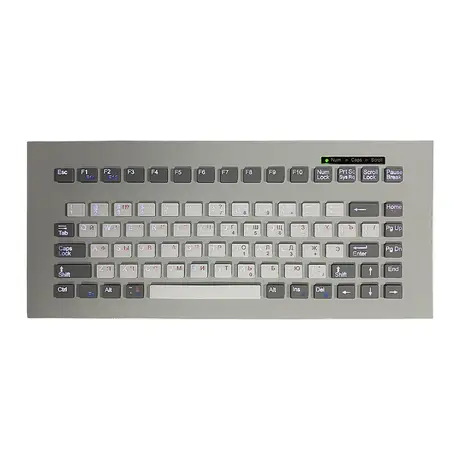
IP65 Waterproof Silicone Keyboard KY-GJ305
View Specification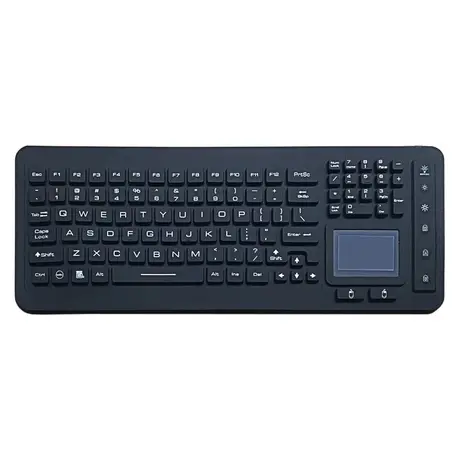
KY-GJ-98-BL Washable Silicone Keyboard With 98 Keys and Backlight
View Specification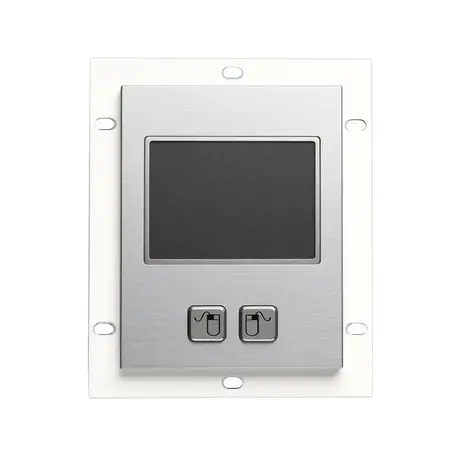
Stainless Steel External Trackpad for PC KY-PC-TB-A-R
View Specification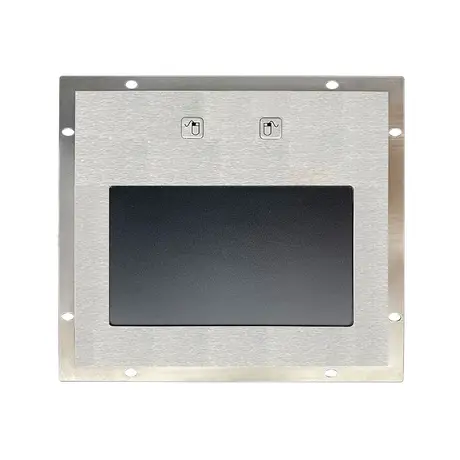
KY-TB-A160 Stainless Steel External Trackpad With 2 Function Keys
View Specification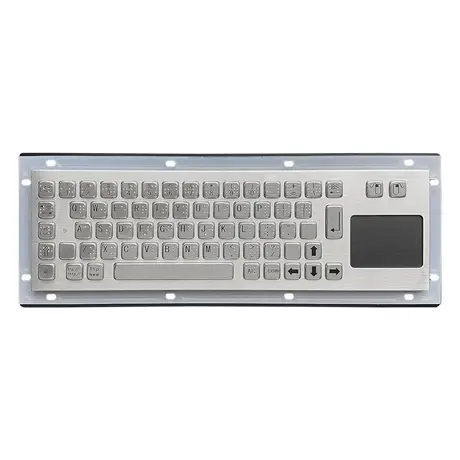
67 Key Metallic Keyboard With Braille KY-PC-NT3 BR
View Specification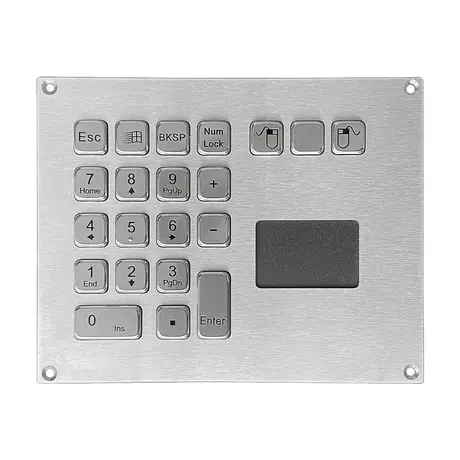
IP65 Mini Keyboard With Trackpad KY-PC-VG160T
View SpecificationRelated Ranges
Questions On This Topic
Silicone or glass for a clinical workstation?
What protection ratings are available?
Can they be used with gloves?
Why are medical keyboards usually white?
Put This Into A Specification
Send us the application and we will tell you which of these choices actually matter for your terminal.