
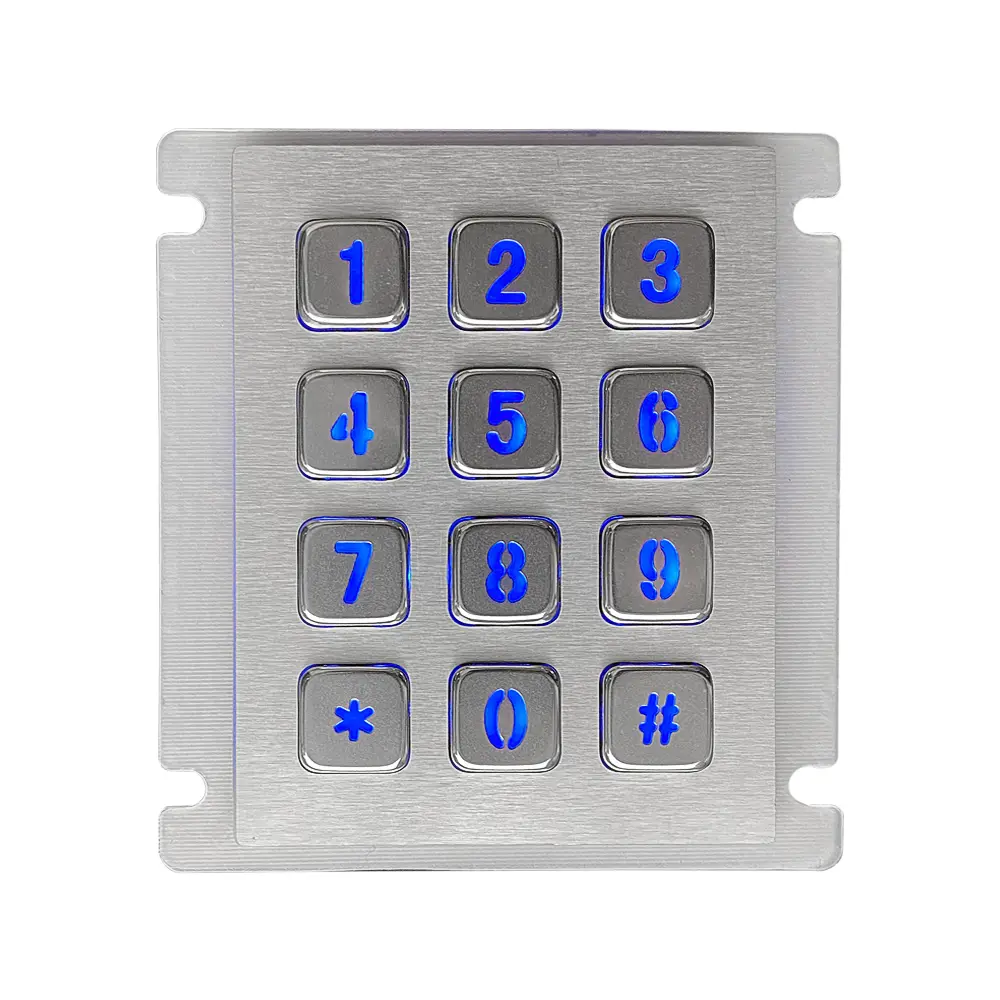
Backlit Trackballs for Work in Low Light Environments
What a Backlit Trackball Does
A backlit trackball is a pointing device in which the ball itself is illuminated, normally by LEDs around the seating. The practical purpose is straightforward: in a dark control room, a night shift cab, or a dimmed medical suite, the operator can see the ball and its rolling surface without extra task lighting that would wash out a display. Optical tracking reads the finger driven movement of the ball and translates it into cursor motion, so the device gives accurate pointing while the hand stays in one position. It plugs into a USB port and works without a separate installation step.
Sizes Materials and Surface Finish
Backlit trackballs are made in a wide range of sizes, commonly from 20mm up to 120mm, so the ball can be matched to the panel and to the way it will be operated. A small ball suits fingertip control in a tight console; a large ball suits gloved hands or gross positioning work. Materials include PU polyurethane unsaturated resin, POM, PA, PP, rubber, and silicone, each giving a different balance of durability, grip, and rolling feel. Surface finish is a further choice: both smooth and frosted surfaces are produced, and finish affects how evenly the backlight spreads as well as how the ball feels.
Backlight Quality and Smart Sleep
Two things distinguish a well made backlit ball. The first is evenness. The illumination should be uniform across the whole visible surface with no colour difference from one area to another, since patchy lighting is distracting and makes the ball harder to read at a glance. Backlight colour is selectable and can be specified to match a panel or a colour coding scheme. The second is the smart sleep function: when the trackball is not being used it goes to sleep automatically and switches the backlight off, saving energy and avoiding a permanently lit point of light in a dark room.
Precision in Practice
Backlit trackballs are built to tight precision requirements, with accuracy generally reaching 0.05mm, which is what allows fine cursor positioning rather than approximate pointing. That level of control is the reason the device is specified in place of a mouse for work where the pointer has to land exactly where the operator intends. The design combines mechanical and optoelectronic principles: the mechanical side governs how smoothly and consistently the ball rolls in its seat, while the optical side reads that motion. Both have to be right, because a precise sensor cannot compensate for a ball that rolls unevenly.
Where Backlit Trackballs Are Used
The device suits applications with strict requirements on the external environment, including industrial control, medical equipment, aviation, and marine navigation. In machinery applications it provides precise rolling control. Integrated into keyboards it replaces a separate mouse and gives accurate scrolling and pointing within a single panel. In electronic equipment generally it is chosen where both high visibility and durability are needed at the same time. What links these cases is that the operator cannot rely on desk space for a mouse and cannot rely on good ambient lighting, which is exactly the gap a backlit trackball fills.
Compatibility and Operation
Setup is simple: connect the device to a USB port on the host and it is ready to use. Compatibility is broad, covering common operating systems including Windows and macOS, so the same unit can be deployed across a mixed estate without separate part numbers. Beyond basic pointing, backlit trackballs support a range of gesture operations such as dragging, zooming, and rotating, which gives the operator more control without adding physical buttons to the panel. Because the hand stays in a fixed position while the fingers move the ball, operation stays comfortable and flexible through extended use.
Products Mentioned
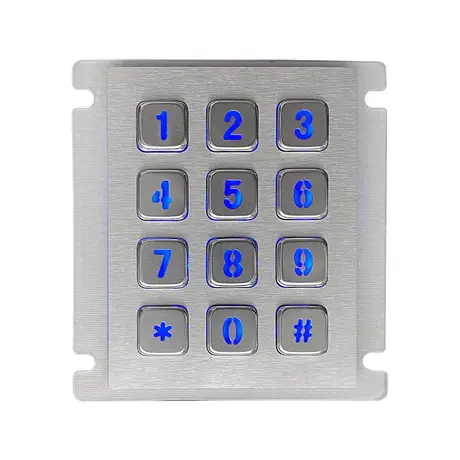
12 Key Industrial Backlight USB Keypad KY2068A-LED
View Specification
KY-PC-MINI-LED Backlit Metal Keyboard With SUS304 Panel
View Specification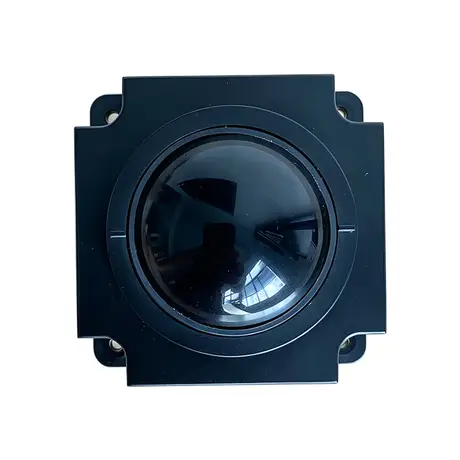
Industrial 50mm Trackball Module KY-MS-MH50-BRS-A
View Specification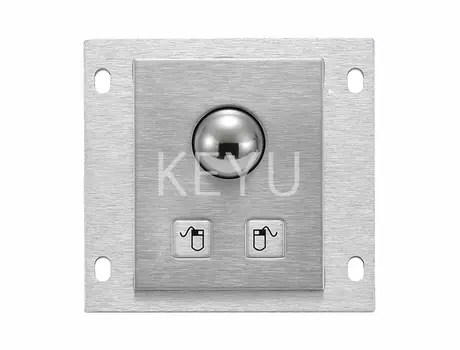
KY-PC-25G 25mm Metal Trackball Module With Two Keys
View Specification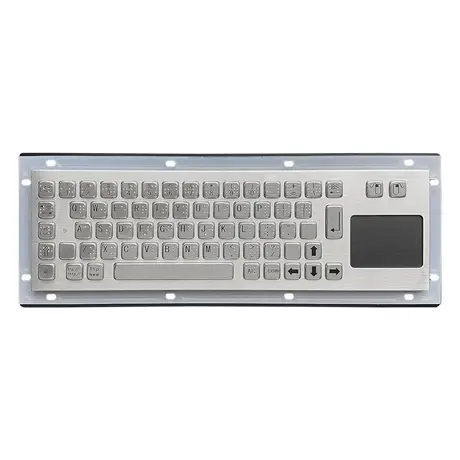
67 Key Metallic Keyboard With Braille KY-PC-NT3 BR
View Specification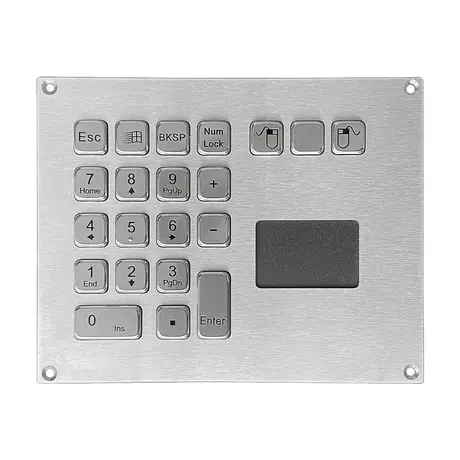
IP65 Mini Keyboard With Trackpad KY-PC-VG160T
View SpecificationRelated Ranges
Questions On This Topic
What ball sizes are available?
What accuracy can a backlit trackball reach?
Does the backlight stay on all the time?
Which materials are used for the ball?
Put This Into A Specification
Send us the application and we will tell you which of these choices actually matter for your terminal.