Why volumetric
Hand feeding a gestation row produces a different ration every day and a different one for every member of staff. A volumetric cup fixes the amount mechanically: set the volume once and every drop is the same until you change it deliberately.
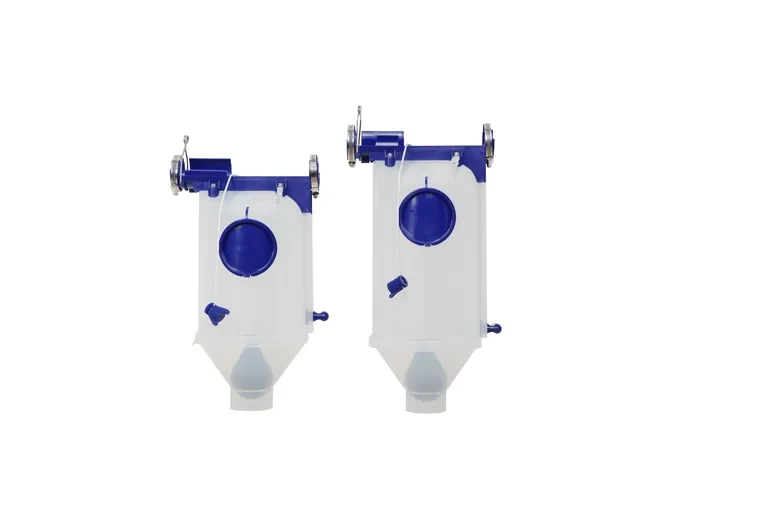
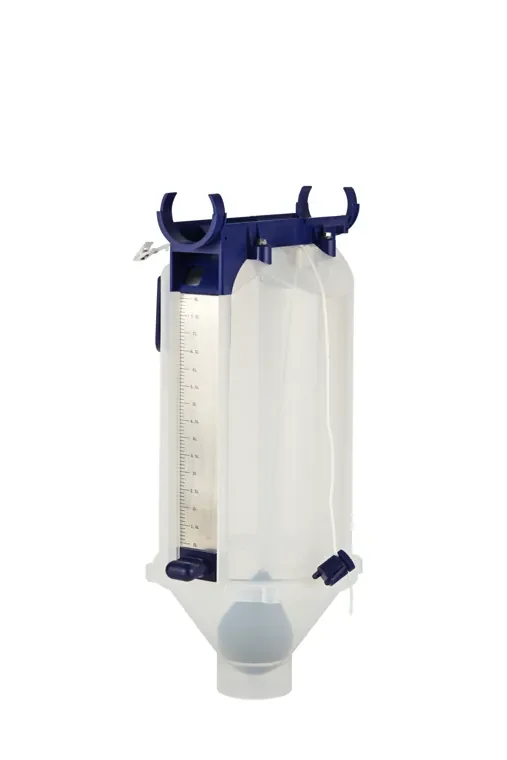
JGM produces the cups in 6 L and 8 L bodies, in opaque (codes 22108-2 and 22109-2) and transparent (22118-2 and 22119-2) versions.
Choosing the capacity
6 L covers gestation rations; 8 L covers the higher feed levels of lactation. Rooms that run both stages usually fit the larger body and set it down, rather than swapping cups.
Commissioning: set, then weigh
Set the volume against your ration table, then weigh one drop on a scale. A cup measures volume; your plan is in kilograms; the relationship between the two is your diet's bulk density.
Do this again whenever the formulation changes. A move to a lighter, higher-fibre diet changes the weight in the same set volume, and nothing on the cup will tell you.
Release the row together
The point of a row release is that every sow starts at the same time. Feeding one by one down a row creates noise, agitation and animals that have finished before their neighbour has started.
One person can feed a full room in a single pass once the release is set up properly.
Why the transparent version earns its price
A stockperson walking the row before release can see, at a glance, whether every cup has filled. A blocked auger, a bridged cup or a cup knocked off its setting shows up before the feed drops rather than the next morning when a sow has missed a meal.
Keep the outside of the body clean during washdown so it stays readable from the alley.
Cleaning and export packing
Rinse and dry cups between batches so feed does not bridge in the body. For planning a shipment: cups pack 8 per carton — 950 × 480 × 500 mm for the 6 L and 950 × 480 × 560 mm for the 8 L — 64 per pallet, and roughly 1,408 sets in a 40 ft container.