
Ultrasonic Material Recognition Sensor 1
A reflection-type ultrasonic transducer that reads back the change in frequency and amplitude of the returned wave, so metal, plastic and wood separate cleanly without any contact with the target.
- High sensitivity
- Good performance consistency
- High reliability
The problem it solves. Sorting lines and consumer robots have to know what they are about to touch before they touch it. Optical sensors are defeated by dark surfaces, dust and gloss; contact probes wear out and mark the part.
Ask for: operating frequency, dimensions, supply voltage, lead length and connector. These are confirmed per order against the current drawing.
Specifications
| Sensing principle | Reflection of ultrasonic waves; frequency and amplitude of the reflected wave change with the material |
|---|---|
| Detection mode | Non-contact |
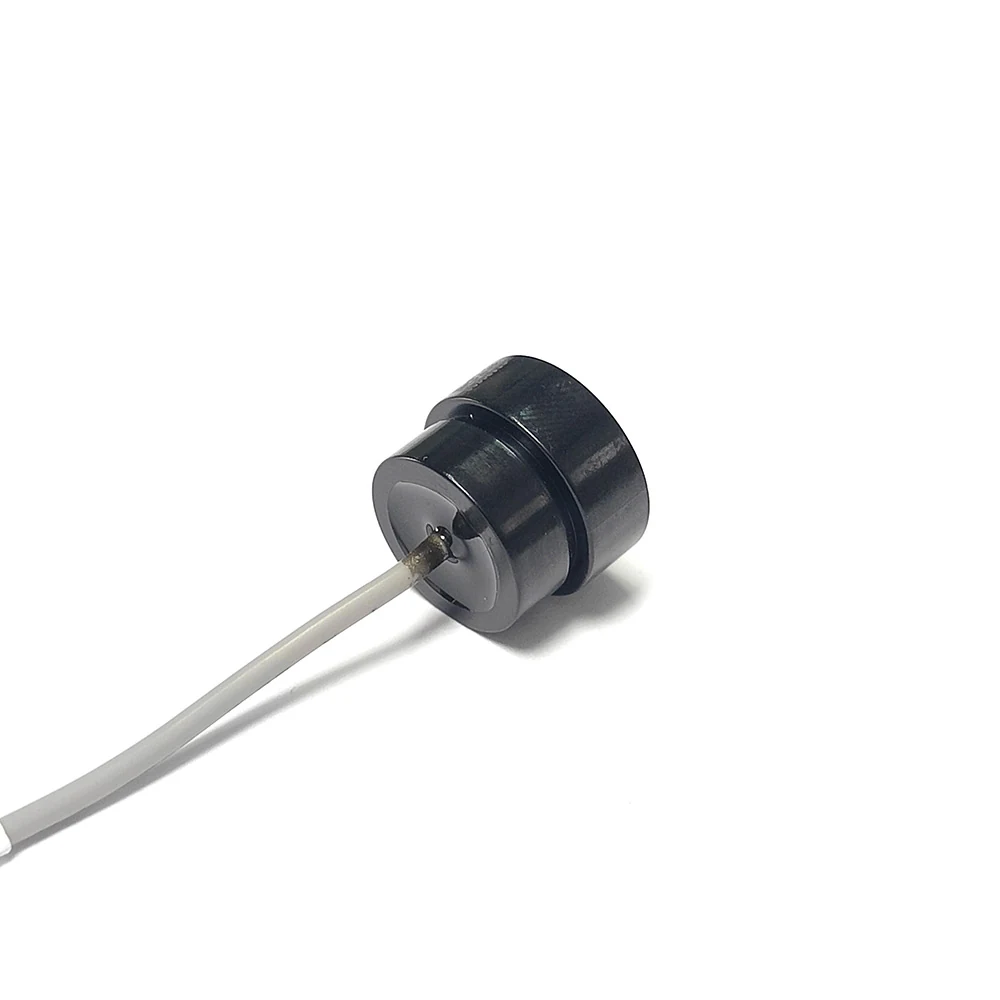
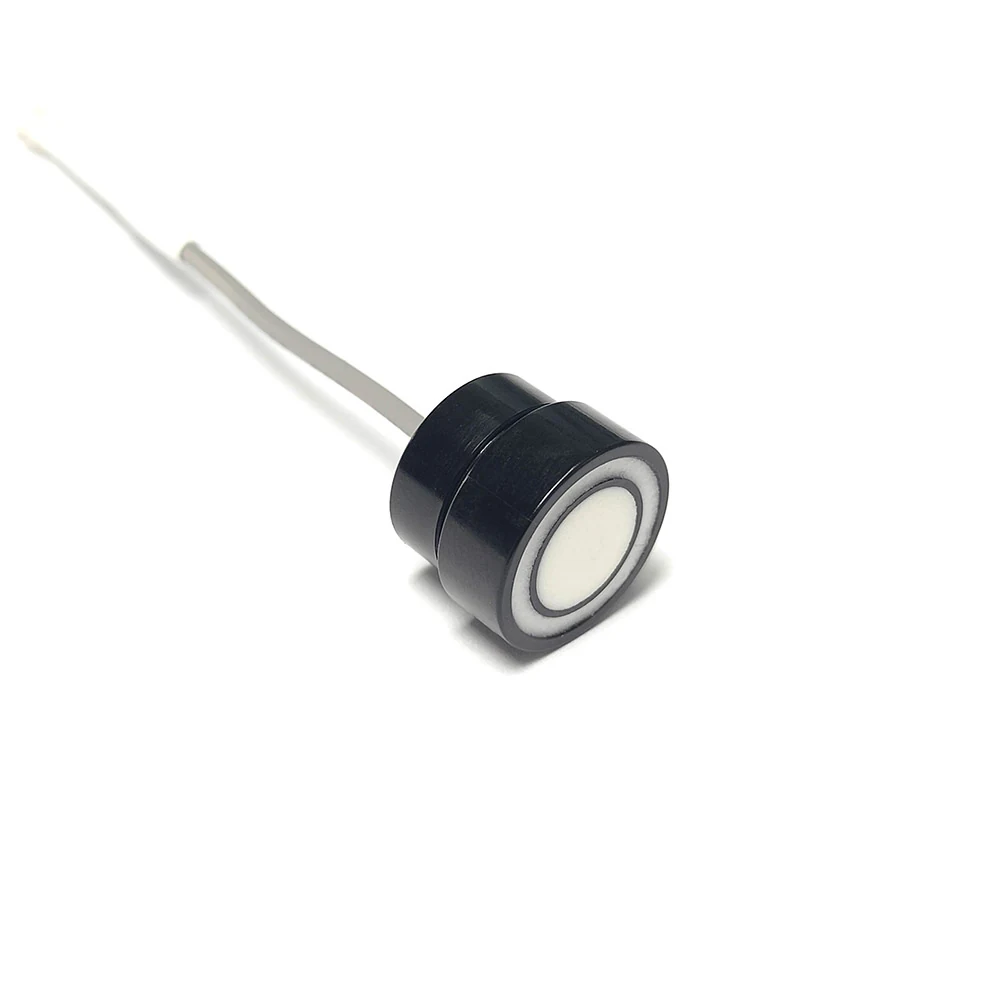
| Housing | Cylindrical, black, with exposed ceramic emitting face |
| Lead | Flat ribbon lead wire, unterminated |
| Operating frequency | TBC - confirm with the engineering team |
| Dimensions | TBC - confirm with the engineering team |
| Supply voltage | TBC - confirm with the engineering team |
Application scenarios
- Material recognition of sweeping robots
- Distinction between single and double sheets of paper
Why this configuration
- Sensitive ceramic material is developed in-house, so batch-to-batch echo behaviour stays inside the same band.
- Signal analysis and failure handling are part of the same team that designed the device, so anomalies are traced rather than swapped out.
- Non-contact operation means no wear surface and no mark on the target.
Questions engineers ask about this sensor
Which materials can this sensor separate?
It works on the acoustic difference between materials such as metals, plastics and wood. The larger the difference in acoustic impedance and surface structure, the cleaner the separation. Send us the two materials you need to tell apart and we will tell you whether the echo difference is usable.
Does the target have to be flat?
A flat, perpendicular face returns the strongest echo. Curved or tilted surfaces scatter part of the wave, so the usable stand-off distance drops. Tell us the geometry and mounting angle when you enquire.
Can I get the sensor with a connector already fitted?
The photographed unit ships with an unterminated lead. Lead length and termination are customisable - specify the connector and length with your enquiry.
What is the difference between sensor 1, 2 and 3?
All three are reflection-type material recognition transducers built on the same principle; they differ in housing and lead configuration. Compare them side by side on the Material Recognition Sensors category page.
Application notes
Related sensors
Ultrasonic Material Recognition Sensor 2
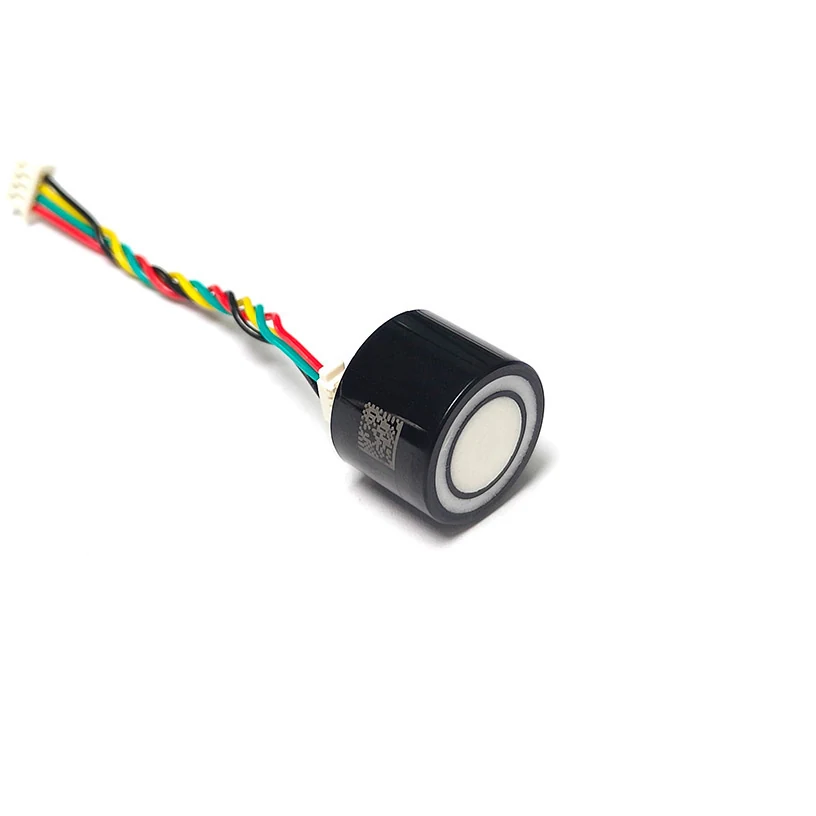
The same reflection-type sensing element supplied on a twisted, colour-coded harness with a pitch connector already fitted, so it drops straight onto a board-level mating header.
View specifications →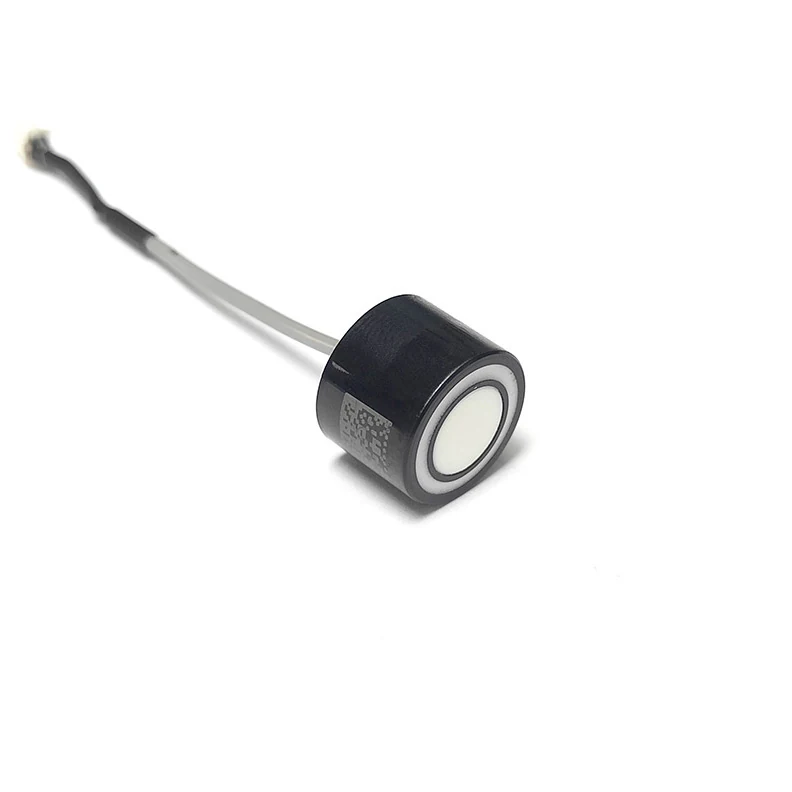
Ultrasonic Material Recognition Sensor 3
A short-body reflection transducer with a fine centre-exit lead and micro connector, so it seats in a shallow boss and routes straight back to the board.
View specifications →Get the current drawing for this sensor
Tell us the medium, the path and the mounting boss. We will send the configuration that fits, with lead and connector specified.