
Why Gas Transducers Run at 200 kHz
Air is a hostile load for a piezoelectric element. The frequency choice is what makes the measurement possible at all.
The impedance problem
A piezoelectric ceramic is dense and stiff; a gas is neither. Most of the acoustic energy at the interface is reflected back into the element rather than radiated into the medium, and what does radiate is attenuated quickly. Attenuation in a gas rises steeply with frequency.
The compromise
200 kHz sits low enough that the wave survives the interface and the path, and high enough that the transit time across a duct can be timed usefully. It is the practical working point for gas metering transducers.
What the meter gets in return
Non-contact measurement, low pressure loss, a wide range ratio and strong corrosion resistance - none of which a diaphragm meter can offer at the same time.
Installation is part of the measurement
The flow calculation uses the measured time or phase difference together with the channel length and the installation angle. Those two geometry terms have to be fixed and known, which makes the flow body design part of the metrology.
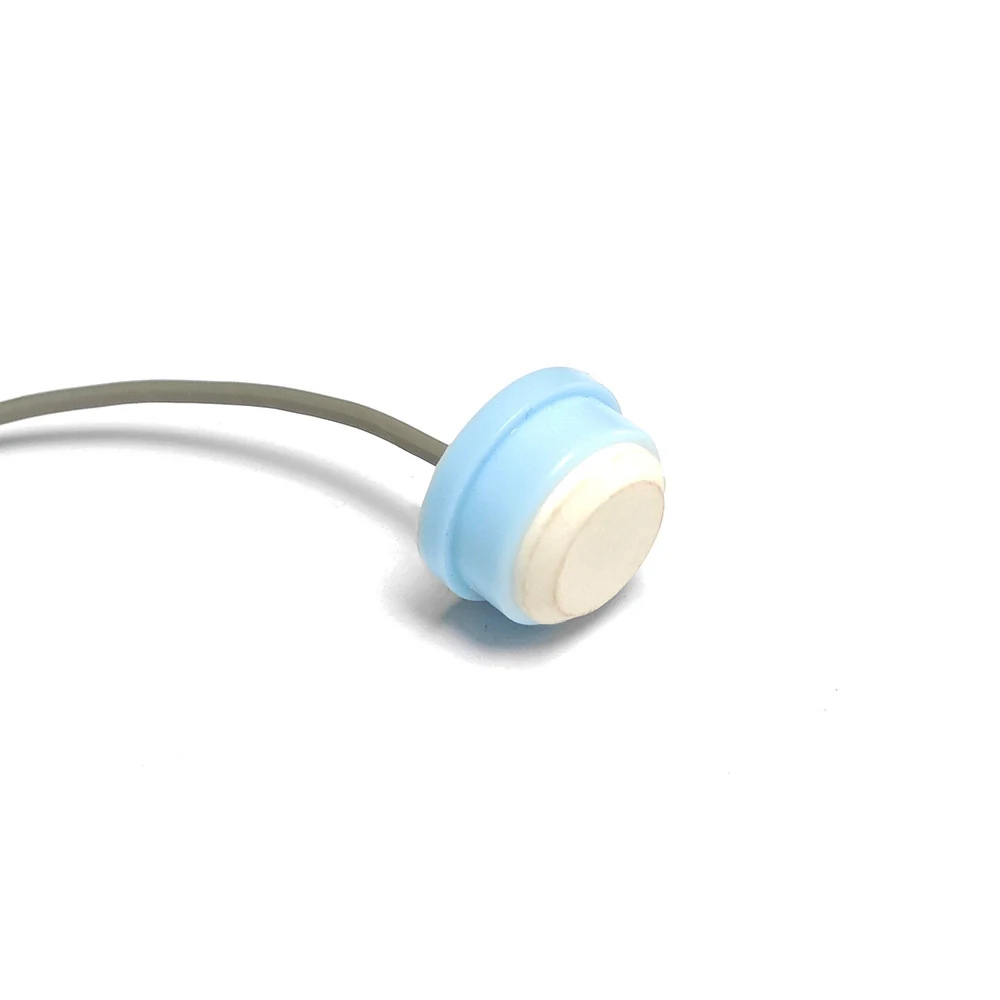
Sensors referenced in this article
Apply this to your own design
Send the medium, the path and what you need to resolve, and we will tell you which transducer the article points at in your case.