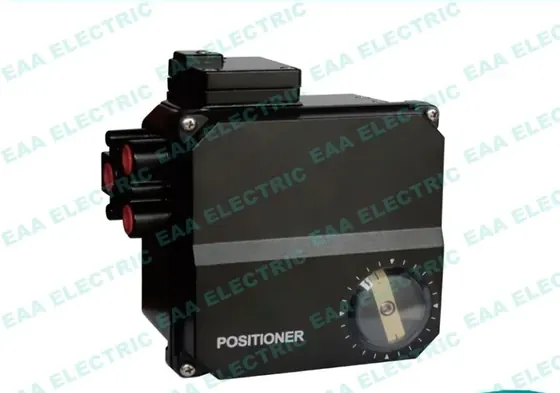
Classification By Input Signal
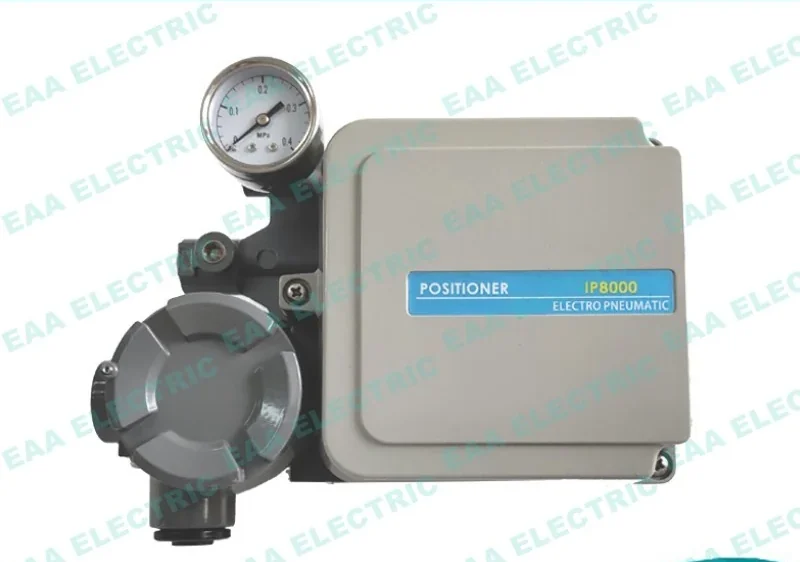
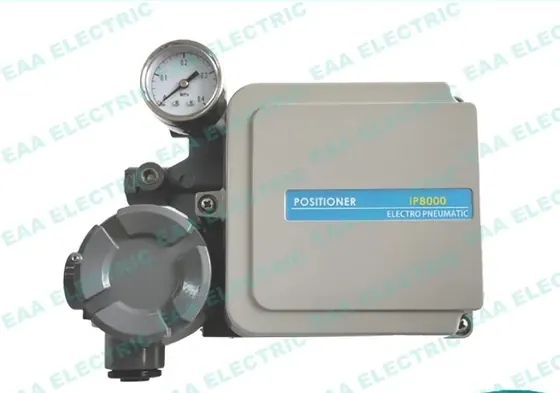
Valve positioners are classified into pneumatic valve positioners, electro-pneumatic valve positioners and smart valve positioners according to input signals. The input signal of the pneumatic valve positioner is a standard gas signal, for example, a 20~100kPa gas signal, and its output signal is also a standard gas signal. The input signal of the electric valve positioner is a standard current or voltage signal, for example, 4-20mA current signal or 1~5V voltage signal, etc.
The electric signal is converted into electromagnetic force inside the electric valve positioner, and then the air signal is output to the toggle Control valve. The intelligent electric valve positioner converts the current signal output from the control room into the gas signal for driving the regulating valve. According to the friction force of the valve stem when the regulating valve is working, the unbalanced force generated by the fluctuation of the medium pressure is offset, and the valve opening corresponds to the control The current signal output by the chamber can be configured intelligently to set the corresponding parameters to achieve the purpose of improving the performance of the control valve.
According to the direction of action, it can be divided into one-way valve positioner and two-way valve positioner.
Single Acting and Double Acting
When the one-way valve positioner is used in a piston type actuator, the valve positioner only works in one direction, and the two way valve positioner acts on both sides of the cylinder of the piston type actuator and works from two directions.
According to the gain symbol of the valve positioner output and input signal, it is divided into positive acting valve positioner and reverse acting valve positioner. When the input signal of a positive-acting valve positioner increases, the output signal also increases, so the gain is positive. When the input signal of the counteracting valve positioner increases, the output signal decreases, so the gain is negative.
According to whether the input signal of the valve positioner is analog signal or digital signal, it can be divided into ordinary valve positioner and fieldbus electric valve positioner. The input signal of ordinary valve positioner is analog air pressure or current, voltage signal, and the input signal of field bus electrical valve positioner is the digital signal of field bus.
Linear and Rotary Patterns
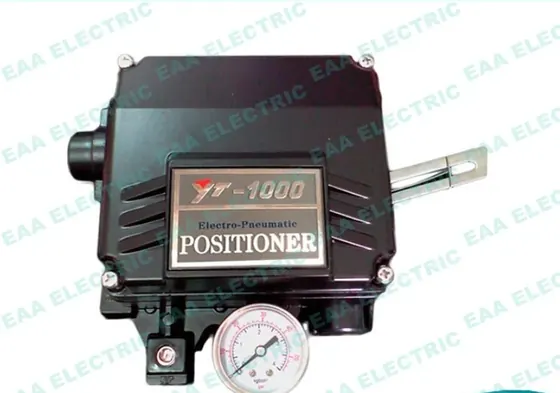
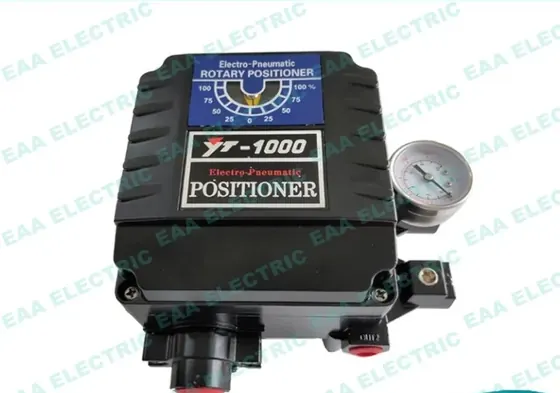
According to whether the valve positioner has CPU or not, it can be divided into ordinary electric valve positioner and intelligent electric valve positioner. Ordinary electric valve positioners do not have a CPU, so they are not intelligent and cannot process related intelligent calculations. The intelligent electric valve positioner has a CPU, which can process related intelligent calculations, for example, it can perform nonlinear compensation of the forward channel, and the fieldbus electric valve positioner can also be equipped with PID and other functional modules to realize the corresponding calculations.
It can also be classified according to the detection method of the feedback signal.
For example, valve positioners that use mechanical linkage to detect valve position signals; valve positioners that use Hall effect to detect displacement of valve stems; valve positioners that use electromagnetic induction to detect valve stem displacement.