The Force Balance Principle
Action Principle of Valve Positioner
(1) It is used in important adjustment systems that require high adjustment quality to improve the positioning accuracy and reliability of the adjustment valve.
(2) Used in occasions where the pressure difference between both ends of the valve is large (△p>1MPa). Increase the output force of the actuator by increasing the air source pressure to overcome the imbalance force generated by the liquid on the valve core and reduce the stroke error.
How The Feedback Loop Closes
(3) When the medium to be adjusted is high temperature, high pressure, low temperature, toxic, flammable, and explosive, in order to prevent external leakage, the packing is often pressed tightly, so the friction between the valve stem and the packing is relatively large. Use the positioner to overcome the time lag.
(4) When the medium to be adjusted is viscous fluid or contains solid suspended matter, the positioner can overcome the resistance of the medium to the movement of the valve stem.
(5) It is used for regulating valve with large diameter (Dg>100mm) to increase the output thrust of the actuator.
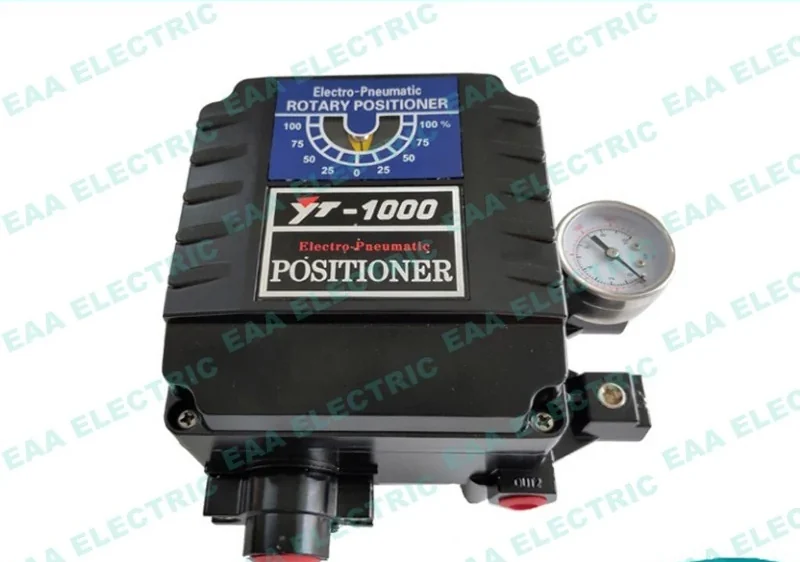
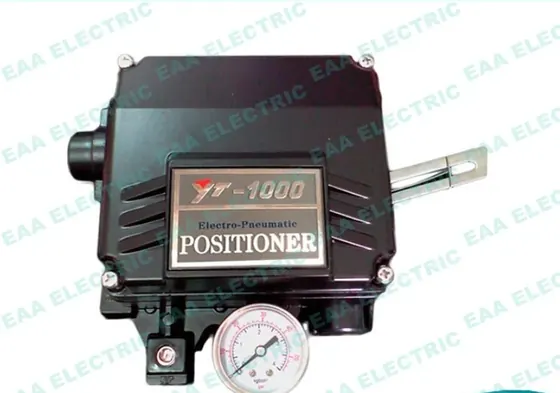
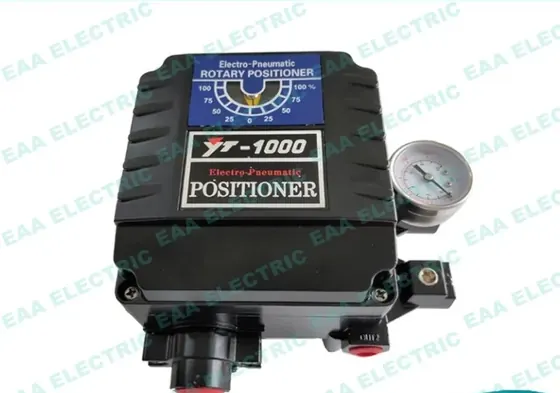
See YT1000R Electro Pneumatic Valve Positioner-Black
What Happens When The Signal Changes
(6) When the distance between the regulator and the actuator is more than 60m, the positioner can overcome the transmission lag of the control signal and improve the response speed of the valve.
(7) Used to improve the flow characteristics of the regulating valve.
(8) When one regulator controls two actuators to implement split-range control, two positioners can be used to accept low input signals and high input signals respectively, and then one actuator will act in low range and the other in high range, which constitutes a split range process adjustment.