Turning Air Pressure Into Stem Travel
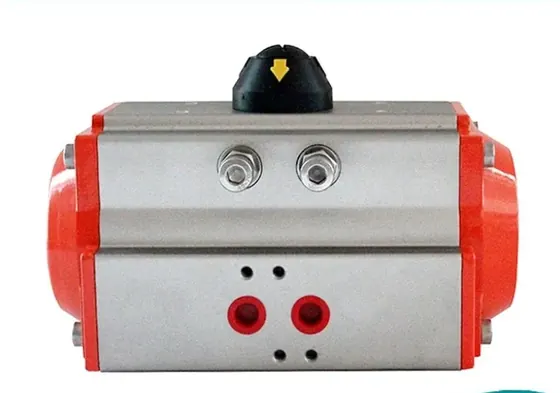
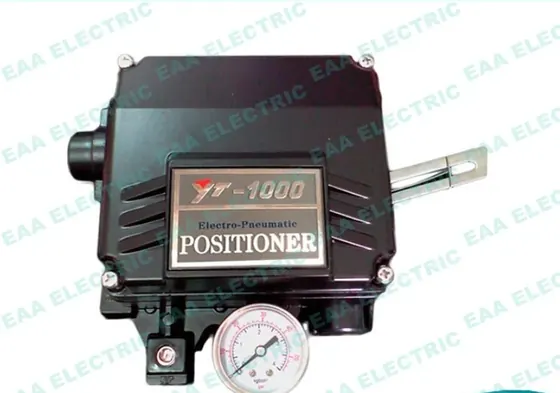
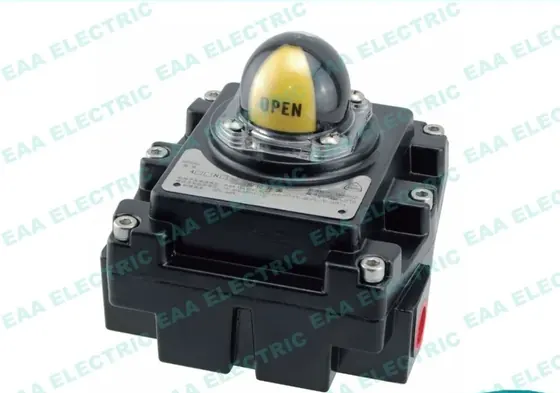
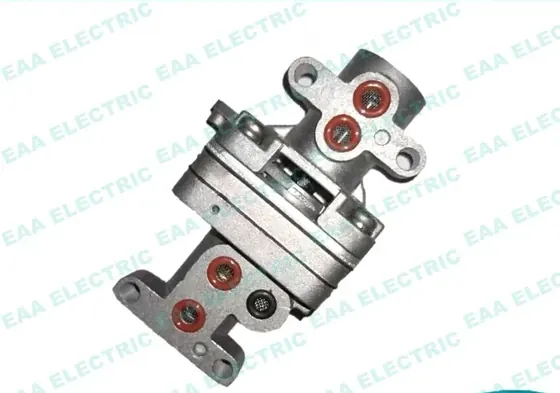
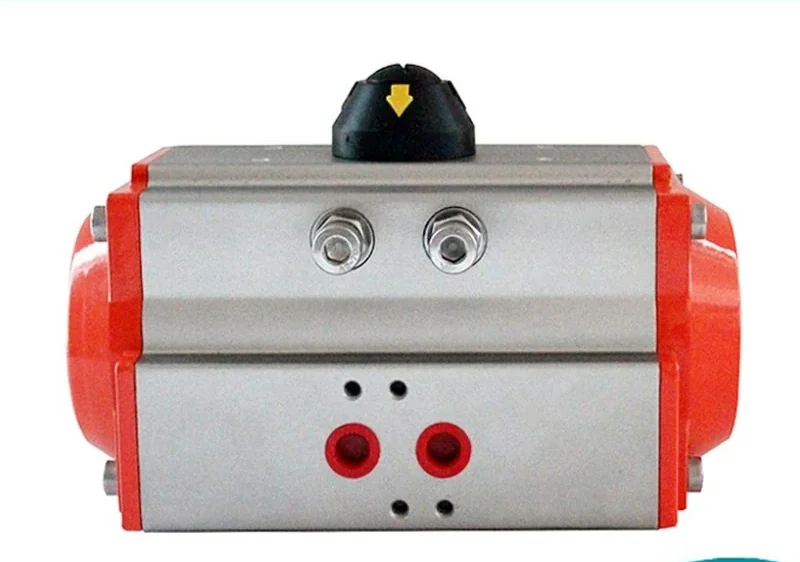
Pneumatic actuators are actuators that use air pressure to drive open and close or adjust valves. They are also called pneumatic actuators or pneumatic devices, but they are generally called pneumatic heads. Pneumatic actuators are sometimes equipped with certain auxiliary devices. Commonly used are valve positioners and handwheel mechanisms. The function of the valve positioner is to use the feedback principle to improve the performance of the actuator, so that the actuator can realize accurate positioning according to the control signal of the controller. The function of the handwheel mechanism is to use it to directly control the control valve to maintain the normal production when the control system is out of power, gas, no output from the controller or failure of the actuator.
Spring Return and Double Acting Arrangements
When compressed air enters the pneumatic actuator from the A nozzle, the gas pushes the double piston to move linearly to both ends (cylinder head end). The rack on the piston drives the gear on the rotating shaft to rotate 90 degrees counterclockwise, and the valve is opened. . At this time, the gas at both ends of the pneumatic actuator valve is discharged with the B nozzle. Conversely, when compressed air enters the two ends of the pneumatic actuator from the B Guanzui, the gas pushes the double plug to move linearly in the middle, and the rack on the piston drives the gear on the rotating shaft to rotate 90 degrees clockwise, and the valve is closed. At this time, the gas in the middle of the pneumatic actuator is discharged with the A nozzle. The above is the standard transmission principle. According to user needs, the pneumatic actuator can be installed with the transmission principle opposite to the standard type, that is, the clockwise rotation of the collimated shaft is selected to open the valve, and the counterclockwise rotation is to close the valve. Single-acting (spring return type) pneumatic actuator A nozzle is the air inlet, B nozzle is the exhaust hole (the B nozzle should be installed with a muffler). The inlet of nozzle A is to open the valve, and the valve is closed by spring force when the air is cut off.
Where The Positioner Fits In
The type and structure of the adjustment mechanism of pneumatic actuators are roughly the same, mainly because the actuators are different. Therefore, in the introduction of pneumatic actuators, it is divided into two parts: the actuator and the regulating valve. Pneumatic actuator is composed of two parts: the actuator and the regulating valve (regulating mechanism). According to the magnitude of the control signal, a corresponding thrust is generated to push the regulating valve to act. The regulating valve is the regulating part of the pneumatic actuator. Under the action of the thrust of the actuator, the regulating valve produces a certain displacement or angle to directly regulate the flow of the fluid.