
ER90S-G Alloy Composition and Weld Performance
Explore ER90S-G welding wire metallurgy, alloy composition, microstructure, and how chemical elements influence weld strength and performance.
- Introduction: Why Metallurgy Matters in ER90S-G Welding Wire
- 1. What Is ER90S-G Welding Wire?
- 2. Alloy Composition Determines Weld Performance
- 3. Carbon: Controlling Strength and Microstructure
- 4. Manganese: Improving Strength and Weld Quality
- Solid Solution Strengthening
- Sulfur Control
- 5. Silicon: Enhancing Deoxidation and Weld Appearance
Introduction: Why Metallurgy Matters in ER90S-G Welding Wire
In modern industrial manufacturing, welding materials are required to provide more than simple joining capability. For high-strength steel structures, pressure equipment, pipelines, heavy machinery, and critical fabrication projects, the welding consumable must deliver reliable mechanical properties, stable microstructure, and long-term service performance. ER90S-G
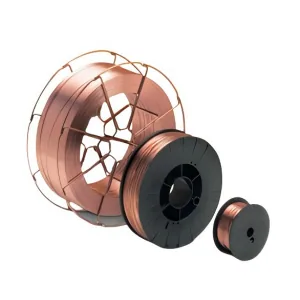
ER90S-G welding wire is a high-strength low-alloy (HSLA) solid welding wire designed for applications where weld metal strength, toughness, and durability are essential. Its performance is closely related to its carefully controlled alloy composition and the metallurgical transformation that occurs during welding.
Unlike conventional carbon steel welding wires, ER90S-G achieves higher strength levels through the combined effects of alloy strengthening, microstructure control, and optimized welding procedures. Understanding the relationship between alloy elements and weld performance helps engineers select the correct filler metal for demanding applications.
1. What Is ER90S-G Welding Wire?
ER90S-G is classified as a low-alloy solid welding wire according to AWS A5.28 requirements. It is commonly used for gas metal arc welding (GMAW/MIG) and related welding processes where higher weld strength is required.
The “90” designation indicates that the deposited weld metal is designed to achieve a minimum tensile strength level of approximately 90 ksi (620 MPa class) under standard testing conditions.
- High-strength structural steel fabrication
- Heavy equipment manufacturing
- Pressure-containing components
- Pipelines
- Industrial machinery
- Large welded structures
The primary advantage of ER90S-G is the balance between:
- High tensile strength
- Good ductility
- Impact toughness
- Welding stability
- Resistance to service-related stress
2. Alloy Composition Determines Weld Performance
The mechanical performance of ER90S-G is directly controlled by its alloy composition.
Unlike pure carbon steel wires, ER90S-G contains controlled amounts of alloying elements that modify the weld metal structure.
- Carbon (C)
- Manganese (Mn)
- Silicon (Si)
- Nickel (Ni)
- Molybdenum (Mo)
- Copper (Cu)
Each element contributes differently to weld performance.
A successful ER90S-G formulation must achieve a balance:
Higher strength requires stronger alloy strengthening, but excessive alloying may reduce toughness and weldability.
3. Carbon: Controlling Strength and Microstructure
Carbon is one of the most influential elements in steel metallurgy.
In ER90S-G welding wire, carbon contributes to:
- Increasing hardness
- Improving tensile strength
- Supporting stronger weld microstructures
However, excessive carbon can negatively affect:
- Weld cracking resistance
- Toughness
- Weldability
Therefore, ER90S-G uses controlled carbon content to provide strength without sacrificing welding reliability.
The goal is not simply to maximize hardness, but to achieve a balanced weld structure with sufficient strength and toughness.
4. Manganese: Improving Strength and Weld Quality
Manganese plays several important roles in ER90S-G weld metal.
Solid Solution Strengthening
Manganese atoms strengthen the iron matrix by restricting dislocation movement.
- Yield strength
- Tensile strength
- Resistance to deformation
Sulfur Control
Manganese also combines with sulfur to form manganese sulfides, reducing the harmful effects of sulfur impurities.
- Hot cracking resistance
- Weld cleanliness
- Overall weld reliability
For high-strength welding applications, manganese is one of the key elements responsible for achieving mechanical performance.
5. Silicon: Enhancing Deoxidation and Weld Appearance
Silicon is mainly added as a deoxidizing element during welding.
During the welding process, molten metal reacts with oxygen from the atmosphere and shielding gas. Excess oxygen can create:
- Porosity
- Oxide inclusions
- Reduced weld quality
Silicon helps remove oxygen from the molten weld pool, producing cleaner weld metal.
- Arc stability
- Weld bead appearance
- Metallurgical cleanliness
However, excessive silicon may reduce impact toughness, so precise control is necessary.
6. Nickel: Improving Toughness and Low-Temperature Performance
Nickel is an important alloying element for improving weld toughness.
- Enhancing impact resistance
- Improving ductility
- Stabilizing the weld microstructure
For structures operating under cold environments or dynamic loading conditions, nickel helps maintain reliable performance.
- Offshore structures
- Heavy machinery
- Large steel frameworks
- Transportation equipment
7. Molybdenum: Increasing Strength and Thermal Stability
Molybdenum contributes significantly to high-strength performance.
Strengthening the Matrix
Molybdenum atoms increase resistance to plastic deformation by strengthening the ferritic matrix.
Improving Hardenability
Molybdenum promotes the formation of stronger microstructures during cooling.
Enhancing Service Performance
In certain applications involving elevated temperatures, molybdenum improves resistance against softening.
This makes ER90S-G suitable for demanding industrial environments where mechanical stability is required.
8. Microstructure: The Foundation of Weld Strength
The final properties of ER90S-G weld metal are determined not only by chemical composition but also by the resulting microstructure.
During welding, the molten weld pool rapidly cools and transforms into different phases.
- Ferrite
- Fine pearlite
- Bainitic components
- Strengthening phases depending on composition and cooling conditions
- Higher strength
- Better toughness
- Improved fatigue resistance
The cooling rate, heat input, interpass temperature, and shielding conditions all influence the final weld structure.
Therefore, welding parameters and alloy design must work together.
9. Alloy Composition and Welding Parameters Must Be Balanced
Even a well-designed welding wire cannot achieve optimum performance without proper welding control.
Heat Input
- Grain growth
- Reduced toughness
- Lower strength
Cooling Rate
Rapid cooling may increase hardness and cracking risk, while slow cooling may reduce strength.
Interpass Temperature
Maintaining suitable interpass temperature helps achieve consistent weld properties.
Alloy Composition → Microstructure → Mechanical Properties → Weld Performance
Each stage affects the final quality of the welded joint.
10. Why ER90S-G Provides Reliable Weld Performance
The performance advantage of ER90S-G comes from the combination of multiple metallurgical mechanisms:
1. Alloy Strengthening
Elements such as manganese, nickel, and molybdenum increase weld strength.
2. Microstructure Control
Controlled alloy composition promotes a strong and stable weld structure.
3. Toughness Improvement
Nickel and optimized carbon levels help maintain impact resistance.
4. Welding Stability
Balanced silicon and manganese content improve arc performance and weld quality.
This combination allows ER90S-G to meet the requirements of high-strength steel welding applications.
11. Common Applications of ER90S-G Welding Wire
Due to its mechanical properties, ER90S-G is commonly selected for:
ER90S-G Heavy Industrial Fabrication
- Construction equipment
- Lifting machinery
- Large steel structures
ER90S-G Pressure Equipment
- High weld strength
- Reliable service performance
- Controlled mechanical properties
ER90S-G Transportation and Infrastructure
- Bridges
- Railway structures
- Heavy-duty welded components
ER90S-G Energy and Industrial Facilities
Where welded joints must withstand demanding operating conditions.
12. ER90S-G vs Conventional Welding Wire: Metallurgical Difference
The main difference between ER90S-G and standard carbon steel welding wires is the level of alloy engineering.
Conventional welding wires mainly rely on carbon and manganese strengthening.
ER90S-G uses a more advanced alloy system involving:
- Controlled alloy additions
- Improved hardenability
- Better microstructure refinement
- Higher strength capability
This allows ER90S-G weld metal to achieve superior mechanical performance while maintaining practical weldability.
Conclusion: Alloy Design Defines ER90S-G Welding Performance
The performance of ER90S-G welding wire is the result of carefully controlled metallurgy.
- Carbon contributes to strength
- Manganese improves strengthening and cleanliness
- Silicon enhances deoxidation
- Nickel improves toughness
- Molybdenum increases strength and stability
Together, these elements control the weld microstructure and determine the final mechanical properties.
For high-strength steel welding applications, ER90S-G represents a balanced engineering solution where alloy composition, welding process, and metallurgical performance work together to achieve reliable welded structures.
- Products AK Welding Wire
- AK Welding Electrodes
- AK Welding Rod
- AK Flux
Questions About This Article
Can AKWELD supply the consumables discussed in this article?
Can you advise on our specific joint?
Need the Consumables Behind This Article?
Tell us the grade or the base metal and we will confirm what we supply and send the data.