
AKJ150 Flux for Submerged Arc Welding of Low Alloy Steels.
A basic flux formulated for submerged arc welding with high deposition rates and good mechanical properties on low alloy steel base metals.
Product Overview
AKJ150 is a basic flux for submerged arc welding, designed for use with matching solid or flux-cored wires on low alloy steels. It is intended for applications requiring sound weld metal with controlled chemistry and consistent mechanical performance.
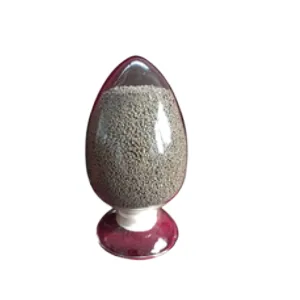
The flux contains a balanced mix of oxides and fluorides, including CaO+MgO, SiO₂+TiO₂, and CaF₂, which contribute to stable arc performance, good slag removal, and clean weld bead appearance. It is supplied in particle sizes ranging from 10 to 60 mesh.
Key Benefits
Controlled Chemical Composition
The flux maintains specified limits for key elements: S at 0.035 percent, P at 0.04 percent, and CaF₂ between 15.0 and 25.0 percent, which helps ensure low hydrogen content and good weld metal cleanliness.
Balanced Oxide Content
With SiO₂+TiO₂ at 14.0-23.0 percent and CaO+MgO at 24.0-36.0 percent, the flux provides stable arc characteristics and consistent slag formation during welding.
Good Slag Removal
The flux produces a slag that lifts off easily after welding, reducing the need for post-weld cleaning and minimizing the risk of slag entrapment.
Compatibility with Matching Wires.
AKJ150 is recommended for use with solid or flux-cored wires that meet the chemical and mechanical requirements of low alloy steel applications.
Where It Is Used
- Submerged arc welding of low alloy steel structures.
- Pressure vessels and boiler components requiring sound weld metal.
- Pipeline and heavy equipment fabrication.
- Welding on base metals where controlled chemistry and mechanical properties are required.
Who It Is For
- Welding consumable distributors supplying flux for industrial fabrication.
- Fabricators working with low alloy steels in structural and pressure applications.
- EPC contractors requiring consistent flux performance across multiple weld joints.
Problems It Solves
- Inconsistent weld metal chemistry due to uncontrolled flux composition, to out-of-spec welds.
- Difficult slag removal and poor bead appearance from fluxes with poor slag detachability.
- Lack of compatibility between flux and wire when sourcing from multiple suppliers.
Specifications
Published by the factory for AKJ150. Values not shown are not published on the datasheet and are marked as such rather than estimated.
| Element | Content |
|---|---|
| SiO₂+TiO₂ | 14.0-23.0 |
| CaO+MgO | 24.0-36.0 |
| S | 0.035 |
| P | 0.04 |
| CaF₂ | 15.0-25.0 |
| Al₂O₃+MnO | 20.0-30.0 |
Mechanical property data for this grade is not published on the factory datasheet. Ask our technical team for the test record before you qualify it.
Size: 10-60
Technical Features
- Flux particle size range: 10-60 mesh.
- SiO₂+TiO₂ content: 14.0-23.0 percent.
- CaO+MgO content: 24.0-36.0 percent.
- CaF₂ content: 15.0-25.0 percent.
- Al₂O₃+MnO content: 20.0-30.0 percent.
- Sulfur content: 0.035 percent.
- Phosphorus content: 0.04 percent.
Use Guide
- Select flux particle size based on welding equipment and wire feed requirements: 10-60 mesh is standard for most submerged arc systems.
- Ensure the flux is dry before use; store in sealed containers and re-dry if exposed to moisture.
- Match the flux with a solid or flux-cored wire that has a compatible chemical composition for the base metal.
- Maintain proper flux layer depth and travel speed during welding to achieve consistent bead profile and slag coverage.
How It Compares
AKJ150 is a basic flux, which differs from rutile or mixed-type fluxes in its arc stability and slag characteristics. Basic fluxes like AKJ150 offer better mechanical properties and lower hydrogen content than rutile types, but require stricter handling and drying. They are not recommended for use with low-hydrogen wires unless the system is fully controlled.
Related Grades
Other welding flux in the same family.
AKJ150 Questions
What is the particle size range for AKJ150 flux?
What are the key chemical limits in AKJ150?
Is AKJ150 suitable for use with solid wires?
Can I get technical data sheets and packing details?
What packing is AKJ150 supplied in?
Can we test AKJ150 before placing a production order?
Request a Quotation for AKJ150
Send the diameter, the quantity and the destination port. Our technical team replies with packing, pricing and the data you need to qualify the grade.