
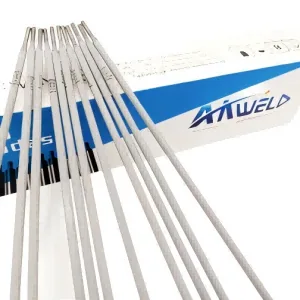
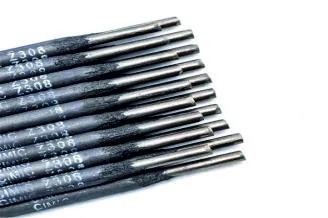
AK-J62CF Basic Low Hydrogen Sodium Electrode for 620 MPa Grade Low Alloy Steel.
A basic low hydrogen sodium coated electrode for welding high-strength low alloy steels with excellent ductility and crack resistance, suitable for critical structures in hydropower, shipbuilding, and bridge construction.
Product Overview
AK-J62CF is a basic low hydrogen sodium coated electrode designed for manual metal arc welding of 620 MPa grade low alloy steels. It is classified under EN ISO —— AWS A5.5 E9015-G and GB/T 32533 E6215-G.
The electrode delivers good arc stability, low spatter, and a smooth weld bead with moderate penetration and easy slag removal. The deposited metal exhibits excellent ductility and resistance to cracking, making it suitable for welding materials such as hydropower volutes, pressure pipelines, and structural components in ships, bridges, and buildings.
Application: AK-J62CF is a 620MPA grade low alloy steel electrode, the coating type is basic low hydrogen sodium type, the arc stability is good, the spatter is small, the weld shape is beautiful, the penetration is moderate, the slag is easy. The deposited metal has excellent ductility and crack resistance. It is suitable for welding 600MPA grade steel such as hydropower volute and pressure pipeline, and the same grade steel such as ship, bridge and building.
Key Benefits
Excellent Ductility and Crack Resistance.
The deposited metal maintains high ductility and resists cracking, which is critical when welding high-strength steels under complex stress conditions.
Good Arc Stability and Low Spatter.
The basic low hydrogen sodium coating ensures a stable arc and minimal spatter, contributing to cleaner welds and reduced post-weld cleanup.
Easy Slag Removal
The slag formed during welding lifts off easily, reducing the need for extensive chipping and wire brushing between passes.
Suitable for High-Strength Steels.
Designed for welding 600 MPa grade steels and similar high-strength materials, including those used in hydropower, shipbuilding, and bridge construction.
Where It Is Used
- Welding of 600 MPa grade low alloy steel structures such as hydropower volutes and pressure pipelines.
- Construction of ships, bridges, and high-strength building frameworks.
- Fabrication and repair of critical structural components requiring high ductility and crack resistance.
Who It Is For
- Welding consumable distributors supplying high-strength steel electrodes.
- Fabricators working with 600 MPa grade steels in hydropower and infrastructure projects.
- Maintenance teams responsible for repairing high-strength steel components in demanding environments.
Problems It Solves
- Welding high-strength low alloy steels with poor crack resistance due to inappropriate filler metal chemistry.
- Excessive slag buildup and difficult slag removal in multi-pass welding operations.
- Arc instability and high spatter when using electrodes not optimized for low hydrogen and controlled deposition.
Specifications
Published by the factory for AK-J62CF. Values not shown are not published on the datasheet and are marked as such rather than estimated.
| Standard | Designation |
|---|---|
| Classification | EN ISO —— AWS A5.5 E9015-G GB/T 32533 E6215-G |
| Element | Content |
|---|---|
| C | ≤0.10 |
| Si | ≤0.80 |
| Mn | ≥1.00 |
| S | ≤0.015 |
| P | ≤0.025 |
| Ni | 0.60-1.20 |
| Mo | 0.10-0.40 |
Mechanical property data for this grade is not published on the factory datasheet. Ask our technical team for the test record before you qualify it.
Note: 1. The electrode must be baked at 380 ° C for one hour before use. 2. Impurities such as water, oil and embroidery must be removed from the surface of the welding parts. 3. Short arc narrow pass welding, the maximum swing should not exceed three times the line diameter
Technical Features
- Basic low hydrogen sodium coating for improved weld metal cleanliness and toughness.
- Deposited metal tensile strength of at least 620 MPa, with elongation of at least 17 percent.
- Chemical composition includes carbon ≤0.10%, silicon ≤0.80%, manganese ≥1.00%, sulfur ≤0.015%, phosphorus ≤0.025%, nickel 0.60–1.20%, molybdenum 0.10–0.40%
- Supplied in 2.5 mm, 3.2 mm, 4.0 mm, 5.0 mm, and 5.5 mm diameters with recommended current ranges for each.
Use Guide
- Bake the electrodes at 380 °C for one hour before use to ensure low hydrogen content.
- Remove all surface impurities such as water, oil, and grease from the joint area before welding.
- Use short arc, narrow pass technique with maximum swing not exceeding three times the electrode diameter to control heat input and ensure good fusion.
- Maintain consistent welding parameters and avoid excessive travel speed to achieve full penetration and sound welds.
How It Compares
AK-J62CF and E9015-G both belong to the basic low hydrogen sodium electrode family and are used for high-strength low alloy steels. AK-J62CF is specifically formulated for 620 MPa grade steels with enhanced ductility and crack resistance. Unlike rutile or cellulosic electrodes, it provides lower hydrogen content and better toughness, making it suitable for critical applications. It is not recommended for use on low carbon steels where a general-purpose electrode would be more cost-effective.
Related Grades
Other welding electrodes in the same family.
AK-J62CF Questions
What is the recommended baking temperature and time?
What are the chemical composition limits for key elements?
What are the available diameters?
What classifications does this electrode meet?
What packing is AK-J62CF supplied in?
Can we test AK-J62CF before placing a production order?
Request a Quotation for AK-J62CF
Send the diameter, the quantity and the destination port. Our technical team replies with packing, pricing and the data you need to qualify the grade.