
AKJ208D Flux for Submerged Arc Welding of Low Alloy Steels.
A basic flux formulated for submerged arc welding with high calcium fluoride content, designed to produce low-hydrogen weld metal suitable for critical applications in pressure vessels and structural components.
Product Overview
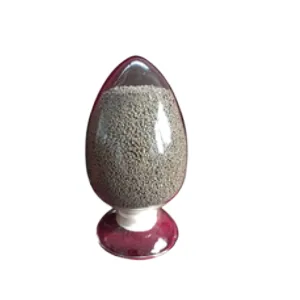
AKJ208D is a basic flux for submerged arc welding, supplied in particle sizes from 10 to 60 mm. It is intended for use with matching or compatible solid wire electrodes in the welding of low alloy steels where high toughness and low hydrogen content are required.
The flux contains 15.0-30.0 percent CaF₂, which contributes to hydrogen control and improved weld metal cleanliness. Its chemical composition includes 20.0 percent SiO₂+TiO₂ and 30.0 percent CaO+MgO, with S at 0.035 percent and P at 0.04 percent, indicating a low impurity level suitable for demanding applications.
Key Benefits
Low Hydrogen Potential
The high CaF₂ content (15.0-30.0 percent) in AKJ208D helps reduce hydrogen in the weld metal, which is critical for preventing hydrogen-induced cracking in high-strength and thick-section steels.
Controlled Impurity Levels
Sulfur is limited to 0.035 percent and phosphorus to 0.04 percent, supporting sound weld metal with good mechanical properties and resistance to cracking.
Stable Arc and Good Slag Removal.
The flux is formulated to produce a stable arc and a slag that lifts off easily after welding, reducing the need for post-weld cleaning and minimizing the risk of slag entrapment.
Compatibility with Low Alloy Steels.
AKJ208D is recommended for submerged arc welding of low alloy steels where weld metal toughness and integrity are essential, such as in pressure vessels and structural components.
Where It Is Used
- Submerged arc welding of low alloy steel pressure vessels.
- Welding of structural components requiring high toughness and low hydrogen content.
- Critical joints in heavy industrial equipment and offshore structures.
- Repair and maintenance of high-strength steel components.
Who It Is For
- Welding consumable distributors supplying flux for industrial and structural welding.
- Fabricators and EPC contractors working with low alloy steels in demanding environments.
- Maintenance teams responsible for high-integrity welds in pressure systems and structural frames.
Problems It Solves
- Weld metal hydrogen content exceeding acceptable limits due to flux with insufficient CaF₂ or poor deoxidation.
- Slag that is difficult to remove, to rework and inspection delays.
- Inconsistent weld quality from fluxes with high sulfur or phosphorus levels.
- Lack of a single flux source for multiple low alloy steel grades with consistent performance.
Specifications
Published by the factory for AKJ208D. Values not shown are not published on the datasheet and are marked as such rather than estimated.
| Element | Content |
|---|---|
| SiO₂+TiO₂ | 20.0 |
| CaO+MgO | ≥30 |
| S | 0.035 |
| P | 0.04 |
| CaF₂ | 15.0-30.0 |
| Al₂O₃+MnO | 15.0-30.0 |
Mechanical property data for this grade is not published on the factory datasheet. Ask our technical team for the test record before you qualify it.
Size: 10-60
Technical Features
- Basic flux for submerged arc welding with particle size 10-60 mm.
- CaF₂ content between 15.0 and 30.0 percent.
- SiO₂+TiO₂ at 20.0 percent.
- CaO+MgO at least 30.0 percent.
- Sulfur at 0.035 percent.
- Phosphorus at 0.04 percent.
- Al₂O₃+MnO between 15.0 and 30.0 percent.
Use Guide
- Select flux particle size based on welding equipment and wire feed requirements, using 10-60 mm as the standard range.
- Ensure the flux is stored in a dry, sealed environment to prevent moisture absorption before use.
- Use the recommended welding parameters with compatible solid wire electrodes to achieve optimal weld metal properties.
- Clean the weld area and remove all contaminants before welding to maintain weld quality.
How It Compares
AKJ208D is a basic flux with high CaF₂ content, suitable for low-hydrogen applications. It differs from rutile or mixed-type fluxes, which typically have lower CaF₂ and higher SiO₂+TiO₂ but are less effective at hydrogen control. Basic fluxes like AKJ208D are preferred for high-strength and thick-section steels, while rutile fluxes are used for higher deposition rates and easier slag removal on less critical joints.
Related Grades
Other welding flux in the same family.
AKJ208D Questions
What is the particle size range for AKJ208D?
What are the key chemical components of AKJ208D?
What is the purpose of the CaF₂ content in AKJ208D?
Can I get technical data or a certificate for AKJ208D?
What packing is AKJ208D supplied in?
Can we test AKJ208D before placing a production order?
Request a Quotation for AKJ208D
Send the diameter, the quantity and the destination port. Our technical team replies with packing, pricing and the data you need to qualify the grade.