
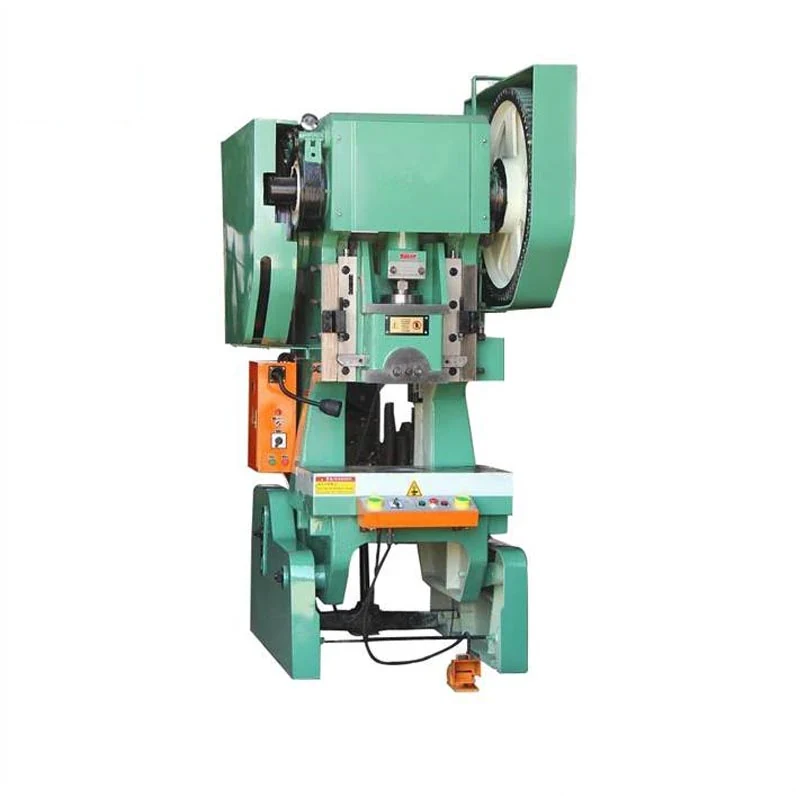
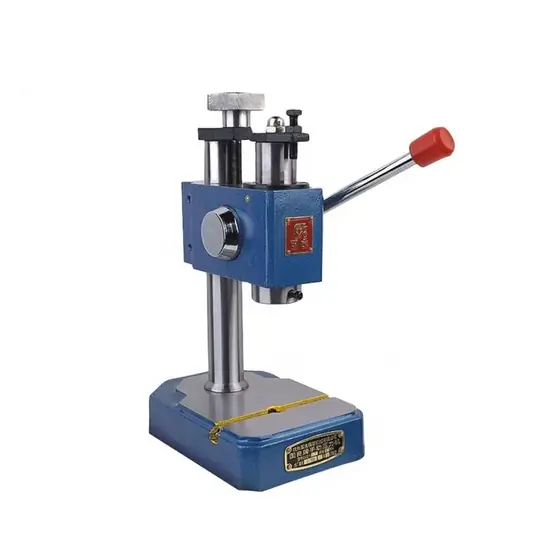
J21 Series Open Type Press Punching Machine
The J21 series is an open front press built on a steel-welded C frame. The C shape leaves three sides of the working area open so dies are loaded and strip is fed from the front or either side, and the movable bolster can be run out of the frame entirely to set a die on the floor rather than inside the press. Rigidity ...
What This Machine Does
The J21 series is an open front press built on a steel-welded C frame. The C shape leaves three sides of the working area open so dies are loaded and strip is fed from the front or either side, and the movable bolster can be run out of the frame entirely to set a die on the floor rather than inside the press. Rigidity is where an open frame usually gives ground, so the frame here is welded from thick plate with large columns and a wide body, which limits deflection under load and keeps punch and die alignment - that is what protects tool life and keeps blanked parts consistent. The crankshaft is placed horizontally and the press uses a rigid rotated bond clutch. Shut height is adjusted manually against a scale display, so a die set up once can be returned to the same setting. Machines are built new in China in models including the J21-16.
Why Buyers Choose This Machine
- Open C frame gives access from three sides for die setting and strip feeding
- Movable bolster runs out of the frame so dies are set outside the press
- Steel-welded frame from thick plate resists deformation under stamping load
- Minimum deflection keeps punch and die aligned which lengthens tool life
- Wide body frame damps vibration so die life and machine life both improve
- Rigid rotated bond clutch engages the stroke positively
- Manual shut height adjustment with scale display returns a die to its previous setting
Where J21 Series Open Type Press Punching Machine Earns Its Place
Problems It Solves
- Closed frame presses restrict access and make die setting and feeding awkward
- Setting a heavy die inside the frame is slow and unsafe without a movable bolster
- Frame deflection under load misaligns punch and die and chips cutting edges
- Vibration from a narrow frame shortens both die life and machine life
- A clutch that slips or engages late makes the stroke unpredictable
- Without a shut height scale a die has to be re-set by trial every time it goes back in
Who It Is For
- Sheet metal stamping workshops
- Press shops producing small and medium pressed parts
- Manufacturers of hardware fittings and brackets
- Toolrooms testing and trialling new dies
- Distributors supplying open type presses to metalworking customers
Application Scenarios
- Blanking and punching sheet metal parts in production batches
- Setting and changing dies using the movable bolster outside the frame
- Progressive strip feeding from the front of an open frame press
- Forming and shallow drawing of pressed components
- Job shop stamping of varied small parts
- Punching holes and cut-outs in fabricated sheet components
Technical Detail
Technical Features
- Horizontally placed crankshaft
- C frame giving maximum rigidity and minimum deflection
- Steel-welded frame construction
- Thick plates and large columns for a stable platform under load
- Wide body frame to reduce vibration
- Movable bolster that can be moved out of the frame for die setting
- Rigid rotated bond clutch
- Manual shut height adjustment with scale display
Specifications
| Machine type | Open type C frame mechanical power press |
|---|---|
| Models | J21 series including J21-16 |
| Frame | Steel welded C frame with thick plates and large columns |
| Crankshaft | Horizontally placed |
| Clutch | Rigid rotated bond clutch |
| Bolster | Movable bolster that can be moved out of the frame |
| Shut height adjustment | Manual with scale display |
| Condition | New |
| Applications | Punching blanking and cold stamping of sheet metal |
Figures above are taken from the product information we hold. Send us your application and we will confirm the exact specification for the model quoted.
How It Is Built and What Can Be Changed
Operations Performed
- Punching
- Blanking
- Cold stamping
- Forming
Quality Control
- Welded frame checked for weld quality and stress relieved before machining of the guide and bolster faces
- Slide guideway clearance checked and set on assembly
- Clutch engagement and stroke stopping tested repeatedly before release
- Shut height adjustment checked against the scale display over its range
- Press run in without load and then with a test die before packing
Customisation Options
- Press size selected from the J21 series against the tonnage and die space you need
- Supply voltage frequency and phase built for your market
- Guarding and control arrangement specified for your safety requirements
- Die cushions and feeding equipment quoted where your work needs them
- Manual and machine plates prepared in your working language
How It Compares With the Alternatives
| J23 series open eccentric press with cast C frame | The J23 uses a cast C frame body that can be tilted; the J21 uses a steel-welded frame with a movable bolster, which is the choice where die setting outside the frame matters |
|---|---|
| Closed straight-side presses | A closed frame is stiffer for heavy deep work but restricts access from the sides; the open J21 frame trades some of that for the open working space a job shop needs |
| Producing the same parts by sawing and drilling | Cutting and drilling each part individually cannot match press cycle times once the die exists, and the pressed part is consistent across the batch |
Running the Machine
Step 1
Move the bolster out of the frame and mount the die on it before running it back in
Step 2
Set the shut height manually against the scale and record the setting for this die
Step 3
Check punch to die alignment and clearance before the first stroke
Step 4
Run a single stroke on test material and inspect the blanked part before continuous running
Step 5
Set the feed so the strip is positioned consistently at every stroke
Step 6
Watch for burr growth on the pressed edge which signals the die needs regrinding
Step 7
Keep the clutch and slide guideways lubricated on the schedule in the manual
Other Machines in Press Machine
Related Applications and Guides
Sheet Metal Fabrication
Sheet metal shops cut, bend, roll and form. XAIMC supplies shears press brakes plate rolls tube benders and fibre laser cutting across the manual to C
Questions About J21 Series Open Type Press Punching Machine
What press capacity is available in the J21 series?
The series covers several sizes including the J21-16. Send us the part material thickness and the die dimensions and we will confirm the press size you need.
Why a steel-welded frame rather than a casting?
The welded frame with thick plates and large columns gives high rigidity with less deformation, which keeps the punch and die in line and extends tool life.
How are dies set on this press?
The movable bolster can be moved out of the frame, so the die is mounted outside the press where there is space to work, then run back in.
Can I return a die to the same setting?
Yes. Shut height is adjusted manually against a scale display, so once you record the setting for a die it can be reproduced.
What voltage and frequency will the press be built to?
Tell us your supply voltage frequency and phase and the press will be built for your market.
What safety controls are fitted?
Tell us the safety requirements that apply in your market and we will confirm the guarding and control arrangement we can supply with the press.
What are your payment and trade terms?
We quote FOB CFR and CIF. Payment is 30 percent by T/T on order and 70 percent before shipment, or an irrevocable L/C at sight.
Request a Quote on the J21 Series Open Type Press Punching Machine
Send us the work you need it to do, the voltage on your site and the port you ship to. We will come back with the model, the tooling and the lead time.