
Machine Tool Installation and Commissioning Checklist
Installing an imported machine tool correctly means preparing the site, unpacking and positioning the machine, levelling it, connecting services and proving accuracy before production starts. This checklist is for importers, workshop managers and maintenance teams receiving a new machine from a supplier overseas.
Plan the Installation Before the Machine Ships
Most installation problems are decided months before the machine arrives. A machine that cannot get through the doorway, a supply that turns out to be the wrong phase, or a floor that cannot carry the load all cause delays that no amount of effort on delivery day can recover. The work to avoid them is paperwork, and it costs nothing if it is done early.
Ask the supplier for the foundation drawing, the installation drawing with service connection points, the net and gross weight, and the crated dimensions. Then walk the route from the unloading point to the final position with those figures in hand. Check door heights, corridor widths, floor loading, any step or ramp, and whether the crane or forklift available can lift the crated weight at the reach required.
Confirm the electrical supply in the order, not on arrival. State voltage, phase and frequency clearly when ordering from XAIMC so the machine is built and wired for your supply, and note any local requirement for isolators, earthing or protective devices that must be provided on site.
- Foundation and installation drawings requested at order stage
- Net weight, gross weight and crated dimensions checked against the route
- Voltage, phase and frequency confirmed in the order
- Lifting equipment capacity confirmed against crated weight
- Floor loading checked for heavy machines
Prepare the Site
Heavy machine tools hold accuracy by being properly supported. A machine sitting on a floor that flexes will not stay level, and a machine that is not level will not hold geometry, because the bed and column will twist under their own weight. Where a foundation is specified, it must be laid, cured and dimensionally checked before the machine arrives, including any anchor bolt pockets.
Location matters as well as support. Keep grinding machines and precision machines away from presses, saws and other impact sources whose vibration transmits through the floor. Leave working space around the machine for loading work, opening doors and covers, and reaching maintenance points, not just the machine footprint.
Prepare services to the position: electrical supply terminated at an isolator near the machine, compressed air with filtration and a regulator if the machine needs air, and drainage or collection for coolant and swarf. Lighting at the working position is often forgotten and then never fixed.
Receiving and Unpacking
Inspect the crate before it is opened and before you sign for it. Photograph any damage to the packing, any shock indicator that has triggered, and any sign that the crate has been tipped or dropped. That record is what supports a claim, and it cannot be created afterwards.
Open the crate carefully from the top rather than levering the sides, and check the contents against the packing list before anything is moved. Loose items such as tooling, chucks, tailstocks, manuals, tool kits and electrical documents are often packed separately inside the crate and are easy to throw away with the packing material.
Machines are shipped with protective coating on bright surfaces such as ways, tables and spindle tapers. Remove it with the recommended solvent and clean cloths, then oil the surfaces immediately. Never scrape protective coating off a ground surface with a hard tool.
- Photograph the crate and any damage before signing
- Check contents against the packing list before moving anything
- Keep manuals, electrical drawings and tool kits together and safe
- Remove protective coating with solvent and re-oil bright surfaces
Positioning and Levelling
Lift the machine only at the points the manufacturer specifies. Slinging under a convenient casting can bend a guard, crack a cover or damage a way surface, and on some machines the lifting points are the only places strong enough to take the load. Note that some machines are shipped with transport brackets or locking devices that secure moving parts, and these must be removed before the machine is run and kept in case the machine is moved again.
Levelling is the heart of the installation. Set the machine on its levelling pads or foundation bolts and use a precision spirit level on the machine surfaces the manual specifies, typically the bed ways or the table, checking in both the longitudinal and transverse directions. Adjust the supports progressively so the machine is not being twisted into level by one corner.
Level again after the machine has stood for a period and once more after the first weeks of operation. Foundations settle, and a machine that was level on day one is often not level a month later. Record the readings each time so drift is visible.
Connecting Services
Electrical connection should be made by a qualified electrician working from the machine's own wiring diagram. Check incoming voltage at the terminals before energising, confirm earthing, and then check the direction of rotation of the spindle and of pumps. A three phase machine connected with two phases swapped will run everything backwards, and a coolant or hydraulic pump run backwards can be damaged within seconds.
For hydraulic machines, check the oil level and the oil grade before starting, fill to the mark with the specified grade, and bleed the system as the manual describes. For pneumatic systems, confirm the air is filtered and dried and set the regulator to the specified pressure. Fit and fill the lubrication system, and operate any manual pump the required number of times before first movement so that ways are not run dry.
Take the opportunity to record the oil grades, filter part numbers and belt sizes in your own maintenance file while the manual is open. That information is much harder to find two years later.
- Electrical connection by a qualified person from the machine's own diagram
- Check spindle and pump rotation direction before running under load
- Fill hydraulic and lubrication systems with the specified grades
- Set air pressure and confirm filtration and drying
- Record oil grades, filters and belts in the maintenance file
First Start and Run In
Start the machine with no workpiece and no cutting. Run the spindle at low speed first and step up through the speed range, listening for noise and watching for vibration or oil leaks. Move each axis over its full travel by hand where possible and then under power, confirming that limit switches and stops work before anything is relying on them.
Test every safety device deliberately: emergency stop, guard interlocks, foot pedal covers, light curtains where fitted. A guard interlock that is discovered to be non-functional after an incident is a very different matter from one found during commissioning.
Allow a run-in period at moderate duty rather than loading a new machine to its limit on the first day. Bearings, gears and ways bed in during this period, and running in reduces early wear. Check oil levels and temperatures during the first hours and again at the end of the first week.
Accuracy Checks and Acceptance
Commissioning is not finished when the machine runs; it is finished when it has been proved to produce accurate work. Start with geometric checks using a dial indicator and a magnetic base: spindle runout, table flatness or travel parallel to the spindle, and squareness of the axes as the machine type requires. Compare each reading with the acceptance figures in the machine's own documentation.
Then cut a test piece. A turned test bar checked with a micrometer along its length shows taper on a lathe; a milled test block checked for parallelism and squareness shows the same on a milling machine; a ground test piece shows finish and flatness on a grinder. Measured results on a real cut are worth more than any static check because they include the machine under load.
Keep the records. The first set of readings is your baseline, and every later accuracy question is answered by comparing against it. Raise any deviation with the supplier during the commissioning period rather than months later.
- Spindle runout, table and axis geometry checked against the documentation
- Cut a test piece and measure it rather than relying only on static checks
- Record all readings as the machine's baseline
- Raise deviations with the supplier during commissioning
Training Documentation and Handover
The installation is complete when the people who will use the machine can run it safely and know its maintenance schedule. Train operators on setup and on the safety devices, not only on the production cycle, because setup is where most incidents and most tooling damage occur. Where a machine has a control system, make sure at least two people understand it so the shop is not dependent on one person.
File the manual, wiring diagram, hydraulic schematic, parts list and commissioning records together and keep a copy away from the machine where it will not be damaged by coolant and swarf. Build the maintenance schedule into your planning system straight away with the intervals from the manual.
Order the first set of spare parts at the same time as the machine wherever possible. Filters, seals, belts, fuses and contactors are inexpensive to ship with the machine and expensive in downtime when they are needed urgently. XAIMC can quote a recommended spares list with the machine if you ask for it at enquiry stage.
- Train at least two people on setup, operation and safety devices
- File manuals, diagrams and commissioning records and keep a spare copy
- Enter maintenance intervals into your planning system immediately
- Order an initial spares package with the machine
Related Machines From XAIMC
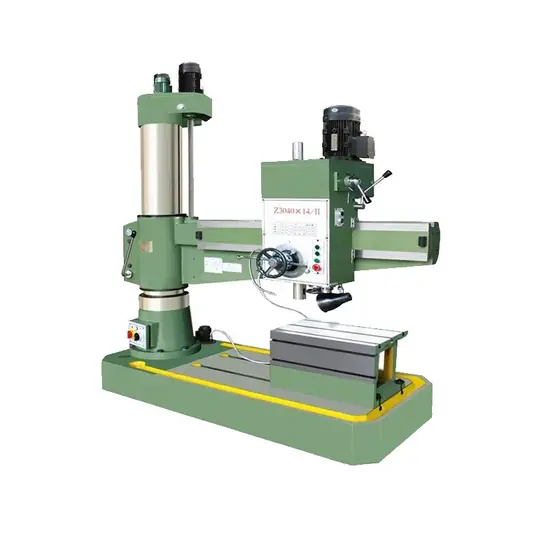
Radial Drilling Machine Z3040x16/1 Z3050x16/1 and ZQ3050x20/1
View Machine →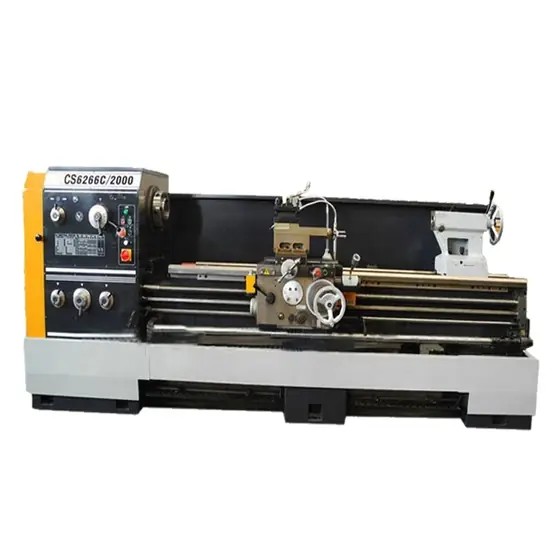
CS6140J Universal Lathes
View Machine →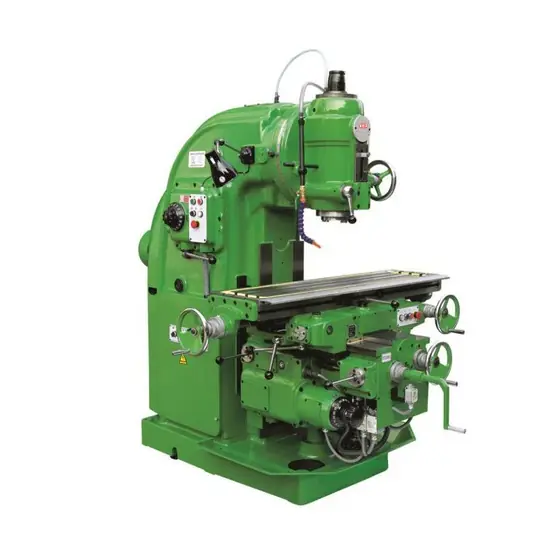
Heavy Duty Universal Vertical Milling Machine X5032
View Machine →
Surface Grinding Machine M7120/M7130/M7140
View Machine →
Dial Indicator and Dial Gauge Indicator Set with Magnetic Stand
View Machine →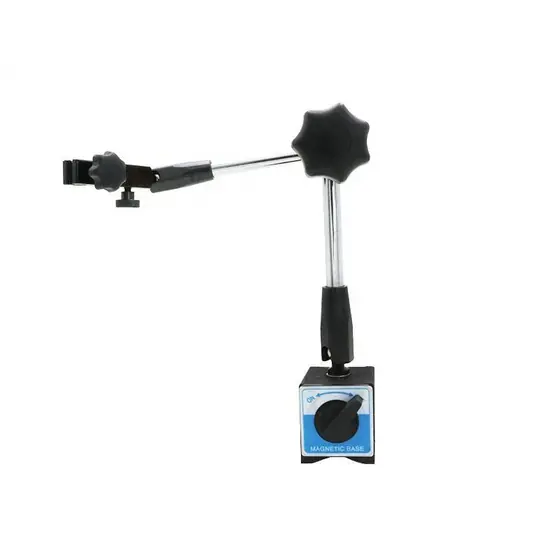
Flexible Magnetic Base Stand Holder
View Machine →Related Categories
Questions on This Topic
What documents should I ask for before shipment
The foundation drawing, the installation drawing with service connection points, net and gross weight, crated dimensions, the operating manual and the electrical wiring diagram. Request them from XAIMC at order stage so site preparation can start while the machine is being built.
How do I make sure the machine matches my power supply
State your voltage, phase and frequency clearly in the order, for example 380V three phase 50Hz or 440V three phase 60Hz, so the machine is built and wired accordingly. On site, verify the incoming voltage at the terminals before energising and check rotation direction of the spindle and pumps.
How often should a new machine be re-levelled
Check level again after the machine has stood for a period following installation, and again after the first weeks of operation, because foundations settle. Record the readings each time so any drift is visible rather than discovered through poor work.
What should I check on arrival of the crate
Inspect and photograph the packing before signing, note any damage or triggered shock indicators, then check the contents against the packing list before moving anything. Loose tooling, manuals and tool kits are often packed separately inside the crate.
Do I need a foundation for every machine
No. Lighter bench and pillar machines are set on a stable floor and levelled, while heavy machines such as large radial drills, big lathes and grinders normally require a prepared foundation. The foundation drawing supplied with the machine states what that machine needs.
Should I order spare parts with the machine
It is usually worth it. Filters, seals, belts, fuses and contactors cost little to ship alongside the machine and avoid long downtime later. Ask XAIMC for a recommended spares list at enquiry stage so it can be quoted with the machine.
Apply This to Your Own Workshop
Send us your parts, your volumes and your site conditions and we will answer for your case rather than the general one.