
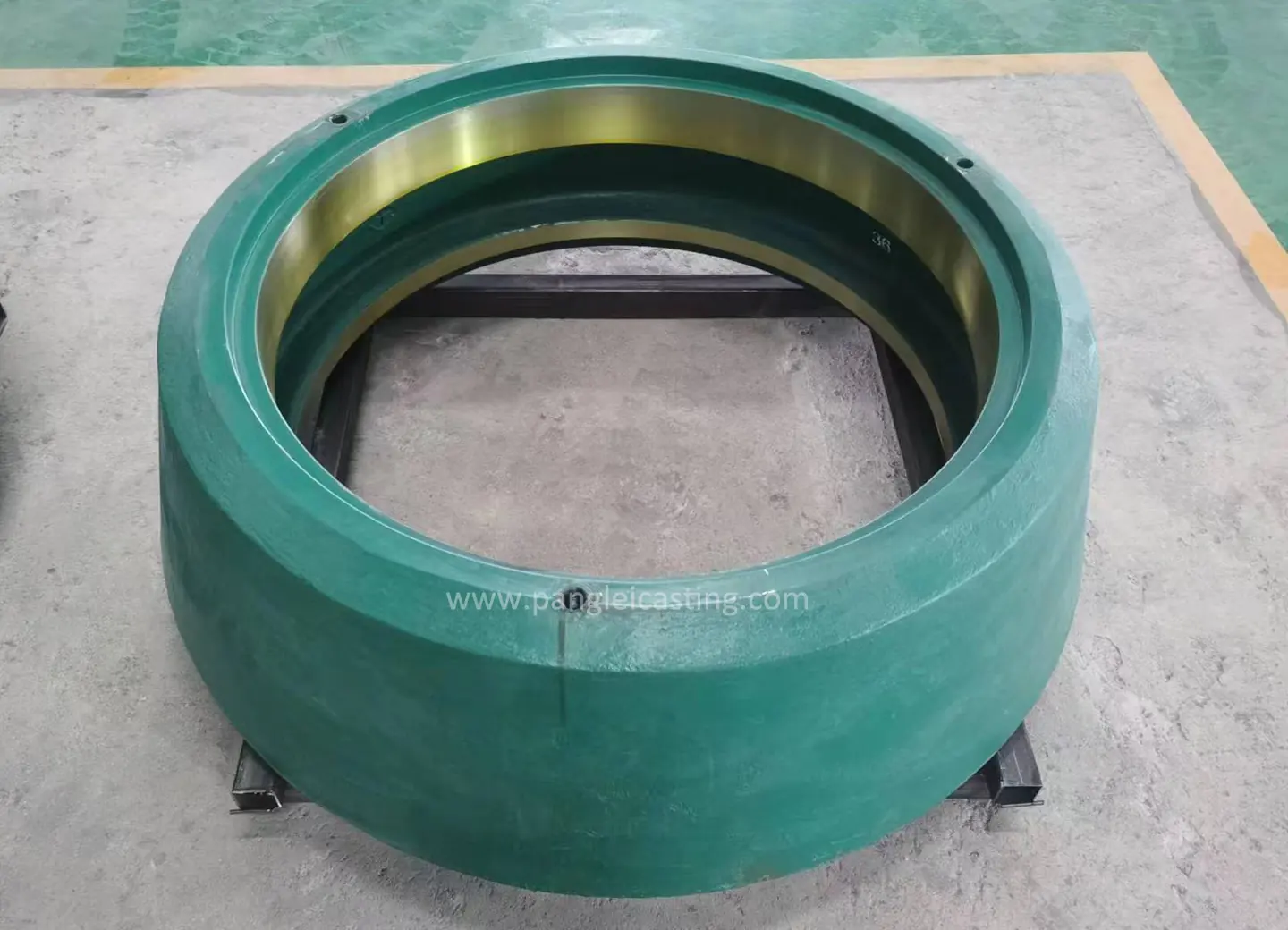
Smooth Surface Roller Shell
Smooth-faced shells for controlled reduction, cast by an OEM roller supplier
What This Casting Does And Why It Matters
Smooth roller shells crush by compression between two rolls and are chosen where fines must be limited and the top size controlled. They are a low-volume part, which is why they are hard to source — most foundries will not tool up for them. PangLei has supplied OEM roller shells to a roller crusher manufacturer for many years, so this is routine work here, machined on vertical lathes up to Ø3.4 m.
Technical Features
- Austenitic manganese steel or high chromium white cast iron
- Face machined true on vertical lathes
- Shell bore machined to the roll shaft fit
- Dimensional inspection report issued
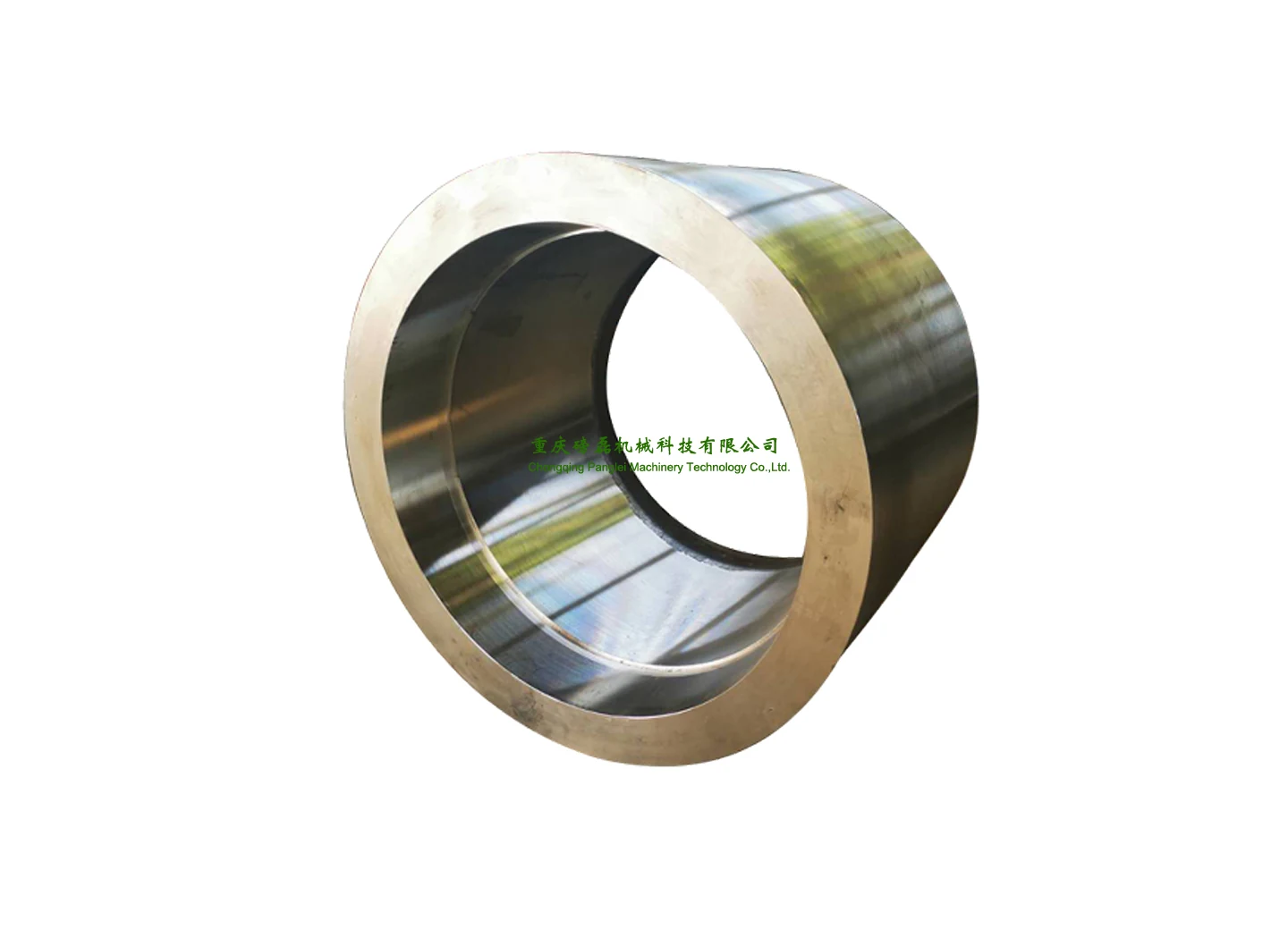
What You Get That You Would Not Get Elsewhere
Years of OEM supply to a roller crusher manufacturer
Machined on vertical lathes up to Ø3.4 m
Manganese and high chromium options by feed abrasiveness
Available for machines the original builder no longer supports
The Failures This Part Is Cast To Prevent
- Shells no longer available from the machine builder
- Uneven wear across the roll face changing the product gap
- Foundries unwilling to take on low-volume roller work
- Long lead times on a critical but infrequent wear item
Who It Is For
- Coal, coke and mineral processing plants
- Roller crusher manufacturers seeking a contract foundry
- Plants running older roller machines
- Operations crushing to a controlled top size
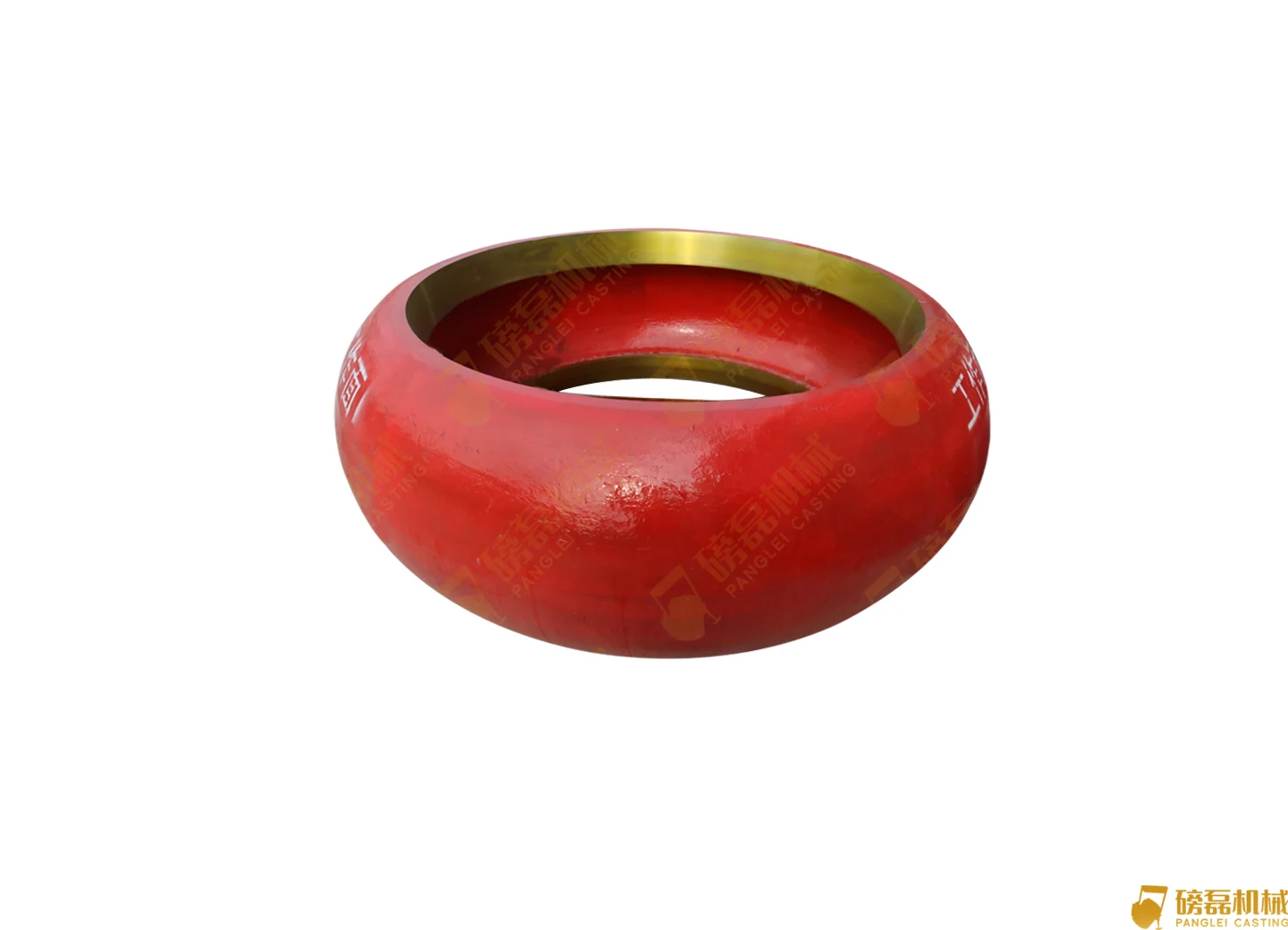
Application Scenarios
- Coal and coke sizing
- Controlled top-size reduction
- Secondary crushing where fines must be limited
- Replacement shells for discontinued machines
Technical Data For Smooth Surface Roller Shell
Every figure here comes from our published foundry capability. Where a value depends on your machine it is confirmed at quotation rather than guessed.
| Specification | Detail |
|---|---|
| Part type | Smooth surface roller shell |
| Material options | Austenitic manganese steel, high chromium white cast iron, alloy steel |
| Max machining diameter | Ø3.4 m |
| Max single casting weight | 10 t |
| Surface | Smooth face |
| Source geometry | Original pattern, customer sample or 3D scan |
| Inspection | Chemical analysis and dimensional report |
| Packing | Steel pallet |
How This Casting Is Made
Pattern Making
Once drawings are confirmed, pattern making starts immediately in our own pattern shop. Thousands of finished patterns are already on the shelf, so repeat parts skip this step entirely.
Sandbox Making
Casting Process Simulation System (CPSS) is run before the moulds are made. The cavity is kept as solid and as clean as possible so that inclusions have nowhere to start.
Melting And Pouring
Charge materials are bought to a high standard and temperature is controlled through the whole pour to achieve a fine grain structure. Samples are taken to verify the analysis and adjusted if needed, then kept for at least three years for traceability.
Sandbox Opening
Also called casting cleaning. After initial cooling the box is opened, risers and runners are removed and the casting is cleaned. Cooling time is set by casting size, not by the clock.
Heat Treatment
Heating temperature is strictly controlled and castings are spaced in the furnace so they heat uniformly and meet the water fully. Quenching begins within 30 seconds of withdrawal from the oven.
Machining
After rectifying and polishing, castings are machined strictly to drawing for correct fitment. QC then carries out dimensional inspection and issues the dimensional inspection report.
Inspection
Our own physical and chemical laboratory covers spectrometry, hardness, microstructure, dye penetrant and dimensional inspection on site rather than at a third party.
Packing And Delivery
Finished parts are packed on steel pallets for forklift handling, to international standards for road, rail, sea and air transport.
Inspection Supplied With This Part
Chemical analysis and a dimensional inspection report are standard on every order. The remaining procedures are carried out in our own physical and chemical laboratory when specified at order stage.
| Procedure | When |
|---|---|
| Chemical Analysis | standard on every heat |
| Dimensional Inspection Report | standard on every order |
| Hardness Testing | if specified |
| Tensile Testing | if specified |
| Microstructure Analysis | if specified |
| Magnetic Particle Testing | if specified |
| Dye Penetrant Testing | if specified |
| Ultrasonic Testing | if specified |
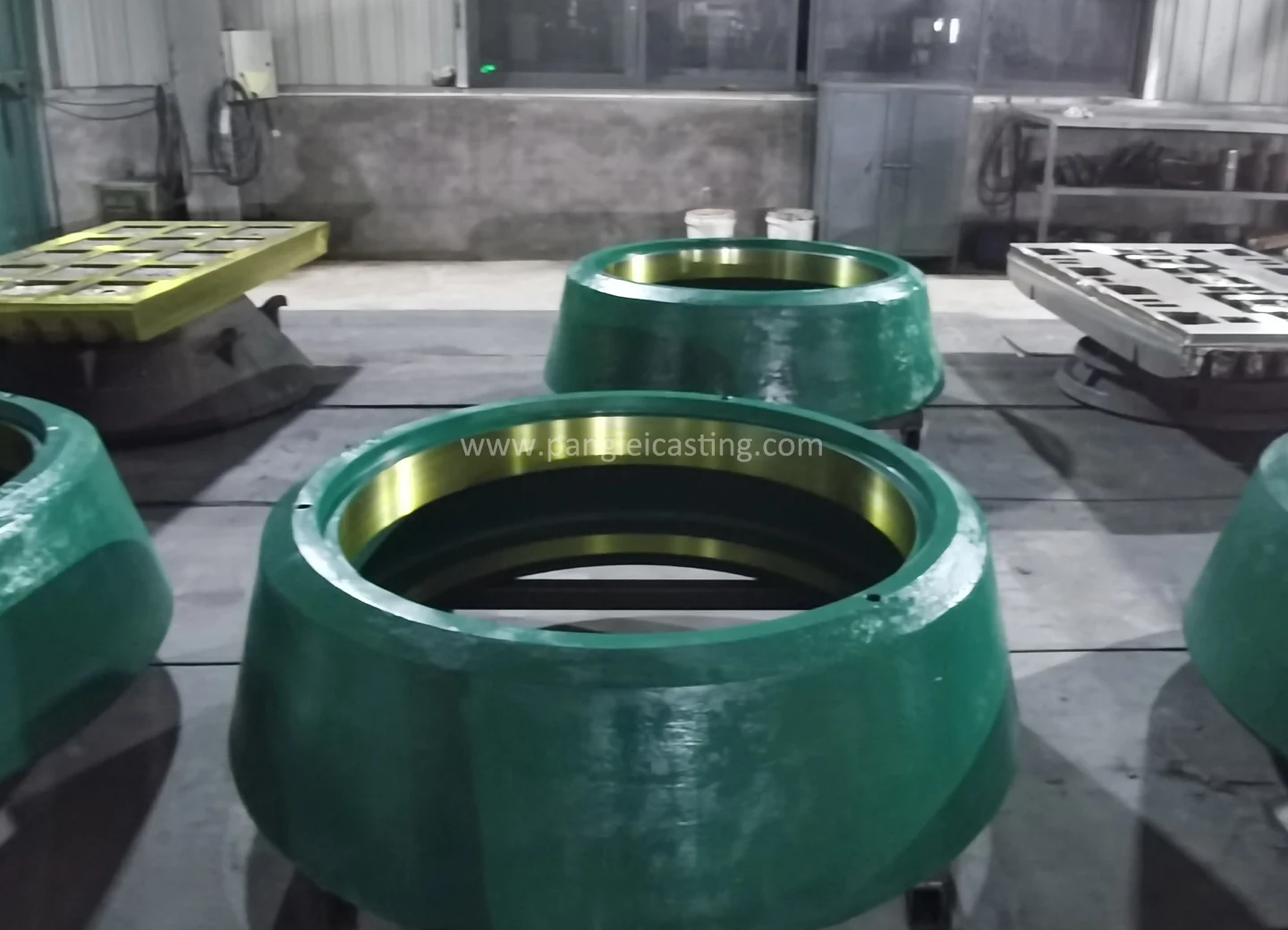
Laboratory Equipment
- German-made OBLF direct-reading spectrometer
- Hardness testing equipment
- Metallurgical microscope
- Dye penetrant inspection equipment
- Dimensional inspection equipment
How This Part Compares With The Alternatives
| Compared With | What Changes |
|---|---|
| A corrugated shell | Smooth shells limit fines and give controlled reduction; corrugated faces grip and pull harder feed into the gap. |
| Re-machining a worn shell | Re-machining reduces diameter and changes the gap. A new shell restores the designed roll diameter. |
| Sourcing from a general foundry | Roller shells are low-volume specials for most foundries. They are ordinary production here. |
If Your Part Is Not Standard
With our own pattern shop, a 3D scanner and Casting Process Simulation System, we work from your drawing, your worn sample, or a scan taken on your site. Material grade, profile and machining are all specified against your machine rather than against a catalogue.
- Reverse engineering from a worn part, with no drawing required
- On-site 3D scanning where the component cannot be removed
- Material grade selected against your feed rather than a default
- Pattern retained afterwards, so repeat orders skip pattern making
Fitting And Getting The Life Out Of It
- Measure both roll diameters before ordering so the pair matches
- Confirm the shell bore and shaft fit with the enquiry
- Replace shells as a pair to keep the gap parallel
- Re-set the roll gap after fitting
- Record tonnage to plan the next change
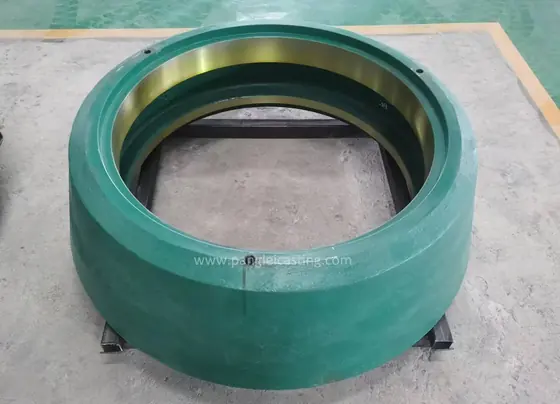
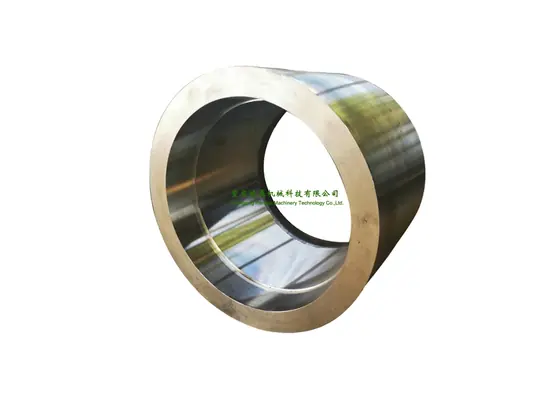
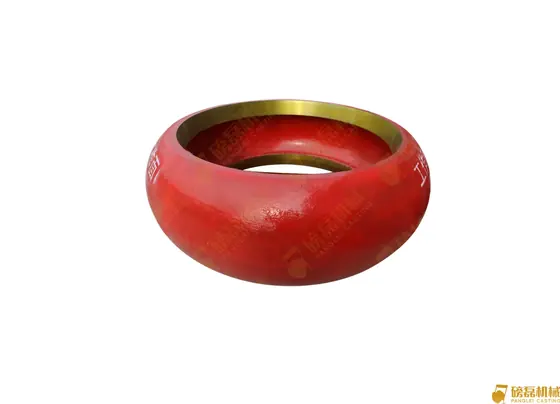
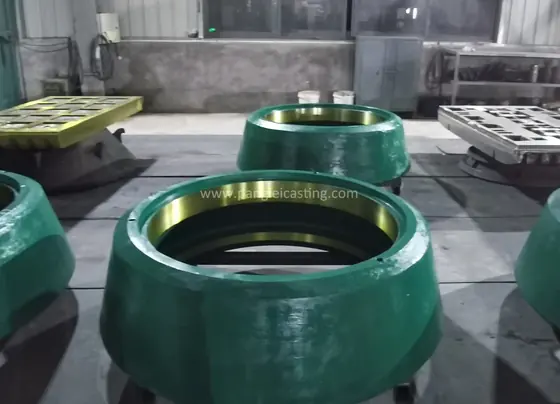
Smooth Surface Roller Shell At The Foundry
Parts Usually Ordered Alongside This One
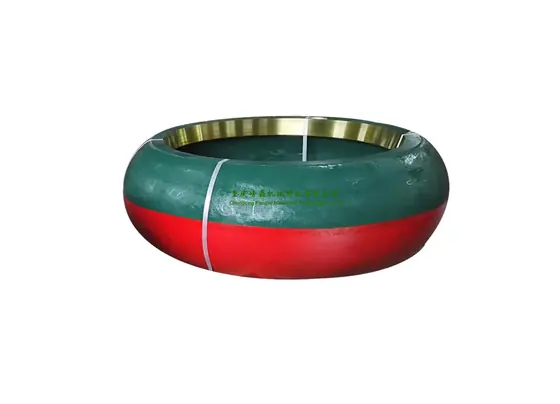
Corrugated Surface Roller Shell
Corrugated faces cast to your existing profile, not substituted with a standard pattern
View Part →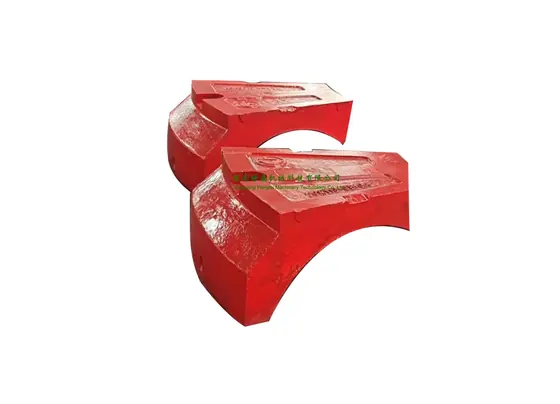
Reverse Engineered Wear Castings
From a worn part with no drawing to a repeatable casting
View Part →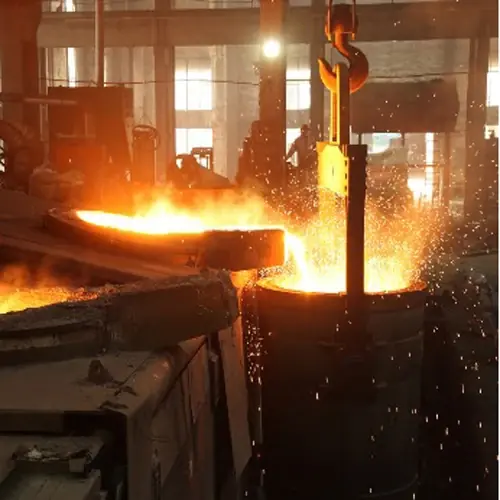
Grinding Roller
Mill grinding rollers supplied to the Chinese electric power industry
View Part →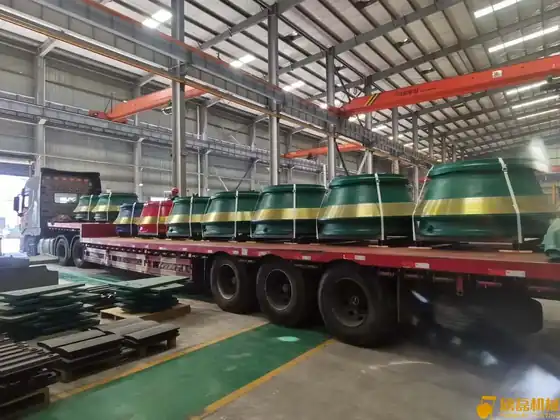
Mill Liner
Mill liners in manganese and high chromium for grinding circuits
View Part →Smooth Surface Roller Shell Questions
Can you cast a shell for a roller crusher out of production?
Yes. This is a large part of our roller work — from the worn shell, a drawing, or a 3D scan taken on your site.
Do shells need to be replaced in pairs?
In most applications yes, otherwise the roll diameters differ and the gap is no longer parallel.
What is the largest shell you can machine?
Our largest vertical lathe takes Ø3.4 m, and we pour single castings up to 10 tonnes.
Which material should I choose?
High chromium for highly abrasive feed, manganese where impact or tramp material is a factor.
Get A Price For Smooth Surface Roller Shell
Send the machine model, the part number if you have one, and the quantity. If you have neither, a photograph with the main dimensions is enough to start.