
Palletising Patterns And Layer Planning
Interlocked, column and five-flower patterns, how many bags per layer, and why the pattern decides whether the load survives the container.
The Pattern Is A Stability Decision
A pallet pattern is not a packing puzzle, it is a structural design. Bags are soft, they settle and they slide. The pattern is what stops the load walking apart in a container over three weeks at sea.
The Three Basic Patterns
Column stacking places every layer identically. It gives the highest bag count per layer and the worst stability, because there is no interlock between layers at all. It is acceptable when every load is stretch wrapped and travels short distances.
Interlocked or back stacking rotates alternate layers so bags bridge the joints below. Stability improves dramatically at the cost of a bag or two per layer.
Five-flower stacking, published as one of our standard options, places four bags around one central bag. It is a strong interlock for square-ish bags and it is common on fertiliser and building material loads.
How Many Bags Per Layer
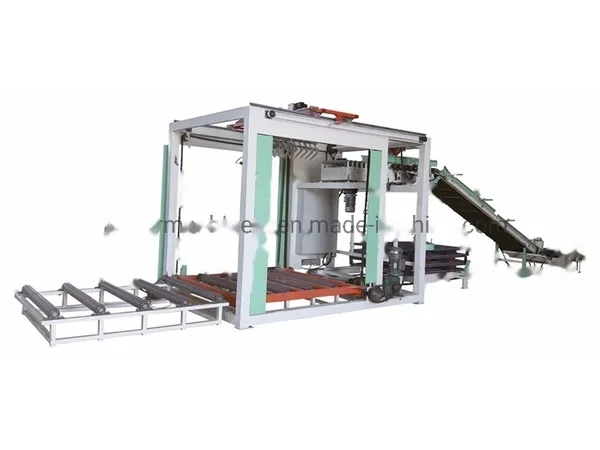
Published configurations on our palletising line are 6 to 8 layers with 4, 5, 6 or 8 bags per layer, in combinations such as 3+2, 2+3, 3+3 and 3+3.
The number follows from the bag footprint and the pallet size. The published tray size is 1400 x 1200 x 150 mm, and a bag flattened to a known width and length either fits five per layer or it does not.
Flatten The Bag First
The single most effective thing you can do for load stability costs almost nothing: run the filled bag through a flattener before it reaches the palletiser. A flattened bag has a predictable footprint, stacks square and settles evenly. An unflattened bag is a pillow and it will roll.
Robot Reach And Payload Set The Envelope
Published robot data is a 180 kg bearing capacity, IP67 protection, 0.1 mm repeat positioning accuracy, 0.3 mm repeat cycle accuracy and a 3.15 m maximum reach, at 600 to 1000 bags an hour on 25 kg to 50 kg bags.
Reach is what usually constrains a cell layout, not payload. Two pallet positions either side of the robot must both sit inside the working envelope, along with the pallet magazine.
The Gripper Decides What You Can Pick
The published fork type grab is a stainless welded fork with pneumatics, mounting bracket and a vacuum pipeline system, picking by photoelectric detection. Fork grippers suit bags. Vacuum suits cartons and slip sheets. Clamps suit rigid cases.
A cell that has to handle both bags and cartons needs either a combination tool or a tool change, and that is a decision to make at layout stage rather than later.
Practical Layout Advice
- Give the pallet magazine 10 to 15 pallets of capacity so a pallet change is not a line stop.
- Leave the forklift a clear straight run to the discharge position, not a turn inside the cell.
- Put the stretch wrapper immediately after the palletiser and before any storage, so no load is ever moved unwrapped.
- Make the pattern adjustable on the touch screen so your own shift leader can add a size without a programmer.
Machines Referenced In This Guide
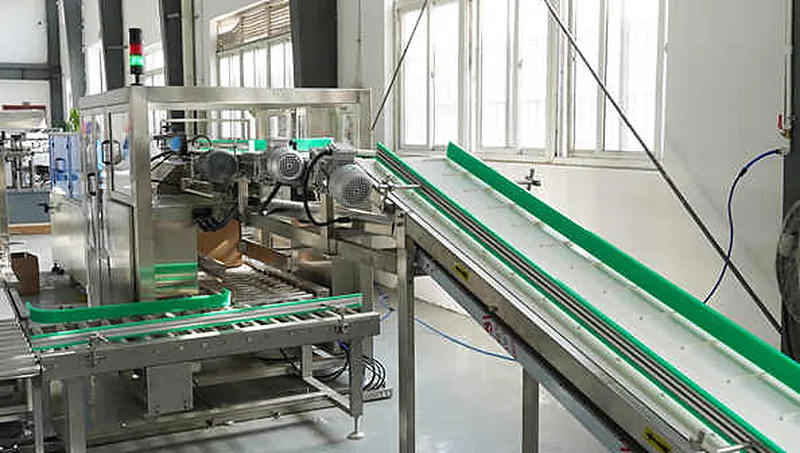
HN series automatic palletizing production line
This unit is a modern and unmanned production line composed of stacking robot, grab, base, pallet warehouse, stack supply sys...
View machineHN600 Palletizer Machine
Factory Price Robotic Palletizing System, Bag Palletizer Machine, Palletizing Robot
View machine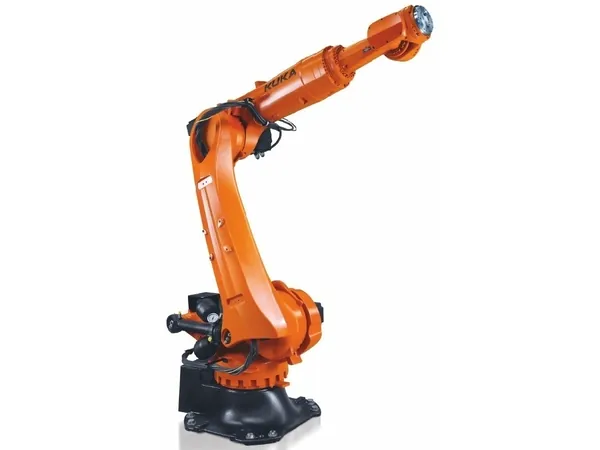
Palletizing Robot
Automatic Robot for Stacking and Palletizing(China factory) Low price new Kuka palletizing robot provider($24000/set )KR120
View machine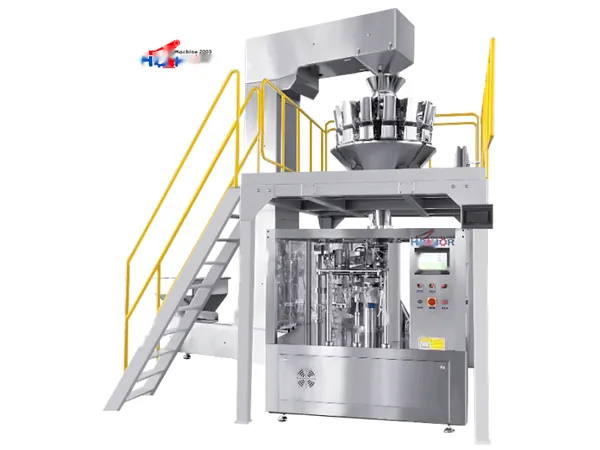
Rotatable Pallet Packing
China Manufacturer Fully Automatic Pallet Stretch Wrapping Machine
View machineRelated Guides
How To Choose A Packing Machine
The eight questions that decide the machine before price ever comes into it.
Material GuideBag Types For Packing Machines
Pillow, four-side seal, stand-up, zipper, M-bag, spouted and woven: what each one costs you.
Process GuidePacking Accuracy Explained
Why a machine rated at 0.2% can still give you 1% giveaway, and what to do about it.
Palletising Patterns And Layer Planning FAQ
Questions buyers ask before they order. If yours is not here, message us and an engineer will answer.
Can the palletiser handle more than one pallet size?
How fast can it stack?
Does the cell need a safety fence?
Apply This To Your Own Line
Send the product, the pack weight and the output and we will tell you exactly how this guidance applies to your case.
Send a drawing, a bag sample photo or a video of your current line on WhatsApp or by email — that is usually enough for us to quote.