
How To Choose A Packing Machine
Eight questions decide the machine. Price is not one of them, and it should not be the first thing you ask a supplier.
Start With The Pack Not The Machine
Every wasted quotation cycle we have ever seen started the same way: a buyer asks for a price on a packing machine without saying what goes in the bag. The machine is a consequence of the pack, so settle the pack first and the shortlist writes itself.
Write down four numbers before you contact anyone. Target pack weight. Bags per minute you need at peak, not average. Bag style and dimensions. Product bulk density in kilograms per litre. With those four numbers any competent supplier can name a model in one message.
Question One What Is The Material
Free-flowing granules, cohesive powders, sticky pastes and liquids all want different dosing. A rice grain will drop cleanly through a weigher. A fine additive powder will bridge in the hopper, aerate on the way down and refuse to settle in the bag.
Two properties matter most: bulk density and flow behaviour. If you do not know your bulk density, weigh a litre of product. If you do not know the flow behaviour, tip a heap of it on a bench and look at the angle it makes. A steep pile means a cohesive material and probably a screw dosing head.
Question Two What Pack Weight
Weight bands map almost directly onto machine families. Below about 5 kg you are in form fill seal or premade bag territory. From 10 kg to 50 kg you are on a heavy bag line with a fold-and-sew or heat-seal closing station. Above 500 kg you are on a ton bag station.
Where a project goes wrong is at the boundaries. A 5 kg pack can run on either a small heavy bag line or a large form fill seal machine, and the right answer depends entirely on the next question.
Question Three What Output
Ask for peak, not average. A plant that averages 8 bags a minute but has to clear a 14 bag peak on despatch day needs a 14 bag machine, or it needs an accumulation buffer, and the buffer is usually cheaper.
Be honest about the working day too. A machine rated at 40 bags a minute over an eight-hour shift is a different specification from the same machine expected to run three shifts.
Question Four Which Bag Style
The bag decides more of the machine than most buyers expect. A pillow bag formed from roll film is the cheapest pack you can make. A premade stand-up pouch with a zipper looks far better on a shelf and costs several times as much per pack, and it needs a completely different machine.
If the pack is going to a retail shelf, the bag is a marketing decision and the machine follows it. If the pack is going to another factory, choose roll film and save the money.
Question Five What Accuracy Do You Actually Need
Legal metrology sets a floor, but most plants specify tighter than the law because giveaway costs real money. On a 25 kg bag, half a percent is 125 grams. At a thousand tonnes a year that is five tonnes of product given away.
Published machine accuracy is always qualified against material properties, and rightly so. Treat a headline figure as an envelope, then have the supplier confirm it on your own material.
Question Six What Has To Happen After The Bag Is Closed
Coding, checkweighing, metal detection, bag flattening, conveying, palletising and stretch wrapping. Decide now which of these you need, even if you buy them later, because the layout has to leave room for them.
Retrofitting a checkweigher into a line that was laid out tight against a wall is expensive and ugly. Leaving the space costs nothing today.
Question Seven What Are Your Utilities
Voltage and frequency, available compressed air in cubic metres a minute and at what pressure, ceiling height, floor loading and dust extraction capacity. These constrain the machine as hard as the product does.
A published requirement of 6 to 8 kgf per square centimetre at 0.9 cubic metres a minute is not a suggestion. If your compressor cannot supply it, the machine will run badly and everyone will blame the machine.
Question Eight Who Will Maintain It
A plant with a good maintenance team can run a more sophisticated machine. A plant with no electrician needs simpler equipment, stocked wear parts and a supplier who will diagnose the PLC remotely.
Ask any supplier three specific questions: what are the wear parts, do you hold them in stock, and can you see my HMI from your office. The answers tell you more about the next five years than the price does.
Now Compare Quotations Properly
Put the quotations side by side on scope, not on total. Does the price include the elevator, the conveyors, the coder, the installation drawings and the spare parts kit, or are those extra? Is the frame carbon steel or stainless? What is the warranty, and does it cover the wear parts?
The cheapest number on the page is rarely the cheapest machine after two years.
Machines Referenced In This Guide
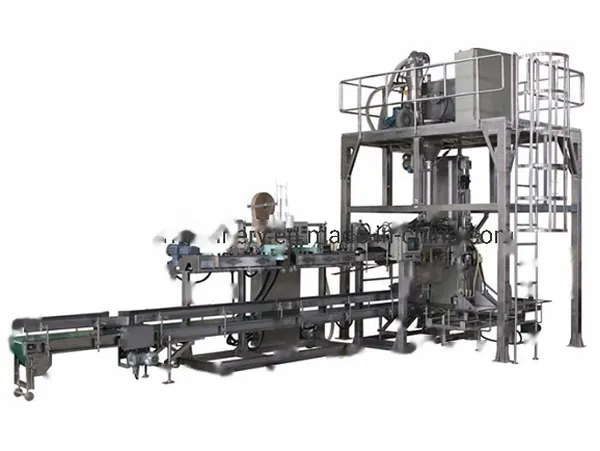
HN series automatic bag-making and packing machine
Sugar Salt Powder Bagging/Weighing/Packaging /Filling/ Packing Machine
View machineHN-GP6-200 series automatic feeding bag packing machine
This unit is composed of automatic feeding machine (Z elevator), automatic weighing machine (combination scale, electronic sc...
View machineHN series 10kg-50kg automatic feeding bag packing machine and production line
The unit is composed of automatic feeding elevator, electronic weighing machine, automatic bag feeding and packaging machine,...
View machineHNWT2000 series ton bag packing machine
It is a metering control system composed of high-precision sensors and high-precision resolution control instruments, with hi...
View machineRelated Guides
Bag Types For Packing Machines
Pillow, four-side seal, stand-up, zipper, M-bag, spouted and woven: what each one costs you.
Process GuidePacking Accuracy Explained
Why a machine rated at 0.2% can still give you 1% giveaway, and what to do about it.
ComparisonForm Fill Seal Versus Premade Bag Machines
Bag cost versus shelf appeal, and the volume at which the answer flips.
How To Choose A Packing Machine FAQ
Questions buyers ask before they order. If yours is not here, message us and an engineer will answer.
How long does a packing machine last?
Should I buy semi-automatic first?
How much should I budget for the rest of the line?
Apply This To Your Own Line
Send the product, the pack weight and the output and we will tell you exactly how this guidance applies to your case.
Send a drawing, a bag sample photo or a video of your current line on WhatsApp or by email — that is usually enough for us to quote.