
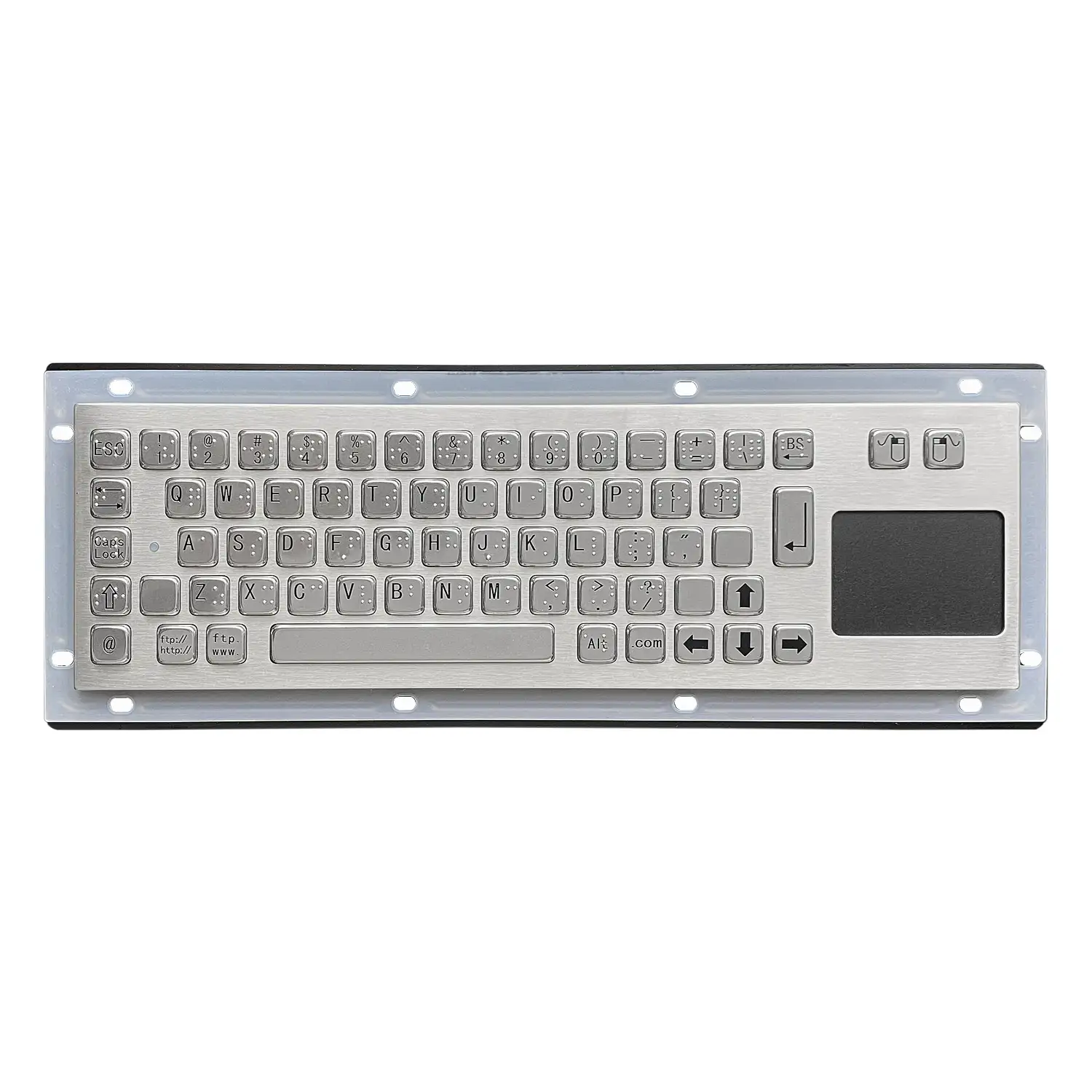
Metal Keyboards in the Age of Intelligent Manufacturing
A Manufacturing Base That Has Changed
Since the start of the century, information technology represented by the internet, the internet of things, cloud computing, big data and artificial intelligence has merged with new industrial materials, new processes, new energy and advanced manufacturing. The effect has been structural rather than incremental: research and development, design, production, industrial form and business model have all shifted. New production methods, organisational methods and business models keep appearing, and together they are driving the intelligent transformation of the global industrial system. Intelligent manufacturing is now developing quickly worldwide and has become a defining direction of the manufacturing industry rather than a specialist branch of it.
Moving Up the Value Chain
China's manufacturing base has for a long time been concentrated in the middle and lower-end links of the chain, where industrial added value is limited. Developing intelligent manufacturing has become the principal route from low-end production towards high-end production. For component and subsystem suppliers this is not an abstract policy point. It changes what customers ask for, because equipment builders who are themselves moving up the chain expect their suppliers to bring design capability rather than only manufacturing capacity. A supplier of input devices that can contribute to the interface design of the host equipment is in a different conversation from one that simply quotes against a drawing supplied to it.
The Challenge from Touch Screens
The honest question for any metal keyboard manufacturer is where the product goes now that touch screens and flexible screens are the popular interface choice. Can the industrial metal keyboard enter the intelligent field, and can it meet the demands of smart manufacturing? There is no ready-made answer and no existing model to copy. The way forward is exploration and innovation, and specifically the question of how the keyboard integrates into complete machine manufacturing rather than sitting beside it. As one commentator put it, there are no traditional industries and no emerging industries, only companies that keep pace with the change and continually remake themselves.
Where Metal Keyboards Are Being Designed In
In recent years industrial metal keyboards have entered intelligent manufacturing equipment across machinery, aviation, shipbuilding, automotive, light industry, textiles and electronics. The list of applications is concrete: unmanned delivery vehicles, drone operating desks, community shared refrigerators, self-service car washing machines, explosion-proof boxes, high-speed rail commissioning equipment, building access control, intelligent waste bins and waste collection vehicles, underground coal mine operating desks, fuel dispensers, medical equipment, self-service account opening robots in securities halls, intelligent lift panels, spray operation training simulators and portable automatic pressure testing units. Durability is what keeps the metal keyboard in these designs when a screen would be the easier default choice.
Why a Physical Interface Still Wins
The pattern across that application list is worth drawing out. Almost every item is unattended, outdoors, gloved, dirty, or all four. A fuel dispenser and a self-service car wash sit in the weather. An underground mine operating desk is humid and dusty. Building access control and lift panels face constant public use and occasional deliberate abuse. Explosion-proof enclosures rule out many alternatives outright. In each case the interface has to keep working with no operator nearby to restart it, which is a durability problem before it is a user interface problem. That is the ground on which a metal keyboard continues to be specified, and it is not shrinking.
From Component Supplier to System Partner
There is a limit to this position if a manufacturer is content to remain a supplier of parts to intelligent manufacturing. Intelligent manufacturing applies the technology across the whole span of product design, production, management and service, covering both the equipment industry and the associated service industry. Entering the intelligent field with the keyboard as the entry point, and becoming a subsystem within the wider ecosystem, is what opens genuinely new ground. The practical version of this is system integration guided by intelligent manufacturing services: supporting the equipment, promoting the integration of hardware and software, and using that integration to reduce labour cost and raise product quality across the upgrade process.
What This Means for Buyers
For an equipment builder, the useful test of an input device supplier is whether they can work at the level above the part. That means overall design capability, the ability to provide a solution rather than a catalogue item, and supporting services covering scheme design, equipment procurement, equipment development, installation and maintenance. With networks linking people, machines and things, the supplier who understands the host system is the one who can resolve an interface question quickly instead of escalating it. KEYU's own direction is towards that integrator role, built on OEM and ODM work from its Shenzhen factory rather than on catalogue supply alone.
Products Mentioned
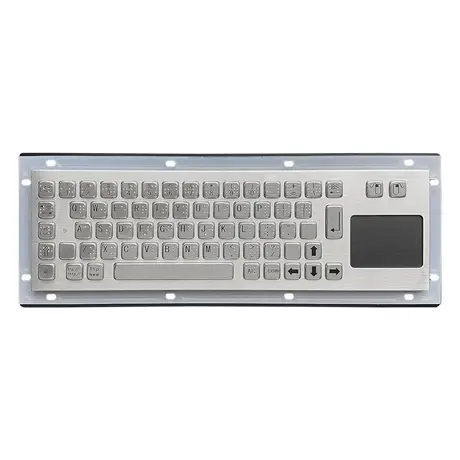
67 Key Metallic Keyboard With Braille KY-PC-NT3 BR
View Specification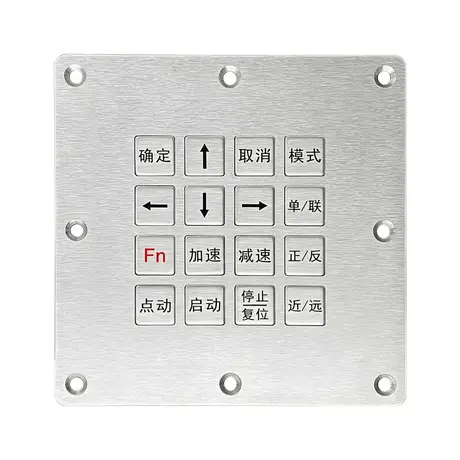
Industrial RS485 Keyboard With 16 Stainless Steel Keys
View Specification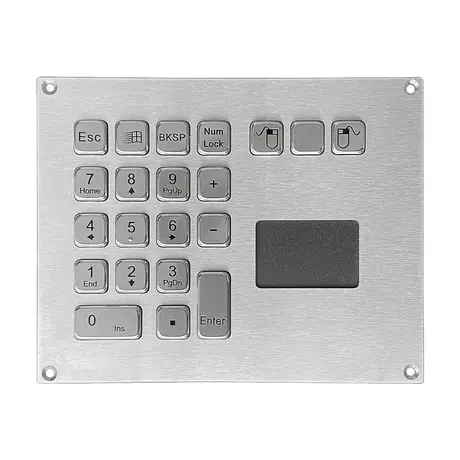
IP65 Mini Keyboard With Trackpad KY-PC-VG160T
View Specification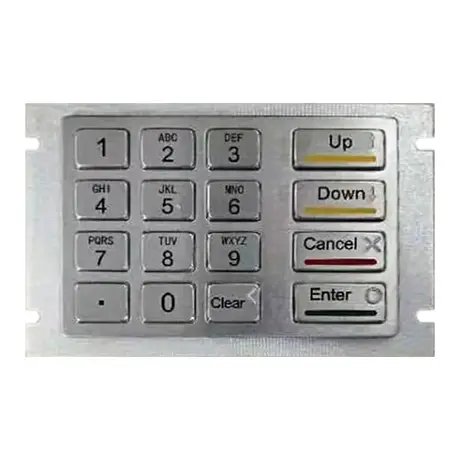
KY2145A IP65 Metal Encrypting PIN Pad
View Specification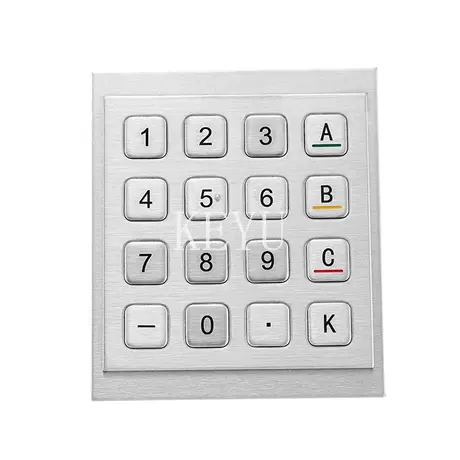
KY3088C 16 Keys Encrypting Metal Keypad
View SpecificationRelated Ranges
Questions On This Topic
Are metal keyboards being replaced by touch screens?
Which intelligent manufacturing sectors use metal keyboards?
Why does durability matter more on unattended equipment?
Does KEYU work on system integration as well as supply?
Put This Into A Specification
Send us the application and we will tell you which of these choices actually matter for your terminal.